Liuzi Temple
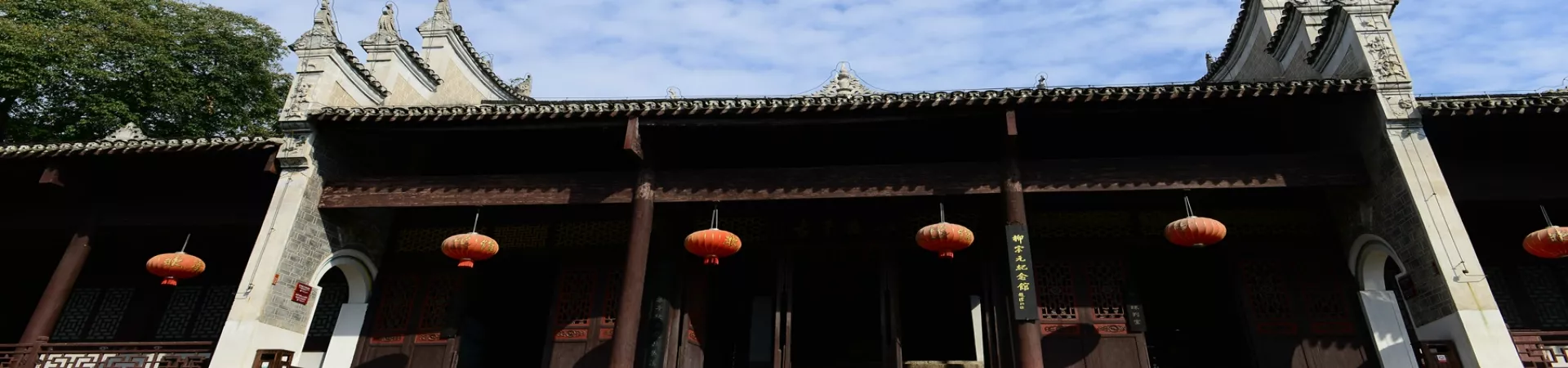
Subtitle: A Journey to the Memorial of a Literary Giant in Southern Hunan
1. Introduction to the Site and Its Inhabitant
Nestled in the picturesque landscapes of southern Hunan Province, near the border of Guangxi, lies the historic town of Yongzhou. This region, renowned for its lush green mountains and clear waters, is dotted with numerous scenic spots and ancient relics. Among its most profound cultural treasures is the Liuzi Temple, a site forever intertwined with the memory of one of China's most celebrated literary figures, Liu Zongyuan.
Liu Zongyuan (773-819 AD) was a preeminent prose writer and poet of the Tang Dynasty, proudly counted among the "Eight Great Prose Masters of the Tang and Song Dynasties." His life took a dramatic turn following his involvement in the failed political reform led by Wang Shuwen. As a consequence, he was exiled to Yongzhou, where he spent a decade in relative obscurity from 805 to 815 AD. Far from being a period of mere despair, this decade of exile became the most fertile ground for his literary genius. Immersed in the natural beauty and social realities of Yongzhou, Liu Zongyuan produced a remarkable body of work that has resonated through the centuries. His profound connection to this land and its people transformed his banishment into a cornerstone of Chinese literary history.
2. The Literary Legacy Forged in Exile
2.1. Masterpieces Inspired by Nature and Society The Yongzhou period was Liu Zongyuan's most prolific. It was here that he composed his iconic series of landscape essays, The Eight Records of Yongzhou (Yongzhou Ba Ji). These essays are not mere descriptions but philosophical contemplations, where the serene yet sometimes desolate beauty of the local hills, springs, and rocks mirrored his own inner state and served as a medium for expressing complex emotions and thoughts. His poetry from this era, such as the famously minimalist and evocative River Snow (Jiang Xue), captures a profound sense of solitude and resilience.
Beyond nature, his experiences in Yongzhou sharpened his social conscience. Works like The Snake-Catcher (Bu She Zhe Shuo) are powerful social commentaries. Using the allegory of a peasant who risks his life catching poisonous snakes to avoid oppressive taxes, Liu Zongyuan delivered a scathing critique of governmental policies that were more devastating than the venom of the snakes themselves. This deep empathy for the common people earned him their enduring love and respect, a sentiment that would later be immortalized in the temple built in his honor.
2.2. The Philosophical Depth of His Work His writings from Yongzhou often explore themes of reclusion, the search for personal integrity in the face of injustice, and a Daoist-inspired harmony with the natural world. He used the landscape as a character and a teacher, finding in its permanence and cycles a counterpoint to the fleeting nature of human political fortunes. This philosophical depth elevates his travelogues and essays from simple records to timeless meditations on the human condition.
3. Exploring the Liuzi Temple Complex
3.1. Architectural Layout and Historical Atmosphere The Liuzi Temple, constructed in later dynasties to commemorate his life and contributions, stands as a testament to his lasting impact. The temple complex is a fine example of traditional Chinese memorial architecture, typically featuring a series of halls, courtyards, and steles set within a tranquil environment. Visitors enter through a majestic gate, stepping into a space designed for reflection.
3.2. Key Features and Artifacts The main hall houses a dignified statue of Liu Zongyuan, often depicted in scholarly robes, inviting contemplation of the man behind the legacy. The surrounding walls are frequently adorned with inscriptions of his most famous verses and excerpts from his essays, allowing the visitor to read his words in the very context that inspired them.
3.2.1. Stone Tablets and Calligraphy Throughout the complex, numerous stone tablets (steles) are engraved with his poetry and prose in various styles of calligraphy. These tablets are not only literary treasures but also significant artworks, preserving the brushwork of different eras. They serve as a physical bridge connecting the visitor directly to the textual heritage of the Tang Dynasty.
3.2.2. The Surrounding Gardens and Landscape The temple grounds are meticulously landscaped, incorporating elements of the very nature Liu Zongyuan so loved. Meandering paths, ancient trees, bamboo groves, and rockeries create a serene atmosphere conducive to understanding the pastoral and reflective themes in his work. The design encourages a slow, thoughtful pace, mirroring the contemplative walks the poet himself might have taken.
4. Practical Visitor Information
4.1. Location and Accessibility The Liuzi Temple is located within Yongzhou City, Hunan Province. The city is accessible by high-speed rail and major highways. From the city center, local taxis or public buses provide convenient transport to the temple site.
4.2. Opening Hours and Admission * Opening Hours: * Winter Period (December 1 - February 28): 08:00 - 17:30 (Last entry at 17:00) * Summer Period (June 1 - August 31): 08:00 - 18:00 (Last entry at 17:30) * Hours for the spring and autumn seasons typically align with or fall between these schedules. * Admission Fee: 25 RMB per person.
4.3. Contact Information For the most current information, especially regarding schedule adjustments or special events, visitors can contact the temple management at: 0746-6385865.
4.4. Tips for a Fulfilling Visit To fully appreciate the site, it is highly recommended to familiarize oneself with some of Liu Zongyuan's major works, particularly The Eight Records of Yongzhou and River Snow, before visiting. This preparation transforms the visit from a simple sightseeing tour into a poignant dialogue with history and literature. Allow at least two hours to wander the halls, gardens, and courtyards at a leisurely pace. The quiet corners of the garden are perfect for re-reading a passage of his work, completing the immersive experience of connecting with the spirit of the great master in the land that shaped his legacy.
Information last verified/updated: November 16, 2022. Credit for user-contributed updates: White1997丶.