Lanxi Goulan Yao Village
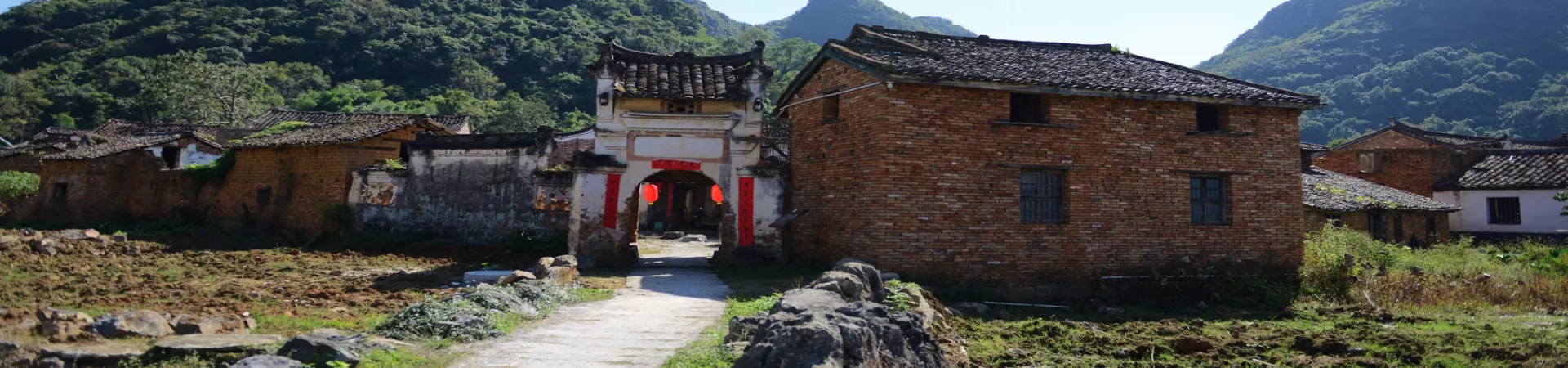
Subtitle: A Journey into the Heart of China's Yao Heritage
1. Introduction to Lanxi Goulan Yao Village
Nestled amidst the rolling hills and lush landscapes of Yongzhou, in China's Hunan Province, lies a hidden gem of cultural preservation and natural beauty: the Lanxi Goulan Yao Village. This ancient settlement stands as a remarkably intact ancestral home of the Goulan Yao people, a branch of the larger Yao ethnic minority. More than just a village, it is a living museum, a testament to centuries of tradition, and a serene escape where history is etched into the very walls of its buildings and the contours of the surrounding mountains. For the discerning traveler seeking an authentic encounter with China's diverse ethnic heritage and unspoiled rural scenery, Goulan Yao Village offers an unparalleled experience, inviting visitors to step back in time and immerse themselves in a uniquely preserved way of life.
2. The Enchanting Landscape and the "Eight Scenic Wonders"
The village's harmony with its environment is its defining characteristic. It is cradled by a picturesque range of mountains—Chewei Shan, Renping Shan, Hulei Shan, and Wangyue Shan—whose names whisper of local lore and whose forms create a natural amphitheater of breathtaking beauty. This stunning backdrop is integral to the village's identity and fame.
2.1. The Legendary Eight Scenic Wonders Central to the village's charm are the legendary "Eight Scenic Wonders of Goulan" (勾蓝八景), poetic names that capture the essence of its most revered natural and historical sites. Each "wonder" tells a story, blending geological formation with cultural imagination:
- Puli Sheng Jing (蒲鲤生井): The "Carp Spring Well," a clear, perennial water source vital to the community's sustenance.
- Shanku Cang'an (山窟藏庵): The "Mountain Grotto Concealing a Nunnery," a place of quiet retreat and spiritual significance tucked into the hills.
- Xiniu Wangyue (犀牛望月): "The Rhinoceros Gazing at the Moon," likely a rock formation whose silhouette against the night sky inspires the imagination.
- Tianma Saocao (天马扫槽): "The Heavenly Horse Sweeping the Trough," another evocative name for a distinctive natural landmark.
- Shidou Quanqing (石窦泉清): "The Clear Spring from a Stone Aperture," highlighting the purity and abundance of mountain water.
- Guta Zhongyuan (古塔钟远): "The Distant Bell of the Ancient Pagoda," suggesting the presence of an old temple tower whose chimes once echoed through the valleys.
- Xiangtong Yongfu (享通永富): "Everlasting Prosperity and Wealth," a site symbolizing the community's hopes for fortune and well-being.
- Yanhu Ping'an (岩虎平安): "The Rocky Tiger for Peace and Safety," a guardian-like rock formation believed to protect the village.
These wonders are not isolated points but are seamlessly connected by the village layout and the surrounding trails, forming a cohesive tapestry of scenic and cultural exploration.
3. Practical Information for Visitors
To fully appreciate the tranquility and authenticity of Goulan Yao Village, planning your visit with the following practical details in mind is essential.
3.1. Location and Transportation The village is located approximately 15 kilometers south of Jiangyong County. The final approach involves turning off the main road onto a rural country lane, leading you deeper into the pastoral landscape. The total journey from Jiangyong County town to the village takes about one and a half hours by car. This relatively remote location is key to its preserved state, so visitors should prepare for a scenic drive through the countryside. It is advisable to arrange private transportation or hire a local driver, as public transport options to the village itself may be limited.
3.2. Opening Hours and Accessibility A significant advantage for visitors is the village's flexible access. It is open to the public all day, every day, throughout the year (January 1st to December 31st, Monday through Sunday). This "open all hours" policy allows for maximum flexibility in planning. You can arrive early to catch the morning mist over the mountains, spend a leisurely afternoon exploring, or witness the serene ambiance of dusk. As it is a living community, visitors are reminded to be respectful of private residences and local customs while enjoying the public spaces and pathways.
3.3. Contact Information For specific inquiries, particularly for group visits or to confirm current conditions, you can contact the village management at 0746-5816008.
4. The Living Culture of the Goulan Yao
Beyond the landscapes and scenic spots, the true soul of the village resides in its people and their enduring traditions.
4.1. Architectural Heritage The village architecture is a masterpiece of adaptation. Built from local materials like blue brick, wood, and stone, the structures feature distinctive Yao characteristics. Look for ornate gate towers, ancestral halls with intricate wood carvings, and traditional dwellings with upturned eaves. The clever design of the village's water system, channeling clear mountain springs through canals that run alongside streets and even through some houses, is a testament to ancient hydrological engineering and remains functional today.
4.2. Cultural Traditions and Festivals The Goulan Yao people maintain vibrant cultural practices. Their unique language, colorful and elaborate traditional dress (especially the women's intricately embroidered attire and striking silver headdresses), and rich folklore are integral to daily life. If your visit coincides with a local festival, such as the Panwang Festival (the King Pan Festival, a major Yao celebration involving ancestor worship, song, and dance), you will be treated to an extraordinary display of music, ceremonial rituals, and communal feasting.
4.3. Experiential Engagement Visitors are encouraged to engage respectfully with this living culture. This might involve observing local artisans at work, tasting authentic Yao cuisine—often featuring locally foraged ingredients, preserved meats, and sticky rice dishes—or simply sharing a smile and a greeting with villagers. The pace of life here is gentle, governed by the rhythms of nature and tradition, offering a profound sense of peace and a rare connection to a centuries-old cultural heritage that continues to thrive in its ancestral home.