Jiucai Ridge
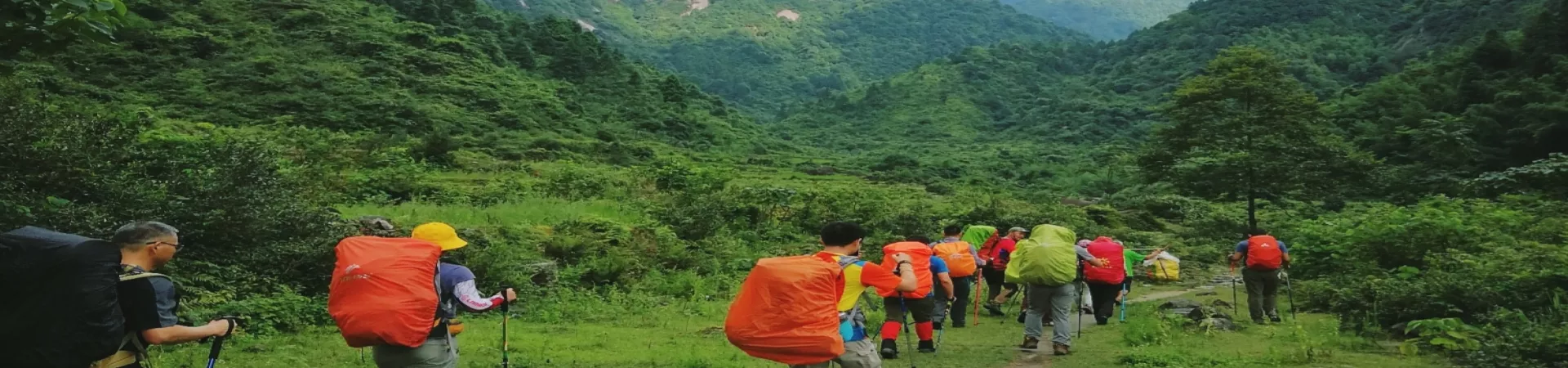
Subtitle: The Roof of Southern Hunan – A Journey into the Primitive Wilderness of Jiucai Ling
1. Introduction: The Allure of the Unknown
Nestled in the far south of Hunan Province, China, where the borders of Hunan, Guangdong, and Guangxi converge, lies a realm of untamed beauty and formidable challenge: Jiucai Ling (Leek Ridge). As the highest peak of the Yuecheng Ling range within the Nanling Mountains, its summit crowns the southern Hunan sky at an elevation of 2,009.3 meters, rightfully earning the title "Roof of Southern Hunan." However, Jiucai Ling is far more than a geographical statistic. It represents one of China's most demanding and rewarding hiking experiences, often mentioned in the same breath as the "K2 of Chinese Hiking." This is not a manicured tourist park but a vast, primitive wilderness area within the Hunan-Guangdong-Guangxi Border National Nature Reserve, a sanctuary for biodiversity and a true test of human spirit and endurance. For the adventurous traveler, it offers an unparalleled opportunity to disconnect from modernity and immerse oneself in ancient forests, mystical cloud seas, and breathtaking alpine meadows.
2. The Jiucai Ling Experience: Landscapes and Challenges
2.1. A Tapestry of Ecosystems The ascent of Jiucai Ling is a vertical journey through distinct ecological zones. The hike begins in subtropical broadleaf forests, where the air is thick with humidity and the sounds of wildlife. As you climb, the vegetation transitions into enchanting bamboo groves and then into hardy, wind-swept coniferous forests. Nearing the summit, the landscape opens up into the famous "Ten Thousand Mu (approx. 667 hectares) Grassland," a vast, rolling expanse of alpine meadow that feels utterly surreal amidst the southern Chinese climate. The summit itself offers panoramic views that stretch across the layered ridges of the Nanling Mountains. On many mornings, a spectacular sea of clouds blankets the valleys below, with peaks emerging like islands, creating a scene of profound tranquility and majesty.
2.2. The "K2" Challenge The comparison to K2 is not made lightly. The standard multi-day trek to Jiucai Ling is physically demanding and requires proper preparation. * Terrain: The trail involves sustained, steep ascents and descents, river crossings over slippery rocks, and sections of narrow, exposed paths. * Conditions: Weather is highly unpredictable. Sunshine can turn to dense fog or rain in minutes, making trails muddy and navigation difficult. Temperatures drop significantly at higher elevations. * Remoteness: There are no facilities or supplies on the mountain. Hikers must be completely self-sufficient, carrying all necessary gear, food, and water for 2-4 days.
2.3. Key Attractions Along the Trail * The Summit (2009.3m): The ultimate goal, marked by a simple stone pile. The sense of accomplishment and the 360-degree vistas are the primary rewards. * The Primitive Forest: A core zone of the nature reserve, featuring ancient trees draped in moss, rare flora like the dove tree (Davidia involucrata), and a palpable sense of entering a primordial world. * Mountain Streams and Pools: Crystal-clear waters cascade down the slopes, providing essential water sources (which must be treated) and serene spots for rest. * Starry Skies: Far from light pollution, nights on the mountain offer breathtaking views of the Milky Way.
3. Practical Information for the Expedition
3.1. Access and Logistics The primary gateway for the hike is the village of Dahejiang (大江源) in Jiangyong County, Yongzhou. This remote village serves as the last point for hiring local guides and porters—a highly recommended or often mandatory step for safety and ecological protection. Reaching Dahejiang typically requires a combination of long-distance bus to Jiangyong County and then a local transfer.
3.2. Essential Preparations 3.2.1. Physical and Mental Readiness A high level of physical fitness is non-negotiable. Prior experience with multi-day backpacking is strongly advised. Mental preparedness for hardship, changing conditions, and basic living is equally important.
3.2.2. Gear and Supplies A comprehensive packing list is critical: * Footwear: Waterproof, ankle-supporting hiking boots with excellent grip. * Backpack: A 50-70 liter backpack with a rain cover. * Camping Gear: Four-season tent, cold-weather sleeping bag (comfort rating near 0°C), sleeping pad. * Clothing: Moisture-wicking base layers, insulating mid-layers, waterproof and windproof outer shell, quick-dry pants, spare socks. Avoid cotton. * Navigation & Safety: Detailed topographic maps, compass, GPS device, headlamp with extra batteries, multi-tool, first-aid kit, emergency blanket. * Food & Water: High-calorie, lightweight food for all meals (e.g., dehydrated meals, nuts, energy bars). Water filter/purification tablets are essential. * Other: Trekking poles, sun protection (hat, sunglasses, sunscreen), insect repellent, personal toiletries, trash bags (practice Leave No Trace).
3.3. Guides, Permits, and Ethics * Local Guides: Hiring a guide from Dahejiang is strongly recommended. They ensure route-finding in fog, provide knowledge about water sources and campsites, and assist in emergencies. Their involvement also supports the local community. * Permits: As part of a national nature reserve, entry may require permits or registration, typically arranged by your local guide. * Leave No Trace: This principle is sacred in Jiucai Ling. All trash must be carried out. Minimize campfire impact (use a stove), respect wildlife, and camp only in established durable sites.
4. Timing, Climate, and Final Considerations
Opening Hours: The area is accessible 24 hours a day, year-round. However, accessibility is entirely dictated by weather and trail conditions.
The optimal seasons for attempting the climb are spring (April-June) and autumn (September-November). Spring brings blooming rhododendrons and vibrant greenery, while autumn offers stable, dry weather and clear skies. Summer (July-August) is hot, humid, and prone to sudden thunderstorms and leeches. Winter (December-March) can be bitterly cold at the summit, with occasional frost and ice, requiring specialized winter hiking gear and experience.
Ultimately, a journey to Jiucai Ling is a pilgrimage for serious outdoor enthusiasts. It strips away comfort and confronts you with the raw power of nature. The reward is not just a summit certificate, but a profound connection with a pristine wilderness, a tested resilience, and memories of awe-inspiring landscapes that few ever witness firsthand. Success demands respect—for the mountain, its fragile ecosystem, and one's own limitations.