Emperor Shun's Mausoleum Scenic Area
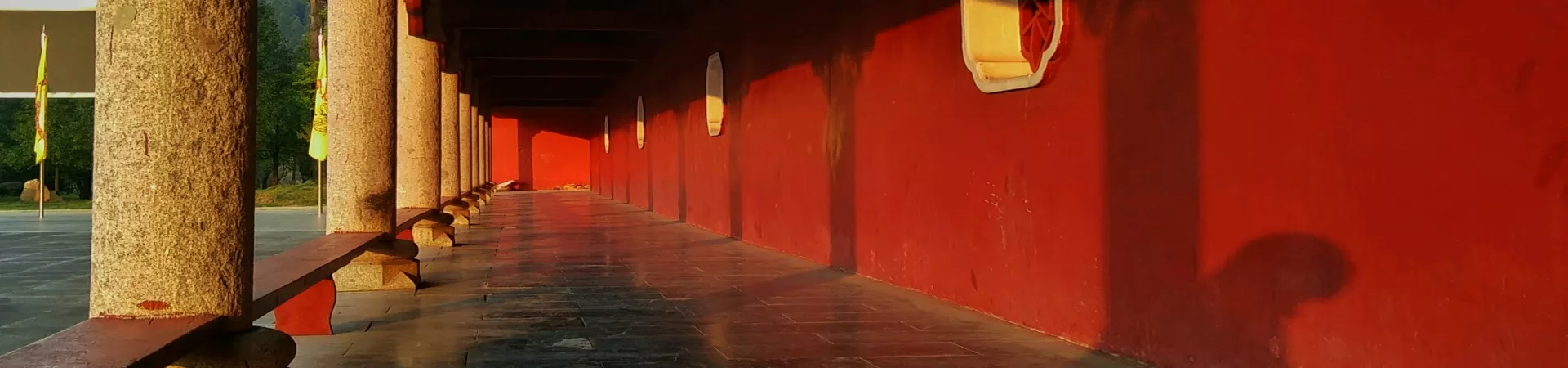
Subtitle: A Journey to the Sacred Mausoleum of Emperor Shun, the Legendary Sage King of Ancient China
1. Introduction: The Sacred Grounds of a Legendary Emperor
Nestled within the majestic Jiuyi Mountain range, approximately thirty kilometers south of Ningyuan County in Yongzhou, Hunan Province, lies one of China's most venerable historical and cultural sites: the Mausoleum of Emperor Shun. Revered as the "Jiuyi Holy Land" and the "Source of Virtue and Filial Piety," this area is intrinsically linked to the legacy of Emperor Shun, one of the legendary "Five Emperors" who are considered foundational figures of Chinese civilization. As the ancestral mausoleum for a paramount cultural hero, it transcends being merely a tourist attraction; it is a pilgrimage site that embodies the enduring Chinese values of benevolent governance, moral integrity, and familial devotion. Designated as a National AAAA-level tourist attraction and a provincial-level scenic area, the Shun Emperor Mausoleum complex offers visitors a profound opportunity to connect with the deepest roots of Chinese heritage amidst a setting of solemn architectural grandeur and natural beauty.
2. Architectural Grandeur and Layout: The "First Mausoleum in Huaxia"
The mausoleum complex, covering an expansive area of 50,000 square meters, is renowned for its imposing scale and meticulous traditional design. It holds the distinction of being the largest and tallest among the mausoleums dedicated to China's legendary primordial emperors, earning it the honorific title "Huaxia Di Yi Ling" or "The First Mausoleum in China."
2.1 Spatial Organization and Key Structures The site is meticulously arranged into two natural courtyards, enveloped by palace walls on three sides, and comprises nine principal buildings aligned along a central axis that guides visitors on a symbolic journey into the past. The approach itself is part of the experience, beginning with the elegant Jade Belt Bridge. Passing through the Ceremonial Gate, visitors walk along the sacred Spirit Way, a path historically reserved for ceremonial processions, leading to the main entrance, the Mountain Gate.
2.2 The Core Ritual Precincts Beyond the Mountain Gate lies the Qian Gate, the formal gateway to the innermost ceremonial courtyards. The heart of the complex is defined by three successive and increasingly sacred halls. The Worship Hall (Bai Dian) serves as the space for paying respects and conducting commemorative rituals. Directly behind it stands the magnificent Main Hall (Zheng Dian), the architectural and spiritual centerpiece of the complex, which houses statues and tablets dedicated to Emperor Shun. Finally, the Resting Hall (Qin Dian) symbolizes the eternal chamber of the emperor. Flanking these central structures are the East and West Wing Rooms, which historically served auxiliary functions and now often contain cultural exhibits, along with the East and West Stele Rooms and Stele Corridors. These latter structures house a valuable collection of stone tablets inscribed with historical records, poems, and edicts from various dynasties, forming an invaluable archive carved in stone.
3. Practical Visitor Information
To facilitate a smooth and enriching visit, the following practical details are essential for planning.
3.1 Ticket Information Admission to the Shun Emperor Mausoleum scenic area requires the purchase of an entrance ticket. The standard fare is set at 80 RMB per person for adults. It is advisable to check for any potential discounts for students, seniors, or children at the ticket office, as policies may vary.
3.2 Opening Hours The operating hours of the mausoleum vary seasonally to accommodate daylight conditions: * Summer Season (June 1 - August 31): The site is open from 08:00 to 17:30, with the last admission allowed at 17:00. * Winter Season (December 1 - February 28/29): Hours are from 08:30 to 17:00, with the last entry at 16:30. Visitors should allocate sufficient time to explore the extensive grounds thoroughly, with a typical visit lasting three hours or more.
3.3 Transportation Guide Reaching the mausoleum is straightforward. For travelers using public transport, the primary hub is the Shuishi Parking Lot in Ningyuan County Town. From this point, direct minivans or medium-sized buses regularly depart for the Shun Emperor Mausoleum scenic area. The journey covers about 30 kilometers and is remarkably affordable, with a standard fare of only 5 RMB per person. For those preferring private transport, taxis or ride-hailing services are also available from Ningyuan, offering greater flexibility albeit at a higher cost.
4. The Cultural and Historical Significance of Emperor Shun
Understanding the figure honored here deeply enriches the visitor's experience. Emperor Shun, a semi-mythical ruler from the 22nd-21st century BC, is celebrated in Chinese historiography as a model of virtuous leadership. His story, passed down through classics like the "Book of Documents," emphasizes his exceptional filial piety despite a challenging family background, his humility, and his wise, compassionate governance based on moral example rather than coercion. He is traditionally credited with standardizing rituals, calendars, and weights and measures, and for selecting his successor, Yu the Great, based on merit—a foundational narrative for the Chinese political ideal of abdicating to the most capable. His alleged burial place at Jiuyi Mountain has been a site of imperial worship and scholarly pilgrimage for millennia. The current architectural ensemble, while reflecting Ming and Qing dynasty styles, stands on ground steeped in this continuous tradition of reverence. Thus, a visit to the mausoleum is not just an architectural tour but an engagement with the core ethical and philosophical ideals—virtue (De) and filial piety (Xiao)—that have shaped Chinese society for centuries. The serene atmosphere of the Jiuyi Mountains provides a fittingly contemplative backdrop for reflecting on this enduring legacy.