Longhu Mountain - Luxi River
Subtitle: A Journey Along Luxi River: From Wuyi Mountains to the Xinjiang River
Introduction: The River's Course and Character Flowing through the picturesque landscapes of Jiangxi Province, the Luxi River is a serene tributary of the larger Xinjiang River. Its journey, marked by changing names and scenery, offers a microcosm of the region's natural beauty, from mountainous origins to its confluence with a major waterway. The river's name itself is a testament to the places it touches; known as the Luxi River along its middle reaches as it passes the town of Shanglu, it transforms into the Shixi River near the village of Shixi in Yanshan County, before finally merging with the Xinjiang River at that point. This gentle watercourse is more than just a geographical feature—it is a ribbon of life, history, and recreational potential winding through Shangrao.
1. The Source and Upper Reaches: A Reservoir's Serenity 1.1. Origin in the Wuyi Mountains The Luxi River begins its life on the northern slopes of the famed Wuyi Mountains, a UNESCO World Heritage Site known for its biodiversity and dramatic landscapes. These forested highlands provide the pure, initial waters that gather to form the river's headwaters.
1.2. The Da'ao Reservoir: Shangrao's Largest Artificial Lake A significant feature of the upper river is the Da'ao Reservoir. As Shangrao's largest artificial lake, it serves crucial functions in water conservation, irrigation, and power generation. For visitors, the reservoir presents a vast, tranquil expanse of water, ideal for sightseeing and appreciating the calm, mountainous surroundings that contrast with the river's later, more animated flow.
2. The Middle and Lower Reaches: Towns, Gorges, and Confluence 2.1. Passing Through Shanglu: The Namesake Stretch The river earns its most common name, Luxi, as it navigates its middle section through Shanglu Town. This area often features more accessible banks and reflects the everyday life of local communities connected to the water.
2.2. The Shixi Section and Final Journey As it continues downstream, the river approaches the area of Shixi in Yanshan County, where it is locally known as the Shixi River. This final stretch carries the river towards its ultimate destination. The confluence with the mighty Xinjiang River at Shixi is a notable geographical point, symbolizing the end of the Luxi River's independent journey as its waters join a larger system flowing towards Poyang Lake and the Yangtze.
3. Visitor Information and Practical Details 3.1. Access and Transportation The Luxi River area is accessible via public transportation. A primary option is the K2 public bus route, which connects key areas in Yingtan and provides access to points near the river and the broader Longhushan (Dragon & Tiger Mountain) scenic area, with which the river is closely associated. Private vehicles or taxis offer more flexibility for exploring specific sections.
3.2. Admission and Operating Hours A visit to the core scenic zones along the Luxi River typically requires an entrance fee. * Ticket Price: Approximately 28 RMB per person. * Opening Hours: The site is generally open from 08:20 to 17:30 daily. Last admission is at 17:30. These hours are consistent throughout the year. * Admission Note: It is important to clarify that children eligible for free admission must be accompanied by a paying adult for safety and supervisory reasons.
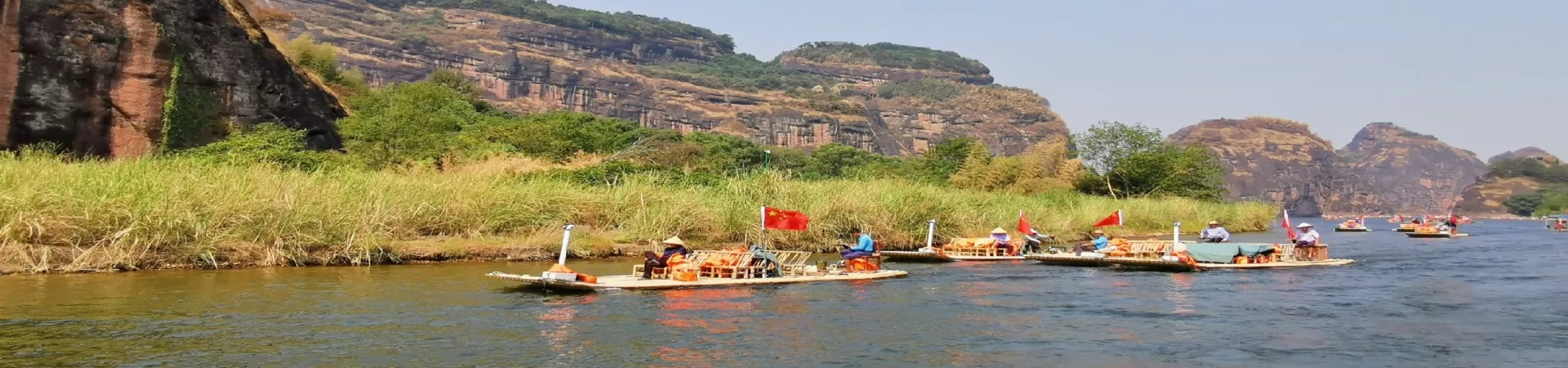
4. Experiencing the Luxi River 4.1. Suggested Duration and Activities A visit to the Luxi River can be tailored to your interests. A minimum of 1-3 hours is recommended to enjoy a basic sightseeing tour or a short walk along its banks. However, the river is best experienced as part of a full-day exploration of the Longhushan UNESCO Global Geopark. Here, the primary activity is a scenic bamboo raft ride along the clear, green waters of the Luxi River. This tranquil journey floats passengers past the park's most stunning natural attractions.
4.2. The Bamboo Raft Journey: A Highlight Gliding down the river on a traditional bamboo raft is the quintessential Luxi experience. The calm water reflects the stunning red sandstone Danxia cliffs that tower overhead. As you drift, your guide will point out fascinating rock formations naturally sculpted into shapes that resemble animals, faces, and mythical figures, each with its own story. You'll pass ancient "cliff tombs" hanging high on the canyon walls, mysterious burial sites of the ancient Guyue people dating back over 2,600 years. This peaceful voyage is a perfect blend of natural beauty, geological wonder, and historical intrigue.
4.3. Contact Information For specific inquiries regarding the Luxi River scenic area within the Longhushan park, visitors can contact the local management office at 0701-7176096.
5. Ecological and Cultural Significance Beyond tourism, the Luxi River is an vital ecological corridor. Its waters support diverse flora and fauna and contribute to the regional ecosystem's health. Culturally, the river has been a constant presence for millennia, witnessing the rise of Taoism at Longhushan, the practices of ancient civilizations, and the daily rhythms of local life. It remains a source of inspiration, sustenance, and tranquility. A journey along the Luxi River is therefore not just a scenic outing but a gentle voyage through the living landscape and layered history of Jiangxi.