Tianbao Village
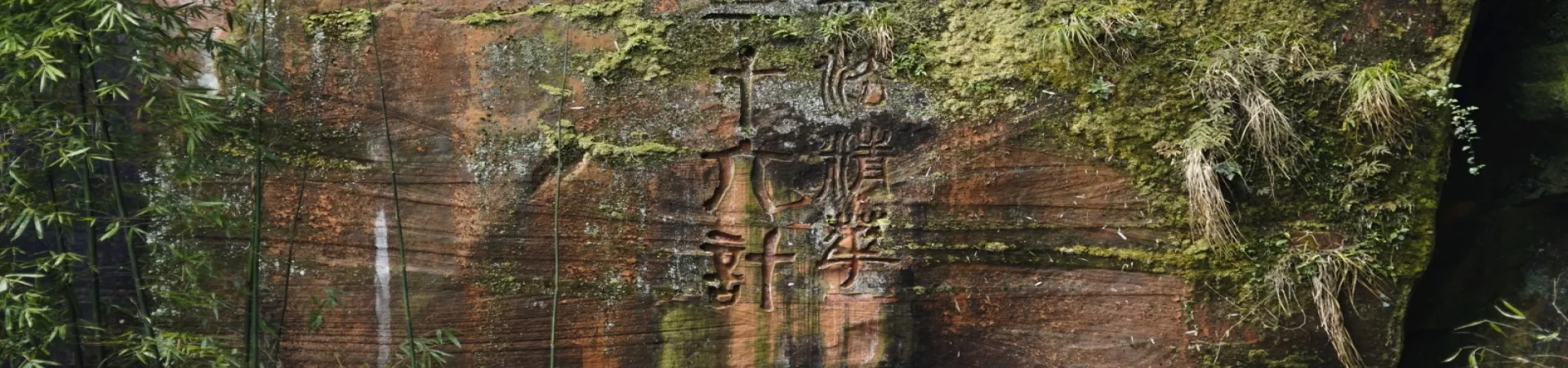
Subtitle: A Journey Through Time and Stone: Exploring Tianbao Village, Yibin's Cliffside Fortress
Introduction: A Fortress in the Clouds
Nestled within the breathtaking expanse of the Bamboo Sea in Southern Sichuan (Shunan Zhuhai), near the city of Yibin, lies a remarkable feat of human ingenuity and natural architecture: Tianbao Village, also known as Tianbao Cave. This is not a village in the conventional sense, but a vast, serpentine fortress carved into and sheltered by the sheer face of a towering cliff. Located on the southern edge of the Bamboo Sea, to the east of the mystical Xianyu Cave, Tianbao Village presents a dramatic spectacle. It clings precariously to the rock, a silent sentinel overlooking a sea of emerald-green bamboo that sways in the mountain winds below. The journey here is as much about immersing oneself in the serene beauty of one of China's most famous bamboo forests as it is about stepping back in time to explore a site steeped in legend, conflict, and resilience.
1. Architectural Marvel: Between Rock and Sky
1.1. Scale and Structure Tianbao Village is an engineering marvel that harmonizes with its formidable natural setting. The complex stretches approximately 1,500 meters (nearly a mile) along the cliffside, with an average height of 20 meters and width of 10 meters. This creates a long, sheltered corridor high above the ground. Its formation is a fascinating blend of nature and human effort; the roof is entirely composed of solid rock, with large sections being natural overhangs and recesses of the cliff itself, while other parts were painstakingly enlarged and shaped by hand. This combination results in a continuous, sheltered passageway that feels both organic and deliberately crafted.
1.2. A Daunting Precipice The site's defensive genius is immediately apparent from its location. The village path runs along a ledge where the cliff face curves inward, providing a natural roof. Above it, the rock continues to soar skyward in a "sheer cliff that scrapes the heavens." Below, the view is not for the faint of heart—a vertiginous drop of hundreds of meters, a "precipice of a thousand ren," presents a sheer, smooth face that is utterly impassable. This geography made the village virtually inaccessible from below and extraordinarily difficult to assault from above, fulfilling the ancient military axiom of occupying an easily defensible position.
2. Layers of History: From Rebel Stronghold to Gentry Refuge
The true allure of Tianbao Village lies in the layers of history etched into its stone walls, a narrative pieced together from local lore and historical fragments.
2.1. Ancient Origins and the "Man Army" The earliest legends speak of the site's use by ancient indigenous groups, often referred to in historical texts as the "Man army." These groups are said to have utilized the natural caves as a fortified mountain stronghold, a base from which they could exert control over the surrounding region. This origin story roots the site in the mysterious and often untold histories of Sichuan's early inhabitants.
2.2. The Taiping Rebellion and the Thirteen Gates The most prominent historical tale dates to the turbulent 19th century. According to local tradition, Tianbao Village, in its current elaborate form, was constructed around 1862 during the Qing Dynasty's Xianfeng era. The purpose was starkly practical: to serve as a defensive bulwark for local authorities against the advancing forces of the Taiping Rebellion, led by the famed commander Shi Dakai, as they moved towards Sichuan. The fortress's most iconic defensive features date from this period: thirteen meticulously crafted, solid stone gateways. These gates, strategically placed at intervals along the narrow passage, created a series of deadly chokepoints. Each gate could be sealed and defended independently, meaning any attacker who breached one would immediately face the next under a hail of projectiles from above. This design made the stronghold "easily defensible and hard to attack," a nightmare for any besieging force.
2.3. Republican Era Sanctuary The village's role as a sanctuary endured into the 20th century. In the chaotic early years of the Republic of China, when banditry was rampant across much of the countryside, the local gentry and wealthy families sought safety. They turned once again to the impregnable Tianbao Village, moving their households and valuables into its sheltered confines to protect themselves from roaming gangs of thieves and outlaws. Thus, the site transitioned from a military garrison to a temporary residential refuge, its stone halls echoing with the domestic lives of those seeking peace in a time of disorder.
3. The Visitor's Experience: Practical Information
Exploring Tianbao Village is a captivating addition to any visit to the Shunan Bamboo Sea Scenic Area. Visitors should allocate 1 to 3 hours to fully traverse the lengthy cliffside path, absorb the panoramic views, and contemplate the historical echoes within the stone gates. The pathway, while safe, involves walking along a cliff edge, offering thrilling vistas but requiring sensible footwear and caution.
3.1. Access and Admission Access to Tianbao Village is included within the general admission ticket for the Shunan Bamboo Sea (Bamboo Sea in Southern Sichuan) Scenic Area. There is no separate entrance fee for the fortress itself. Visitors must first travel to the main scenic area, a renowned destination famous for its rolling hills covered in endless bamboo groves, clear streams, and fresh air.
3.2. Operating Hours The site is accessible 24 hours a day, every day of the year. However, practical visitation is, of course, subject to daylight hours and weather conditions. The experience can be particularly atmospheric in the early morning mist or during the soft light of late afternoon.
3.3. Contact and Further Inquiry For the most current information regarding access, weather conditions, or the broader Bamboo Sea park, visitors can contact the scenic area administration. Relevant phone numbers include 0831-8885199 and 0831-4980456.
4. The Enduring Legacy: More Than Just Stone
Walking through Tianbao Village today is a multi-sensory historical dialogue. The cool, damp air of the cave passage, the rough texture of the hand-chiseled walls beside smooth natural rock, the awe-inspiring views of the boundless Bamboo Sea below, and the tangible presence of the massive stone gateways all work in concert. One can almost hear the echoes of sentries' footsteps, the clamor of a gate being secured, or the quiet conversations of families sheltering from turmoil. It stands as a powerful testament to the human instinct for protection and perseverance. It is a monument not to a single event, but to the recurring human need for security in the face of uncertainty, beautifully and enduringly answered in stone and strategic genius amidst one of Sichuan's most peaceful and picturesque landscapes.