Penglai Pavilion
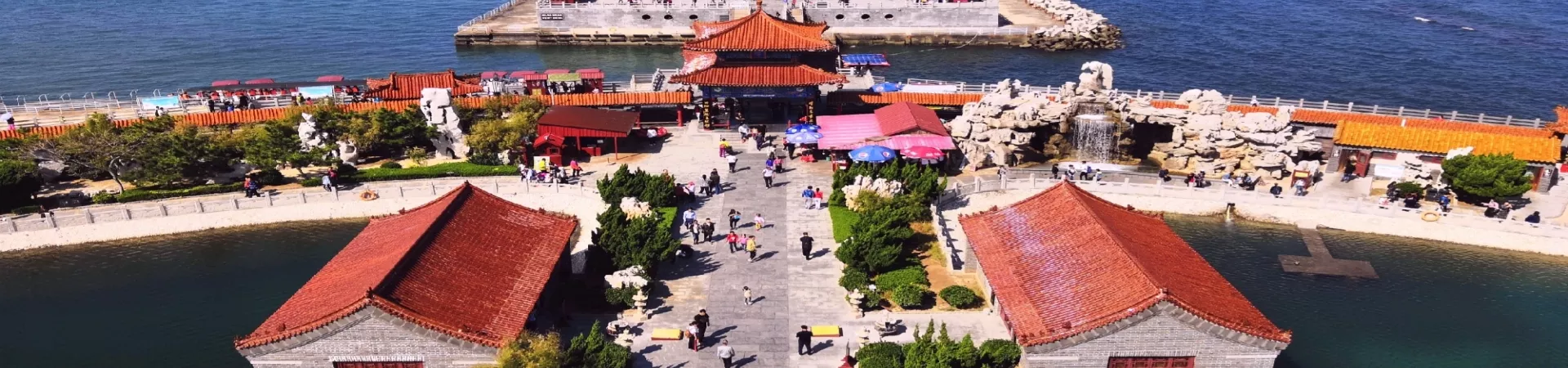
Subtitle: A Journey to the Ethereal Realm: Your Essential Guide to Penglai Pavilion
Introduction: The Pavilion in the Mist Nestled on the northern coast of Shandong province, Penglai Pavilion stands as a timeless monument to Chinese mythology and maritime grandeur. Often shrouded in ethereal sea mist, this iconic structure is not merely a building but the very embodiment of the "Land of Immortals" in the Chinese imagination. Alongside the Yellow Crane Tower, Yueyang Tower, and Tengwang Pavilion, it is revered as one of China's Four Great Ancient Towers. A visit here is less a simple tourist excursion and more a pilgrimage into the heart of ancient legend, where the lines between history, poetry, and myth beautifully blur against the backdrop of the endless sea.
1. The Legendary Realm: Myth and Landscape 1.1. Birthplace of the Eight Immortals The fame of Penglai Pavilion is inextricably linked to the beloved myth of the "Eight Immortals Crossing the Sea." It is from this very location that these iconic deities, each wielding a magical instrument, are said to have embarked on their legendary journey across the ocean, symbolizing the triumph of collective wisdom and supernatural power. This tale has been passed down through centuries, deeply embedding the site in China's cultural consciousness as a gateway to the celestial realms.
1.2. The Elusive Mirage: Sea of Clouds and Phantom Cities The geographical setting of Penglai is as magical as its stories. Perched on Danya Mountain overlooking the Bohai Sea, the pavilion is frequently enveloped in rolling sea fog, creating a perpetually dreamlike and mysterious atmosphere that perfectly justifies its "fairyland" reputation. On rare and fortunate days, nature performs its most spectacular illusion: the "Penglai Mirage" (Haishishenlou). This breathtaking optical phenomenon, where distant objects or phantom cities appear suspended over the water, has captivated observers for millennia, fueling ancient beliefs that this was a portal to the immortal islands of Penglai, Fangzhang, and Yingzhou.
2. Exploring the Penglai Pavilion Scenic Area The experience extends far beyond the main pavilion itself. The entire scenic area is a rich tapestry of cultural, historical, and natural wonders.
2.1. The Architectural Heart: Penglai Pavilion Complex The main pavilion complex is a masterpiece of ancient Chinese architecture. A series of temples, halls, and pavilions—such as the Dragon King Palace, the Goddess of the Sea Temple, and the Amitabha Buddha Temple—climb the hillside, leading visitors on an upward journey through different spiritual and cultural layers. The architectural style, with its upturned eaves, intricate woodwork, and vibrant colors, harmonizes powerfully with the rugged coastal landscape.
2.2. Key Attractions Within the Park * Tianheng Hill: Located at the western end of the scenic area, this hill offers stunning panoramic views and is named after the loyal general Tian Heng of the Qi kingdom. Its cliffs and fortifications tell tales of ancient military defense. * Dengzhou Museum & Ancient Ship Museum: These museums provide crucial historical context. The Dengzhou Museum delves into the local history of the region, a vital ancient port. The Ancient Ship Museum is a particular highlight, showcasing remarkably well-preserved shipwrecks and artifacts that illuminate China's illustrious maritime history and the significance of the Maritime Silk Road. * The Yellow and Bohai Seas Boundary Line: One of the area's most fascinating natural spectacles is visible from the vantage points on the cliffs. Here, one can witness the distinct demarcation where the Yellow Sea and the Bohai Sea meet. Due to differences in salinity, depth, and sediment, the two bodies of water often display a visible line of separation—a striking contrast of yellow and blue hues churning side-by-side. On clear days, the view extends across the strait to the picturesque Long Island (Changdao) archipelago.
3. Essential Visitor Information 3.1. Tickets and Opening Hours * Opening Hours: 07:30 - 17:00 daily (last entry at 16:00). These hours may be subject to seasonal adjustments. * Ticket Prices: * Standard Adult Ticket: 100 RMB. * Student Ticket (with valid ID): 50 RMB for full-time university students and below. * Penglai Citizen Ticket (with ID): 10 RMB. * Discounts and Exemptions: Children under 6 (or under 1.4m tall), seniors aged 60 and over, active-duty military personnel, disabled visitors, and others are eligible for free admission upon presentation of valid official documentation. It is crucial to verify the latest policy details on the official website before your visit. * Important Booking Note: Standard tickets must be booked at least one day in advance. Tickets purchased on the day of visit cannot be used for entry until the following day. "Same-day" tickets must be purchased at least 20 minutes before the planned entry time.
3.2. Getting There The most convenient way to reach Penglai Pavilion is by public bus from Penglai city center. Several bus lines will get you close: * Recommended Bus Routes: Penglai Bus No. 3, No. 5, No. 8, or the Penglai Tourist Sightseeing Bus. * Alight At: Get off at either the "Former Normal School" (Yuan Shifan Xuexiao) or "Eight Immortals Sculpture Square" (Baxian Diaoxiang Guangchang) bus stop. * Final Stretch: From either stop, it is a pleasant and well-signposted walk of approximately 650 meters to the scenic area entrance.
4. Planning Your Visit 4.1. Suggested Duration To fully appreciate the main pavilion complex, museums, and scenic viewpoints at a comfortable pace, allocate between 2 to 4 hours. Visitors with a deep interest in history or photography may wish to plan for a longer stay.
4.2. Best Time to Visit While accessible year-round, the ideal seasons are spring (April to June) and autumn (September to October), when the weather is mild, and visibility is generally good. Summer can be foggy and crowded, but it also increases the slight chance of witnessing the mirage. Winter offers stark, dramatic coastal scenery with fewer visitors.
4.3. Tips for an Enhanced Experience * Wear comfortable walking shoes with good grip, as the exploration involves climbing stone steps and walking along cliff-side paths. * Bring a jacket or windbreaker even in warmer months, as the coastal breeze can be strong and cool. * For the best chance of clear views (though not necessarily of the mirage), aim for an early morning visit after a day of strong northerly winds, which may help clear the sea mist. * Keep your ticket handy, as it may be checked at various sub-attractions within the large park. * Combine your trip with a visit to the nearby Eight Immortals Crossing the Sea sculpture complex or a coastal walk for a complete mythological experience.