Mengding Mountain
Subtitle: A Journey to the Misty Birthplace of Tea
1. Introduction: The Enigmatic Mountain of Eternal Mist and Tea
Nestled within the territory of Ya'an City in Sichuan Province, China, lies Mengding Mountain, a place shrouded in legend and mist. Its very name, "Mengding," meaning "Misty Summit," is derived from the perpetual "rainy haze" that envelops its peaks. With an annual rainfall exceeding 2000 millimeters, it was historically known as "West Shu's Leaky Sky." However, Mengding Mountain's true global significance stems from its profound historical role as the birthplace of cultivated tea, earning it the revered title of "Sacred Mountain of World Tea Culture." This is not merely a scenic area; it is a living museum of natural beauty and ancient agricultural heritage, where every misty breeze carries the weight of over two millennia of tea history.
2. The Cradle of Tea Culture: A Legacy Steeped in History
2.1. The Perfect Environment The ascendancy of Mengding Mountain as the origin of tea is no accident. Its specific altitude, fertile soil, and uniquely humid, misty climate create an ecosystem perfectly suited for the cultivation of tea plants. This exceptional terroir provided the foundation for a revolution in human horticulture.
2.2. Wu Lizhen: The Pioneer Tea Master The history of intentional tea cultivation began here over two thousand years ago during the Western Han Dynasty. A man named Wu Lizhen, now revered as the founding patriarch of Mengding tea, first domesticated wild tea trees on these slopes. His successful efforts marked the definitive shift from foraging wild tea to its organized cultivation, an event of monumental importance in agricultural and cultural history.
2.3. Imperial Endorsement and Lasting Fame The reputation of Mengshan tea (tea from Mengding Mountain) soared during the Tang and Song Dynasties, reaching its zenith. In 724 AD, during the Tang Emperor Xuanzong's reign, it was officially designated as a Tribute Tea (Gong Cha). This prestigious status meant it was reserved exclusively for the emperor, used in sacred rituals to worship heaven, earth, and imperial ancestors. This imperial endorsement continued unbroken for an astonishing twelve hundred years, lasting through various dynasties until the Qing Dynasty. Such sustained recognition is a testament to the unparalleled and consistent quality of tea produced on this sacred mountain.
3. Exploring the Scenic Area: Landscapes of Serenity and Grandeur
As one of Sichuan's first provincial-level scenic areas, the Mengding Mountain Scenic Spot encompasses the main mountain area and the nearby Baizhang Lake.
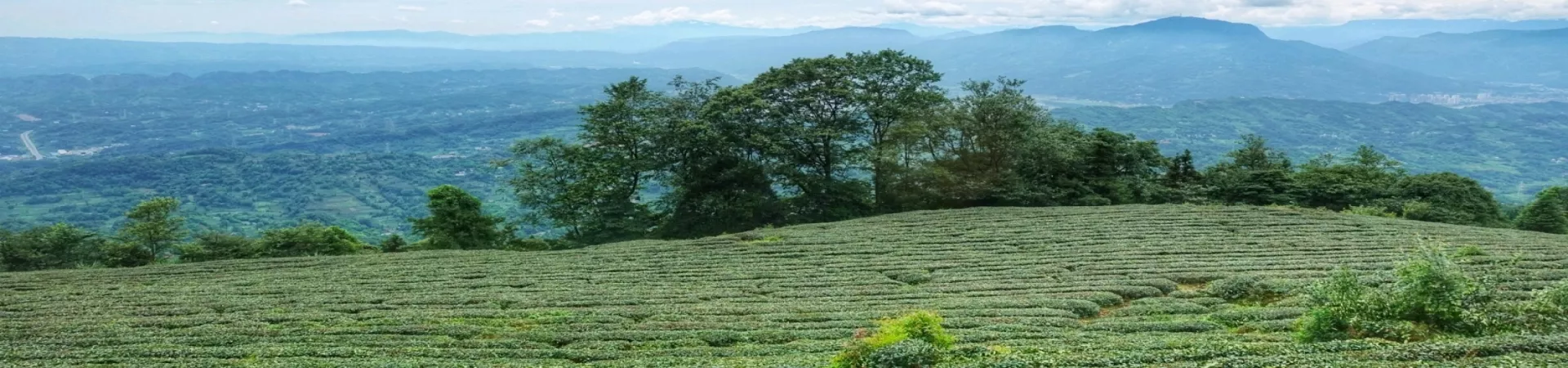
3.1. The Foothills: Verdant Tea Terraces The journey begins at the mountain's base, which is characterized by the idyllic rural scenery of western Sichuan. Dense groves of bamboo and meandering streams embrace traditional farmhouses. From the mid-mountain elevations (approximately 80 to 1000 meters), vast, rolling tea plantations unfold from west to east. These meticulously maintained terraces appear as cascading waves of emerald and jade green, creating a breathtaking and serene panorama that is both grand and soothing.
3.2. Ancient Temples Amidst the Greenery Dotting this sea of green are ancient Buddhist temples, their red walls and elegant architecture offering a striking contrast to the lush surroundings. Temples like Yongxing Si, Tiangai Si, Qianfo Si, and Jingju Nunnery sit peacefully amidst the tea gardens and forest mist. These sacred sites add a layer of spiritual tranquility and historical depth to the landscape, inviting contemplation.
3.3. The Forest Realm and Ancient Wonders Above the tea gardens lies the expansive forest zone. A mixed forest of evergreen coniferous and broad-leaved trees blankets the terrain, ensuring a year-round canopy of lush greenery that becomes particularly vibrant in spring and summer. A remarkable feature near the main peak is an ancient grove of Ginkgo biloba trees. These giants, many over a thousand years old, stand tall and majestic. In spring and summer, they form vast green canopies; in autumn, their leaves turn into a spectacular cloud of gold, visible from miles away.
4. The Ever-Changing Atmosphere: Mist, Clouds, and Light
The local saying, "Ya'an has abundant rain, with Meng Mountain at its heart," perfectly captures the mountain's dynamic atmosphere. The high precipitation gives rise to ever-shifting clouds and mist, which sculpt the landscape into endlessly varying scenes.
4.1. Spectacular Vistas from Above and Below During spring, summer, and autumn, viewing from the mountain tops offers a surreal spectacle. Thick, flowing clouds and mist fill the valleys and cling to the ridges, with smaller hilltops peeking through like islands in a celestial sea, reminiscent of a fairyland palace. In winter, the perspective shifts. Looking up from the foothills, one might see the trees adorned with icy crystals and snow, while clouds wrap around the mountain's waist, creating a dreamlike, ethereal scene.
4.2. The Magic of Dawn and Dusk At sunrise, the first rays of light diffuse through the mist, bathing the mountain in a golden glow with streaks of red cloud floating past. The smaller hills, seen from above, resemble phoenixes bathing in the early morning sun. As evening falls, the vantage point from the mountain offers a stunning contrast: the twinkling lights of the distant cities of Mingshan and Ya'an begin to shine like a field of stars fallen to earth, a peaceful and mesmerizing conclusion to the day.
Practical Information for Visitors
- Suggested Visit Duration: A minimum of 3 hours is recommended to appreciate the tea gardens, temples, and natural scenery. A half-day or full day allows for a more immersive and leisurely experience.
- Admission Fee:
- Standard Ticket: 45 RMB (per adult).
- Concession Ticket (Half-price): Available for full-time students (with valid student ID, excluding adult education and postgraduate students) and children with a height between 1.2 meters (inclusive) and 1.4 meters (inclusive).
- Opening Hours: 08:30 - 18:30, daily throughout the year.
Information last updated: August 24, 2023.