Sichuan Dadu River Canyon National Geopark
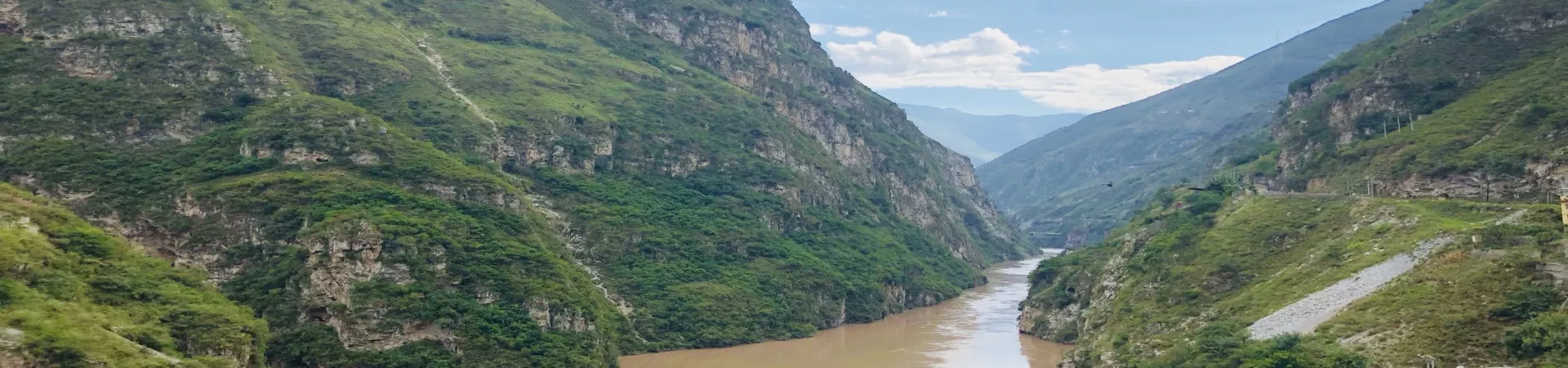
Subtitle: A Journey into the Depths: Unveiling the Majesty of Sichuan's Dadu River Canyon National Geopark
1. Introduction: A Colossal Natural Sculpture Nestled at the convergence of three distinct regions—Jinkouhe District in Leshan City, Hanyuan County in Ya'an City, and Ganluo County in the Liangshan Yi Autonomous Prefecture—lies a geological masterpiece of staggering proportions: the Dadu River Canyon National Geopark. Encompassing approximately 404 square kilometers in central Sichuan Province, this park is not merely a landscape but a profound testament to the immense, patient power of water over millennia. It presents a textbook example of river erosion canyon landforms, where the relentless force of the Dadu River has carved and sculpted the earth into a scene of breathtaking, awe-inspiring grandeur. This is a destination that demands to be felt as much as seen, a place where the scale of nature humbles and exhilarates in equal measure.
2. The Canyon's Immense Scale and Geology 2.1. Dimensions that Defy Belief The raw statistics of the Dadu River Canyon are its first and most compelling argument for a visit. The primary canyon stretch extends for roughly 26 kilometers, with its width varying dramatically between 70 and 150 meters. In its most constricted passages, the cliffs narrow to less than 50 meters apart, creating an intimate, powerful channel for the rushing river below. However, it is the vertical scale that truly sets this canyon apart. With a total relief ranging from 1,000 to 1,500 meters from river to rim, and reaching a maximum depth of approximately 2,600 meters, the Dadu River Canyon stands as one of the deepest gorges on Earth.
2.2. A Comparative Perspective on Grandeur To fully grasp this depth, consider this: it is nearly double the depth of the famed Three Gorges of the Yangtze River. Even more strikingly, it surpasses the depth of the iconic Grand Canyon in the United States by about 860 meters. This vertical magnitude is the source of the canyon's overwhelming "qishi xiongwei"—its majestic and imposing atmosphere. Visitors gazing from the rim are met with a dizzying vista where the river appears as a distant, silvery thread, and the stratified rock walls tell a silent, billion-year-old story of tectonic uplift and relentless erosion.
3. Practical Information for Visitors 3.1. Accessibility and Location The geopark is situated in a relatively remote and culturally rich part of Sichuan. Its location straddling administrative boundaries means visitors often approach from key hubs like Ya'an, Leshan, or Hanyuan. The journey to the canyon itself is part of the adventure, offering glimpses into the diverse topography and communities of the region. While infrastructure has improved, the terrain demands careful planning. Travelers should prepare for mountain roads and allocate sufficient time for transit to and from major cities.
3.2. Admission and Operating Hours One of the most visitor-friendly aspects of the Dadu River Canyon National Geopark is its accessibility. The park operates with no admission fee, making this natural wonder freely available for all to experience. It is open 24 hours a day, every day of the year. This policy allows for incredible flexibility in planning. Visitors can chase the perfect morning light as it illuminates the canyon walls, enjoy a full day of hiking and exploration, or even contemplate the star-filled sky over the immense chasm after dark. However, the "open all hours" access necessitates personal responsibility; visitors must assess trail conditions, weather, and their own preparedness, especially for any activities undertaken outside of daylight hours.
4. Experiencing the Geopark 4.1. Suggested Duration and Activities While the park is always open, a meaningful visit requires a significant time investment. It is recommended to allocate a minimum of three hours, though a full day or more is ideal to appreciate its scope without rush. The experience can be tailored from leisurely sightseeing to active adventure.
4.2. Viewpoints and Trails The primary activity for most visitors is exploring the various viewpoints and trails along the canyon rim. These engineered paths and platforms provide safe yet thrilling perspectives into the abyss. The play of light and shadow across the rock faces changes throughout the day, offering endless photographic opportunities. The sound of the wind and the distant roar of the river far below create a powerful sensory experience.
4.3. Cultural and Ecological Context Beyond the geology, the canyon is embedded within a vibrant ecological and cultural tapestry. The steep slopes are home to unique microclimates and resilient plant life. The surrounding areas are inhabited by Yi and Han communities, whose cultures have adapted to this dramatic landscape over centuries. While the core geological focus is the canyon itself, this human and natural context enriches the visit, reminding us that such landscapes are both natural cathedrals and living homelands.
4.4. Preparation and Considerations Given the rugged environment, preparation is key. Sturdy walking shoes, protection against sun or rain, ample water, and snacks are essential. As services within the immediate canyon area may be limited, bringing necessities is advised. Visitors should always stay on designated paths, heed safety warnings, and be aware that weather in mountainous regions can change rapidly, affecting visibility and trail conditions.