Yaowan Ancient Town
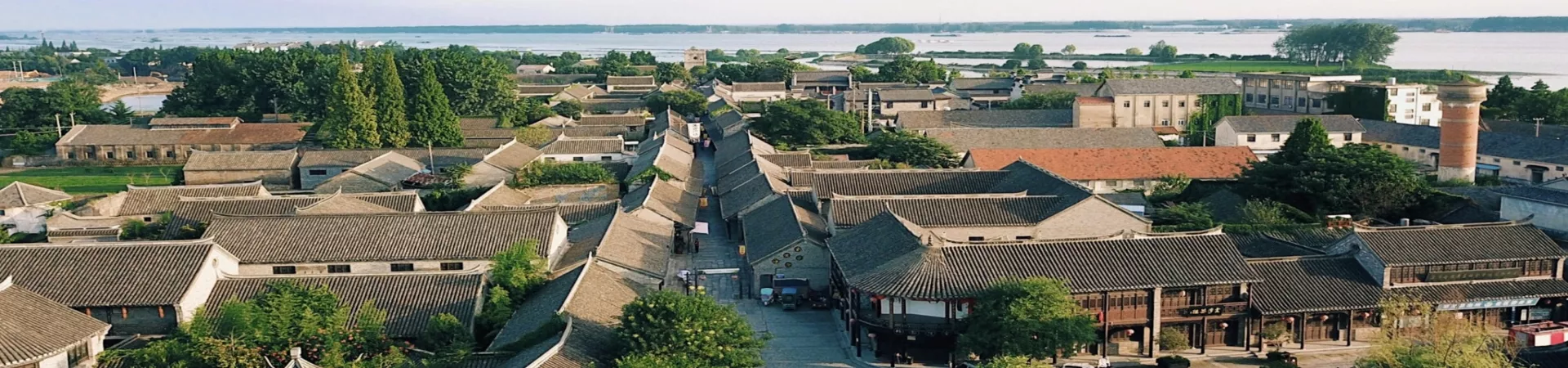
Subtitle: A Journey Through Time: Unveiling the Ancient Charms of Yaowan, a Canal Town Reborn
1. Introduction: Where Waterways Forged a Town's Destiny
Nestled at the unique confluence of the ancient Grand Canal and the vast Luoma Lake, the town of Yaowan boasts a history stretching back over two millennia. Its very name, "Yaowan" (Kiln Bay), speaks to its geographical and artisanal origins. Situated precisely at a bend in the mighty Grand Canal, the town's foundation was shaped by the very forces of nature. Frequent floods from surrounding hills deposited immense quantities of fine silt and clay—serendipitously, the perfect raw material for pottery. Thus, the craft of firing bricks and tiles from the earth became a cornerstone of local livelihood, giving the settlement its enduring identity. This strategic location, a vital hub where water met land, destined Yaowan for a role far beyond its kilns. Described historically as "where a rooster's crow is heard across four counties," it sits at the intersection of Xinyi, Pizhou, Suining, and Suyu districts. Poetic accounts laud its panoramic significance: "gazing east towards the sea, overlooking the Huai and Si rivers to the south, turning to view Pengcheng (Xuzhou) in the west, and contemplating Mount Tai to the north." Centuries ago, its waterfront was a scene of constant bustle, with the 500-meter-wide canal bustling with vessels, marking it as a key national transport node and a prosperous commercial crossroads.
2. Architectural Heritage: Strolling Through Ming and Qing Dynasty Streets
The town's architectural soul is preserved in its two main thoroughfares, which took shape during the late Ming and early Qing dynasties and retain their original character to this day.
2.1. Zhongning Street: A Lane Frozen in Time Stretching approximately 500 meters in length and a mere three meters in width, Zhongning Street offers an intimate journey into the past. Its path is paved with worn bluestone slabs, flanked on both sides by traditional wooden-fronted shops and residences. The narrow lane, shaded by historic eaves, evokes the daily rhythms of merchant life from centuries past, providing a tangible connection to the town's commercial heartbeat.
2.2. West Street: Mansions, Workshops, and Local Flavors West Street houses several of Yaowan's most significant and well-preserved sites. The Wu Family Compound stands as a testament to the wealth and architectural sophistication of the town's former merchant elites. Nearby, the Zhao Xinlong Soy Sauce Garden offers insight into the traditional fermentation industries that thrived here, its aging urns still carrying the deep aromas of its craft. Perhaps most famously, the Mung Bean Burn (Lüdou Shao) Distillery continues the legacy of producing Yaowan's distinctive herbal liquor, a unique local specialty with a history as rich as its flavor.
3. Cultural Landscape: A Tapestry of History and Nature
Beyond the main streets, Yaowan's cultural landscape is remarkably dense. According to cultural relics surveys, the town preserves 834 rooms of ancient residential architecture. Scattered throughout are numerous other historical sites including old guildhalls, ancient temples, stone tablets, pavilions, bridges, and venerable ancient locust and pine trees. This wealth of well-preserved heritage, encompassing both human ingenuity and natural landmarks, has led experts and travel media to dub Yaowan the counterpart to the famous water towns of the south, coining the phrase "While Suzhou has Zhouzhuang, the north has Yaowan."
4. Preservation and Rebirth: From Neglect to Renewal
For much of the 20th century, Yaowan's story was one of quiet decline. Its remote location, while sparing it from major wartime destruction, did not protect it from the slow ravages of time, natural decay, and periods of social upheaval, including the Cultural Revolution. Lacking concerted preservation efforts for decades, this once-bright pearl on the Grand Canal lost its luster. Rows of old houses fell into disrepair, leaving behind broken walls and crumbling roofs. The picturesque reed beds along the canal banks were stripped away by relentless sand-dredging vessels. However, a turning point arrived through the advocacy of numerous dedicated scholars and conservationists. In recent years, government-led rescue and protection projects have begun to show significant results. Painstaking restoration work is breathing new life into the ancient structures, aiming to carefully revive the town's historical fabric while ensuring its sustainable future.
5. Visitor Information
- Location: At the junction of the Grand Canal and Luoma Lake, within Xinyi City, administered by Xuzhou, Jiangsu Province.
- Opening Hours:
- Monday - Thursday: 9:00 - 17:30 (last entry at 16:00)
- Friday - Sunday: 9:00 - 21:00 (last entry at 20:00)
- Admission: A combined entry ticket is priced at approximately 80 RMB. Note: Ticket prices are for reference only; please confirm the official rate on the day of your visit.
- Special Note: Visitors aged 60 and above from Xuzhou municipality can enjoy free admission upon presentation of a senior citizen certificate or ID card.
- Suggested Visit Duration: 1 to 3 hours.
- Contact: +86-516-88554002
Information last updated: August 16, 2023.