Ximatai Ruins
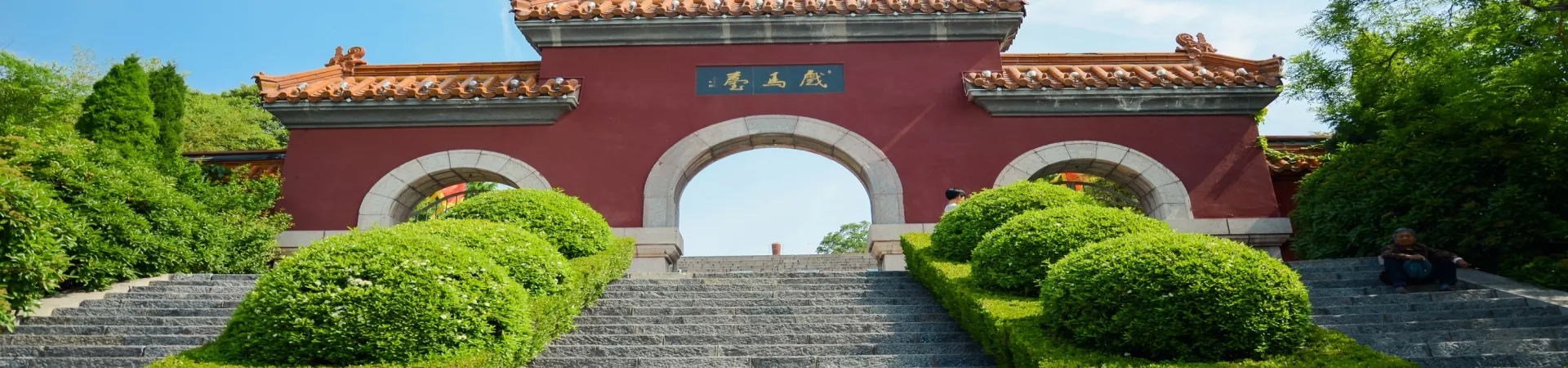
Subtitle: A Journey Through Time at Xuzhou's Ancient Equestrian Stage
Introduction: The Echoes of a Conqueror's Ambition
Nestled against a hill in the southern part of Xuzhou City, Jiangsu Province, lies the Ximatai, or the Terrace for Horse-Training. This historic site is not merely a scenic spot but a profound portal into a pivotal moment in Chinese history, forever linked to the legendary figure of Xiang Yu. According to historical accounts, in 206 BC, following the collapse of the Qin Dynasty, the formidable warlord Xiang Yu declared himself the "Hegemon-King of Western Chu" and established his capital in Pengcheng (present-day Xuzhou). To showcase his military prowess and for his personal enjoyment, he ordered the construction of a grand high terrace on this very hill. Here, he would review his troops, inspect drills, and, most famously, watch horse races and equestrian performances, giving the terrace its enduring name. Today, Ximatai stands as a monument to this brief but intense chapter of the Chu-Han contention, inviting visitors to walk the same ground as one of China's most celebrated and tragic heroes.
Architectural Layout and Symbolism
The current preservation and presentation of Ximatai are organized along a central axis centered on the Fengyun Pavilion (风云阁, Pavilion of Wind and Clouds), which divides the complex into two distinct courtyards: the East and the West. Each courtyard is designed to reflect different facets of Xiang Yu's legacy and the era he dominated.
The East Courtyard: "Chamber of Chu Brimming with Spring" (楚室生春) This section embodies the vitality and martial spirit of Xiang Yu's reign. Its centerpiece is an imposing stone statue of Xiang Yu himself, standing 2.9 meters tall. The sculpture captures him in a moment of commanding authority, his expression fierce and posture dignified, instantly communicating the awe-inspiring presence he must have held. The courtyard's name, suggesting a perpetual spring within the land of Chu, evokes the short-lived zenith of his power—a period of potent, flourishing ambition before its sudden decline.
The West Courtyard: "Autumn Winds over Prancing Horses" (秋风戏马) In contrast to the vibrant east, the west courtyard carries a more solemn and reflective tone, alluding to the autumn of Xiang Yu's life and career. The focal point here is a massive, ancient-style tripod cauldron (鼎). Cast upon its belly are four powerful characters: "霸业雄风" (Bà Yè Xióng Fēng), which translate to "The Majestic Aura of a Hegemon's Enterprise." This artifact is a direct reference to Xiang Yu's legendary physical strength and formidable character, as historical records praise him for being "able to lift a cauldron" and "possessing surpassing talent and ambition." The cauldron symbolizes the weight of his power, his imperial aspirations, and the enduring imprint of his "heroic bearing."
A Natural Monument: The Stone of Contemplation
Beyond the meticulously designed courtyards lies one of Ximatai's most thought-provoking features: a remarkable natural rock formation located near the Zhuisheng Pavilion. This large stone, shaped by nature over millennia, presents an ambiguous and powerful silhouette. From one angle, it resembles a general with his head thrown back, roaring defiantly at the heavens. From another, it takes on the somber shape of a giant skull. This duality has earned it two evocative names: the "Howling-at-the-Sky Stone" (啸天石) and the "Stone of Human Hero and Spectral Champion" (人杰鬼雄石).
This natural sculpture serves as a perfect, unscripted complement to the historical narrative. It instinctively brings to mind the famous lines by the Song Dynasty poetess Li Qingzhao, written centuries after Xiang Yu's death: "生当作人杰,死亦为鬼雄。 至今思项羽,不肯过江东。" ("In life, be a hero among men; / In death, be a champion among ghosts. / To this day, I think of Xiang Yu, / Who refused to cross the river east to his homeland.")
The stone physically embodies the poem's essence—the unyielding spirit of a man who chose a heroic death over a dishonorable retreat, forever cementing his status as both a peerless human hero and an undying legendary figure.
Visitor Information
For those planning a visit, Ximatai offers a deeply cultural experience that can be comfortably explored within a few hours.
- Admission: The site is open to the public free of charge, making it an accessible destination for all visitors.
- Operating Hours: It is open daily from 9:00 AM to 4:30 PM, with the last admission at 4:30 PM. These hours are consistent throughout the year.
- Suggested Duration: A thorough visit to appreciate the architecture, historical exhibits, statues, and the natural scenery typically requires between 1 to 3 hours.
- Contact: For any specific inquiries, visitors can reach the management at 0516-83827740.
A visit to Ximatai is more than a stroll through a park; it is an engagement with a powerful legend. It allows one to stand where a king stood, to gaze upon symbols of his might, and to confront the natural metaphor of his tragic fate. The terrace does not just tell the story of Xiang Yu's military exercises; it whispers the enduring themes of ambition, power, glory, and the poignant choices that define a legacy, resonating through the corridors of Chinese history and poetry.