The Tomb of King Chu on Lion Rock
Subtitle: A Journey into the Royal Tomb of the Chu Kingdom in Xuzhou
1. Introduction: The Lion Hill and Its Hidden Sovereign Nestled within the urban landscape of Xuzhou City in Jiangsu Province, eastern China, lies the Lion Hill (Shizishan), home to one of the region's most significant archaeological treasures: the Mausoleum of the Chu King. This ancient tomb, part of the larger Han Cultural Scenic Area, offers a profound glimpse into the rituals, conflicts, and artistry of the Western Han Dynasty. Its discovery is credited to the dedication of renowned archaeologist Wang Kai, who, over nearly 22 years with simple tools and unwavering perseverance, played a pivotal role in uncovering a series of seven Chu royal tombs in the Xuzhou area. The Lion Hill tomb stands as a monumental centerpiece, captivating visitors not only with its scale but also with the enduring mystery shrouding its occupant.
2. The Historical Enigma: Unraveling the Tomb's Occupant 2.1. The Primary Candidate: Liu Wu The identity of the tomb's master remains a subject of scholarly debate, adding a layer of intrigue to the site. The most widely accepted theory posits that the mausoleum was built for Liu Wu, the third Chu King during the Western Han Dynasty. Liu Wu's life was tragically intertwined with one of the major political upheavals of the era.
2.2. The Rebellion and Its Aftermath Liu Wu was a key participant in the "Rebellion of the Seven States" (154 BC), a large-scale revolt of regional kingdoms against the central Han authority. Following the rebellion's failure, faced with certain execution and the potential extermination of his family lineage as punishment, Liu Wu was forced to commit suicide. Historical records suggest his burial was carried out hastily and without the full ceremonial honors typically accorded to a regional king. This context of sudden death and rushed interment may explain certain unconventional architectural features observed within the tomb complex, distinguishing it from other, more meticulously planned royal mausoleums of the period.
3. Architectural Layout and Notable Features The tomb is an impressive underground palace carved directly into the bedrock of Lion Hill. Its design reflects the contemporary belief in an afterlife that mirrored the earthly world, requiring all necessities for the soul's journey.
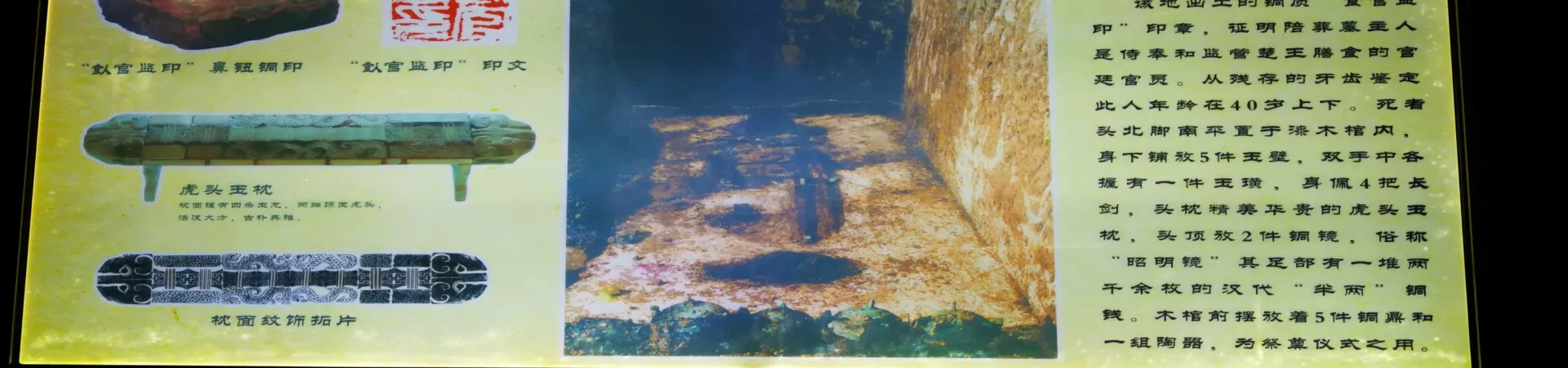
3.1. The Approach and Chambers The entrance leads through a long, sloping passageway (ramp) into the heart of the complex. The interior is divided into several key chambers: * Front Chambers: These likely served as symbolic reception halls or spaces for ceremonial artifacts. * Main Coffin Chamber: The central and most sacred space, designed to house the king's sarcophagus. The engineering precision required to excavate and support this large chamber from solid stone is a testament to Han dynasty craftsmanship. * Storage Vaults: Adjacent rooms were constructed to hold a vast array of burial goods, intended for the king's use in the next world.
3.2. The Terracotta Army of Xuzhou While not as vast as the famous Terracotta Army in Xi'an, the tomb is associated with a remarkable pit containing thousands of miniature terracotta figurines. This army includes infantry, cavalry, chariots, and civilian officials, each meticulously crafted with unique facial features and postures. * Significance: This terracotta guard represents a scaled-down but equally powerful symbol of the king's authority, meant to protect and serve him in the afterlife. Their discovery provides invaluable insights into military organization, attire, and social hierarchy of the Chu Kingdom.
4. Practical Visitor Information 4.1. Location and Access The Chu King Mausoleum is situated on Lion Hill along Xuzhou's Third Ring Road. It is the central attraction within the Han Cultural Scenic Area (Han Wenhua Jingqu).
4.2. Transportation Guide * Public Transport: Numerous public bus routes stop at the "Chuwangling" station. Key routes include: 5, 49, 58附, 60内环, 60外环, 65, 71, 72, 92, 93, 97, 605, 608, 611. From the bus stop, walk approximately 120 meters south along Sanhuan East Road to Bingmayong Road, then 100 meters west to reach the South Gate of the Han Cultural Scenic Area. * Useful Connections: Bus 58附 and 71 are accessible from Xuzhou Railway Station. Bus 72 connects from Xuzhou East Railway Station and Xuzhou South Long-Distance Bus Station. * Within the Scenic Area: From the South Gate, the tomb is a roughly 5-minute walk north. Alternatively, electric sightseeing carts are available for 5 RMB per single stop. A charter cart for up to 10 persons costs approximately 150 RMB.
4.3. Opening Hours and Contact * Operating Hours: Open daily from 08:30 to 16:30. Last admission is at 15:30. * Suggested Duration: A comprehensive visit requires a minimum of 3 hours to appreciate the tomb structure, the terracotta figurine pits, and the surrounding scenic area. * Contact Telephone: 0516-83167053; 0516-83566263.
5. The Archaeological Legacy and Lasting Impression The discovery and ongoing study of the Lion Hill Chu King Mausoleum have dramatically enriched the understanding of the Chu Kingdom, a powerful and semi-autonomous entity within the early Han Empire. The tomb serves as a poignant time capsule, preserving the story of a king whose political ambitions ended in personal tragedy. For visitors, it is more than an archaeological site; it is an immersive portal. Walking through its silent, stone corridors, past the ranks of eternal terracotta guards, one can tangibly feel the weight of history, the sophistication of ancient funerary practices, and the fleeting nature of power and rebellion. It stands as an indispensable chapter in the narrative of China's imperial past, waiting within the quiet embrace of Lion Hill.