Yanglou Cave
Subtitle: A Journey Through Time in the Cradle of Brick Tea
1. Introduction: The Echoes of Ancient Caravans
Nestled in the hills of Chibi City, within China's Hubei province and under the administration of Xianning, lies a place where the very air seems to whisper tales of a bygone era. This is Yangloudong, a name that resonates deeply in the annals of global trade history. Far more than a mere ancient town, Yangloudong is the legendary birthplace of the "Brick Tea" that fueled the centuries-old Tea-Horse Road, a crucial southern artery of the broader Silk Road network. For over four centuries, from the Ming Dynasty well into the modern era, this secluded village was an epicenter of tea production and commerce, its fragrant bricks compressed and packed for the arduous journey to Mongolia, Russia, and beyond. Today, it stands not as a relic frozen in time, but as a living museum, inviting visitors to walk its weathered stone paths and step directly into the narrative of a commodity that shaped empires and connected distant cultures.
2. The Heartbeat of History: Exploring the Ancient Town's Core
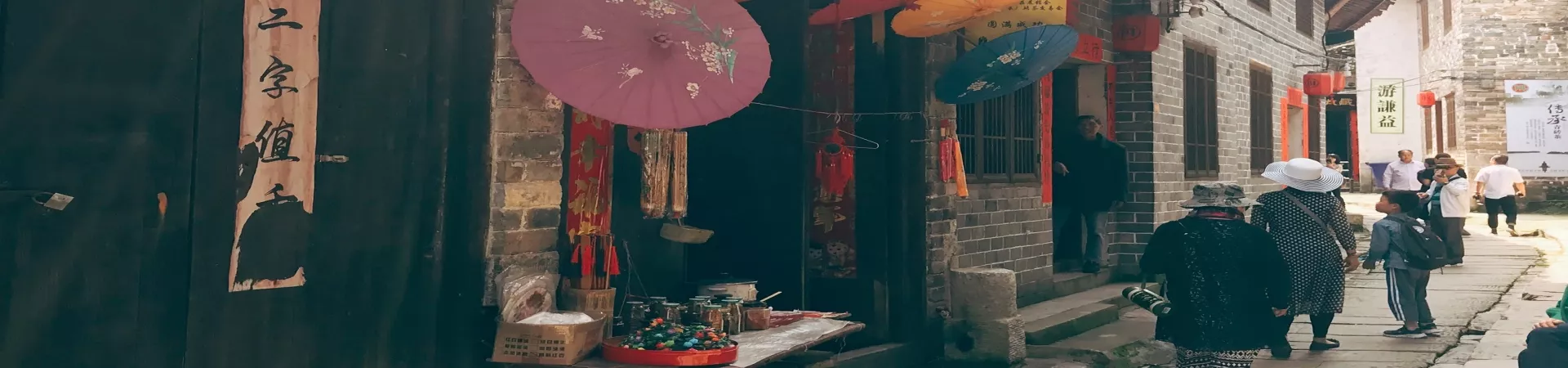
2.1. The Flagstone Road: Tread Where Caravans Walked The soul of Yangloudong is its central, time-worn flagstone street. This is not a reconstructed lane for tourists; it is the original thoroughfare, grooved and polished by the countless iron-rimmed wheels of oxcarts and the footsteps of merchants, porters, and camels. Each stone bears silent witness to the hustle and bustle of its heyday. Flanking this historic artery are rows of well-preserved Ming and Qing dynasty architecture. The buildings, with their grey bricks, black tiles, wooden facades, and overhanging eaves, showcase a distinct local style adapted for commerce, with shops at the front and tea-processing workshops extending behind.
2.2. Legacy in Every Corner: Key Historic Sites Scattered along the main street and its alleys are specific sites that anchor the town's story. The most significant is the Ancient Tea Factory, where you can see traditional tools and gain insight into the complex process of steaming, pressing, and drying tea into its durable brick form. The Qing Dynasty Government Tea Office stands as a testament to the commodity's importance, being the administrative center for tea taxation and trade regulation. Further enhancing the immersive experience are various merchant residences and guildhalls, such as the Lei Family Mansion, which illustrate the wealth and influence of the tea tycoons who operated here. The subtle scent of aged tea wood seems to linger in these structures.
3. The Art of Brick Tea: From Leaf to Legacy
3.1. The Unique Craftsmanship Understanding Yangloudong requires an appreciation of its raison d'être: Brick Tea. This was not a casual product but a technological marvel of its time. Local, large-leaf tea was steamed, crushed, pressed into molds, and then slowly dried to form solid, compact bricks or discs. This ingenious method served critical purposes: it drastically reduced volume for transport, protected the tea from the elements on long journeys, and even improved with age during the trek. The process, visible in demonstrations, highlights the ingenuity applied to solving the logistical challenges of ancient long-distance trade.
3.2. A Cultural and Economic Catalyst The brick tea was far more than a beverage; it was a unit of currency, a diplomatic tool, and a vital dietary supplement for nomadic peoples of Central Asia. Yangloudong's output thus became a linchpin in the transcontinental "Tea-Horse Road," facilitating the exchange of Chinese tea for Central Asian horses. This trade cemented political alliances, spurred regional development, and created a unique cultural fusion, the echoes of which can be felt in the town's architectural and folkloric heritage.
4. Practical Information for Your Visit
4.1. Admission and Operating Hours One of the most appealing aspects of Yangloudong is its accessibility. The ancient town area operates with no admission fee, allowing visitors to explore its historic streets and public spaces freely. It is open to the public 24 hours a day, every day of the year. This "open all hours" policy offers remarkable flexibility, enabling you to experience the town's atmosphere at different times—the soft morning light illuminating the old tiles, the vibrant activity of the afternoon, or the serene, lantern-lit ambiance of the evening.
4.2. Planning Your Experience While the town itself is always open, individual historic buildings, small museums, or tea demonstration workshops may have their own specific operating hours, typically during daylight hours. It is advisable to allocate at least half a day to wander without rush, explore the key sites, and perhaps enjoy a cup of locally produced tea in one of the traditional shops. For inquiries, you may contact the local management at 0715-5863263.
4.3. Immersive Activities and Local Flavors Beyond sightseeing, engage with history through hands-on activities. Participate in a tea-tasting session to compare modern interpretations with traditional brick tea flavors. Some workshops offer short tea-pressing experiences. Stroll beyond the main street to discover the surrounding lush tea plantations that supply the leaves. The local cuisine also incorporates tea elements, offering a unique gastronomic dimension to your visit. As you depart, carrying the weight of history in your mind and perhaps a compact brick of tea in your hand, the legacy of Yangloudong—as a quiet village that once spoke to the world through its tea—becomes palpably clear.