Chibi Scenic Resort
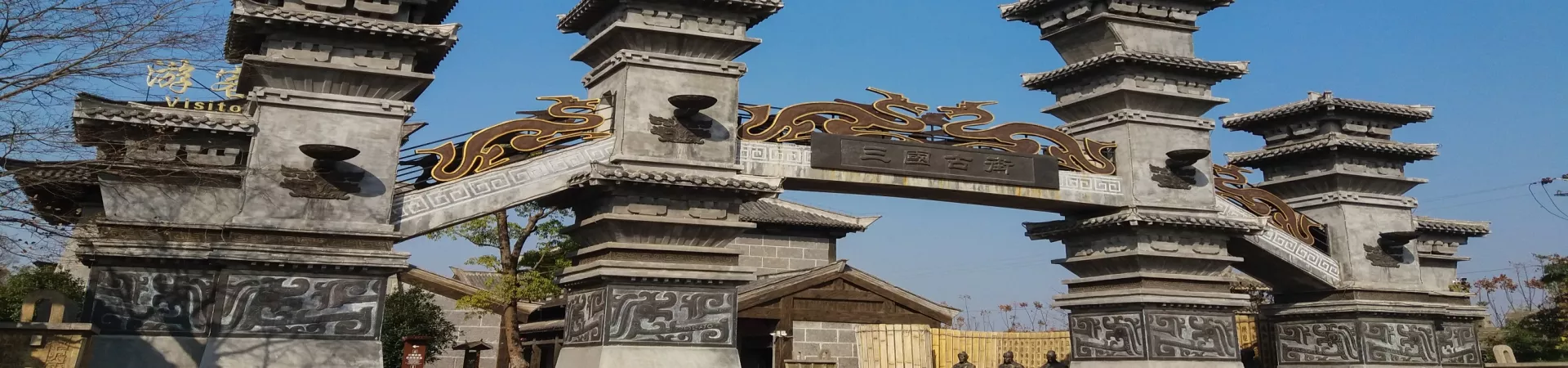
Subtitle: Walking Through the Annals of History at the Ancient Battlefield of Chibi
1. Introduction: A Portal to the Three Kingdoms Era
Nestled on the southern bank of the mighty Yangtze River, the Ancient Battlefield of Chibi in Xianning stands as a monumental testament to one of ancient China's most decisive and legendary conflicts. Strategically positioned with Wuhan, the capital of Hubei Province, to its north and the culturally rich city of Yueyang to its south, the site enjoys both historical significance and modern accessibility, served by the golden waterway of the Yangtze. Recognized as a National AAAAA-Class Tourist Attraction and a Major Historical and Cultural Site Protected at the National Level, this hallowed ground is more than a scenic destination; it is the only surviving battlefield from the Seven Great Battles in Chinese history renowned for "victory against overwhelming odds" that retains its original landscape. It embodies the collective memory of the epic Three Kingdoms period, where strategy, courage, and fate reshaped a nation's destiny. The masterful integration of the genuine ancient battlefield relics with imposing architectural complexes styled after the Han Dynasty creates an environment that is both awe-inspiring and seamlessly authentic, transporting visitors back to an age of heroes.
2. Exploring the Heart of the Battlefield: Key Monuments and Landscapes
The site is a vast, open-air museum where every hill, pavilion, and stone whispers tales of the past. The experience is anchored by several iconic landmarks that vividly bring history to life.
2.1. The Chibi Cliff and Inscription The very soul of the battlefield is encapsulated in the two massive, ancient characters "赤壁" (Chibi) carved into the cliff face overlooking the river. This monumental inscription is believed to date back to the Tang or Song dynasties. Gazing upon these weathered strokes, one can almost hear the thunder of war drums and visualize the fiery stratagem that gave the battle its name, serving as a powerful, direct link to the events of 208 AD.
2.2. Statue of Zhou Yu and the Commander's Vista Dominating a strategic vantage point, a majestic stone statue of the young and brilliant Wu commander, Zhou Yu, stands resolute, facing the endless flow of the Yangtze. His posture exudes the confidence and strategic acumen of the commander who, alongside Zhuge Liang, orchestrated the allied victory. From here, visitors can share his panoramic view and contemplate the immense scale of the naval engagement that unfolded on the river below.
2.3. The Borrowing Wind Platform (Jieting) Perched atop Nanping Hill, this platform commemorates the legendary episode where Zhuge Liang, the master strategist of Shu, allegedly performed rituals to "borrow" the crucial east wind. It was this wind that enabled the fire attack, sealing Cao Cao's fate. Standing here, one imagines Zhuge Liang, feather fan in hand, calmly altering the course of history and cementing the tripartite division of the realm.
2.4. Fengchu Hut and the Ancient Ginkgo Tucked away at the foot of Jinluan Hill, the tranquil Fengchu Hut is said to be the former retreat of Pang Tong, also known as "Fengchu" or "Young Phoenix." It was here that Pang Tong, another renowned strategist, conceived the ingenious "interlocking chains" tactic, which lured Cao Cao's fleet into vulnerability. A towering, centuries-old ginkgo tree beside the hut stands as a silent witness to those secretive planning sessions.
2.5. Hills, Pavilions, and the Theater of War The topography itself narrates the battle. Chibi Hill, Nanping Hill, and Jinluan Hill form the core terrain where observation posts, camps, and command centers were located. The Yijiang Pavilion, extending over the water, offers a dramatic perspective of the river, the presumed main theater of the fire attack. Each location is imbued with the spirit of the "earth-shaking clash and the heroic ambition that rocked the heavens."
3. Cultural Depths: Museums, Galleries, and Reconstructed Cities
Beyond the natural and commemorative monuments, the battlefield site offers structured cultural insights through man-made exhibits.
3.1. Chibi Battle Exhibition Hall This modern facility provides essential context through detailed historical accounts, artifact displays, maps, and dioramas. It systematically explains the political background, the sequence of events leading to the battle, the key personalities involved, and the battle's profound historical consequences, enriching the on-site experience with scholarly depth.
3.2. Chibi Stele Corridor A journey through calligraphic art and literary homage, this corridor houses a collection of stone tablets inscribed with poems, essays, and comments about the Battle of Chibi from scholars, officials, and poets across subsequent dynasties. It reflects the enduring fascination the battle has held in Chinese culture for nearly two millennia.
3.3. Reconstructed Jin City and Tu City These recently built compounds, designed in Han architectural style, represent military camps and fortifications. They serve multiple purposes: as immersive environments that help visualize the scale of ancient military encampments, as venues for cultural performances and reenactments, and as functional spaces for visitor services.
4. Essential Visitor Information
4.1. Location and Transportation The Ancient Battlefield of Chibi is located in Chibi City, Xianning, Hubei Province. A convenient public transportation option is to take Chibi Bus Route 19 and alight at the "Three Kingdoms Chibi Ancient Battlefield" bus stop, from which the entrance is within walking distance.
4.2. Ticketing and Opening Hours * Opening Hours: 08:00 - 17:30 daily (last admission at 17:00). * General Admission Ticket: 135 RMB per adult. * Concession Ticket (67 RMB): Applicable to: * Children with height between 1.2 meters (exclusive) and 1.5 meters (inclusive). * Seniors aged 60 (inclusive) to 69 (inclusive), upon presentation of valid ID. * Full-time students (primary, secondary, university) with a valid student ID.
4.3. Suggested Visit Duration A comprehensive visit to explore the major sites, museums, and landscapes thoroughly requires a minimum of 3 hours. Visitors with a deep interest in history may wish to allocate more time.
4.4. Educational Significance The site holds several prestigious designations, including National Research and Practice Education Base for Primary and Secondary School Students, Hubei Provincial Practical Education Camp for Students, Hubei Provincial Patriotism Education Base, and Hubei Provincial Cultural Industry Demonstration Base. It is an invaluable destination for educational trips, offering tangible lessons in history, strategy, and culture.
(For the most current information, please contact the site at +86 715 5788888.)