Tuojiang Jumping Rock
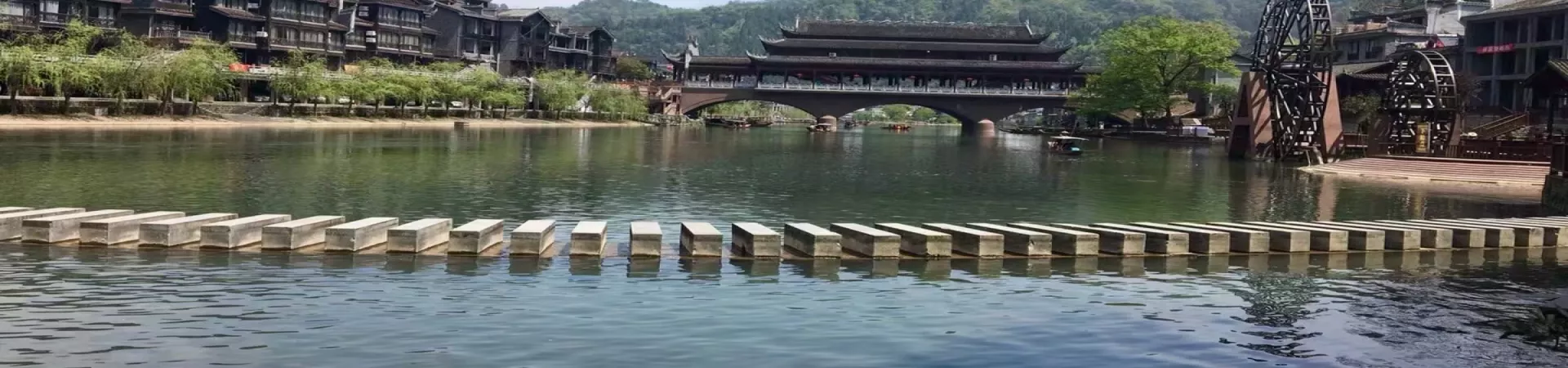
Subtitle: A Timeless Crossing: Experiencing Fenghuang's Iconic Tuojiang Stepping Stones
Introduction: The Pulse of a Water Town In the heart of Fenghuang Ancient Town, where the emerald-green waters of the Tuojiang River flow with centuries of stories, lies not a bridge, but a dance. Directly facing the imposing North Gate Tower, the Tuojiang Stepping Stones, or "Tiao Yan," offer far more than a mere river crossing. They are a living, breathing institution—a kinetic sculpture of daily life, a photographer's muse, and a thrilling, intimate dialogue between visitor and river. This unique passage, composed of two parallel rows of independent stone blocks, forms a captivating and functional link between the ancient town's bustling banks, inviting every traveler to step literally into the rhythm of Phoenix Town.
1. The Architecture of Movement: Design and Sensation 1.1. A Deliberate Design Unlike any conventional bridge, the stepping stones are an exercise in deliberate, engaging simplicity. The structure consists of two separate, offset rows of solid, square stone piers firmly embedded in the riverbed. This dual-path design allows for two-way traffic, as pedestrians can pass each other by switching rows. The gaps between each stone are just wide enough to demand attention, turning a simple crossing into a conscious, step-by-step journey.
1.2. The "Jump" and the Journey Crossing here is an active experience described aptly as "one step, one 'jump'." This is not a leap of fear, but a playful, mindful hopping from one stable block to the next. The sensation is unique: a slight pause on each stone, a glance down at the crystal-clear water swirling below, a moment of balance, then a step forward to the next. The gentle rush of the current beneath your feet, the cool mist rising from the river, and the focused attention required create a surprisingly meditative yet mildly exhilarating connection to the natural element. It is both a physical activity and a moment of presence, separating the mundane act of crossing from the immersive experience of engaging with the Tuojiang.
2. The Unrivaled Vista: A Photographer's Paradise 2.1. The Iconic Shot The Tuojiang Stepping Stones are arguably Fenghuang's most popular and photogenic landmark. Their appeal for photography is multifaceted. Standing mid-river on a stone block provides a perfect, unobstructed vantage point. To one side, the majestic, gray-tiled roofs and wooden stilted houses (Diaojiaolou) of the ancient town cascade down the banks. To the other, the graceful arches of the Rainbow Bridge (Hongqiao) or the silhouette of distant hills might frame the scene. The stepping stones themselves lead the eye beautifully into the composition, creating dynamic lines within the serene waterscape.
2.2. Capturing Life and Landscape The location is dynamic. A successful photograph captures not just the scenic beauty but the human element: locals nimbly navigating the stones with baskets, visitors laughing as they find their balance, the reflection of traditional boats (Wupeng船) gliding by. At dawn, the stones emerge from ethereal mist; at dusk, they are painted gold by the setting sun, with the illuminated towers and houses casting shimmering reflections. Whether you are the subject or the photographer, the stepping stones offer a perspective that is quintessentially Fenghuang—a harmonious blend of human ingenuity and natural beauty.
3. Practical Information for the Visit 3.1. Location and Access The stepping stones are centrally located, directly opposite the North Gate Tower (Beimen Chenglou). Access is straightforward on foot after entering the main area of Fenghuang Ancient Town. They serve as a key pedestrian thoroughfare and attraction within the old town's network of lanes and riverside paths.
3.2. Admission and Opening Hours There is no separate ticket for the Tuojiang Stepping Stones. Access is included within the general entrance ticket to Fenghuang Ancient Town. Notably, the site itself is open and accessible 24 hours a day. This allows for visits at different times to experience varying atmospheres—from the lively daytime crossings to the tranquil, lantern-lit ambiance of the night.
3.3. Time Allocation and Tips A visit typically requires less than an hour to cross and enjoy the views, though photographers or those wishing to linger may spend more time. For a smoother and safer crossing, it is advisable to wear flat, stable shoes. Be mindful of the stones, which can be slippery when wet, and always pay attention to your step while appreciating the views. While crossing, observe the local courtesy of allowing others to pass, especially during busy periods.
4. The Cultural Heartbeat Beyond its functional and aesthetic roles, the stepping stones are a cultural touchstone. They represent a traditional, minimalist solution to connectivity, one that preserves the river's flow and viewscape unlike a solid bridge. They force a slower pace, encouraging people to look around and engage with their surroundings. Throughout the day, they stage a continuous, unscripted performance of local life—children skipping across, elders moving steadily, couples pausing for a picture. In a town famed for preserving its historical atmosphere, the Tuojiang Stepping Stones are not a relic to be viewed from behind a barrier; they are an interactive, enduring part of the town's living heritage, inviting every visitor to become, momentarily, a part of Fenghuang's daily flow.