Mao Zedong Bronze Statue
Subtitle: A Revered Landmark in the Heart of China's Revolutionary Countryside
1. Introduction: The Grand Bronze Sentinel of Shaoshan
Nestled in the tranquil, green hills of Shaoshan Village, a place of profound historical significance in Xiangtan City, Hunan Province, stands a monument of immense cultural and emotional weight: the Statue of Chairman Mao Zedong. More than just a sculpture, this towering bronze figure serves as a national pilgrimage site, a focal point for remembrance, and a powerful symbol of modern Chinese history. The statue presides over the Square of the Bronze Statue, an expansive plaza that forms the ceremonial heart of the Shaoshan Scenic Area, drawing millions of visitors from across China and the world each year. They come not merely as tourists, but as seekers of historical context, admirers of a pivotal figure, and participants in a continuing narrative of national identity. The atmosphere here is one of deep respect and quiet contemplation, set against the backdrop of the rustic landscape that shaped the early life of the man it honors.
2. Historical Context and Symbolic Significance
2.1. The Setting: Shaoshan Village To understand the statue's importance, one must first appreciate its location. Shaoshan is the birthplace of Mao Zedong, the revolutionary leader who played the defining role in the establishment of the People's Republic of China. This rural village, with its traditional farmhouses, lush paddies, and gentle streams, represents the roots from which a nation-changing movement grew. Placing the grand bronze statue here creates a powerful juxtaposition between humble origins and monumental legacy, connecting the personal history of Mao with the epic sweep of 20th-century China.
2.2. Unveiling and Design Intent The bronze statue was unveiled on December 26, 1993, to commemorate the centennial of Mao Zedong's birth. Every detail of its design is laden with symbolism. The statue depicts a mature Chairman Mao, standing at a height of 10.1 meters, a figure often interpreted as symbolizing October 1st, China's National Day. He is portrayed in a characteristic pose, one hand waving gently to the crowd, the other resting by his side, his overcoat slightly billowed as if by a breeze. His expression is thoughtful, confident, and forward-looking, gazing into the distance towards the southeast.
2.3. Decoding the Symbolism The artistry extends to the numerical details. The base is 5.16 meters high, while the pedestal is 4.1 meters high, with the numbers 5.16 and 8.3 (the combined height of the base and pedestal) referencing important dates in Mao's life and the history of the People's Liberation Army. The overall height from the ground to the top of the statue is 10.1 meters, firmly anchoring the symbolism of the nation's founding. The statue's positioning is also precise; it is said to be oriented so that Mao's gaze forever looks upon the ancient capital of Beijing, symbolizing his enduring connection to the nation he helped unite.
3. The Visitor Experience: Ritual, Reflection, and Landscape
3.1. The Pilgrimage and Ritual Visiting the statue is often a structured and emotional experience for many Chinese visitors. It is common to see individuals and groups presenting elaborate floral wreaths and baskets at the base of the statue. The act of bowing three times in solemn respect is a frequent sight, a traditional gesture of deep veneration. For school groups, military units, and party members, the visit is an integral part of patriotic education, a tangible link to the foundational narrative of modern China. The square itself, capable of holding tens of thousands, often hosts official commemorative ceremonies, especially on significant anniversaries.
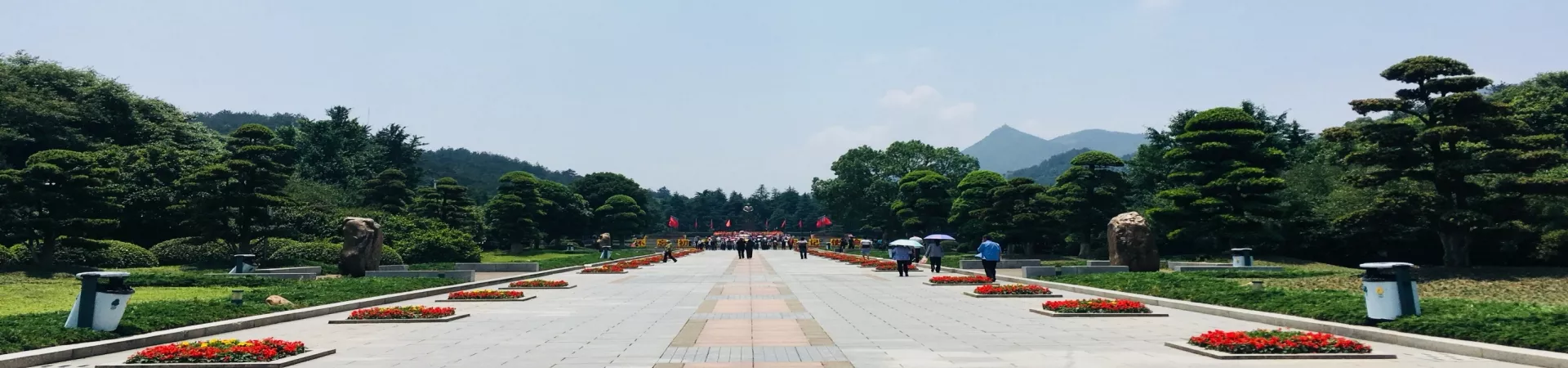
3.2. The Surrounding Plaza and Vistas The Square of the Bronze Statue is a masterpiece of landscape design that complements the central figure. Flanked by symmetrically arranged flagpoles flying the national flag and lined with verdant pines and cypresses—trees representing longevity and resilience in Chinese culture—the plaza directs all attention toward the statue. A long, red-carpeted walkway leads visitors on a gradual approach, building a sense of anticipation. From the elevated platform of the square, one can enjoy panoramic views of the surrounding Shaoshan countryside, physically linking the monument to the land.
3.3. Integration with the Broader Shaoshan Site A visit to the bronze statue is typically the centerpiece of a broader itinerary in Shaoshan. The statue square acts as a gateway to other key historical sites, most notably the Mao Zedong Former Residence, a modest farmhouse a short walk away where he was born and raised. Other nearby museums, such as the Mao Zedong Memorial Museum, provide extensive historical exhibits, creating a comprehensive narrative that moves from the personal (the birthplace) to the symbolic (the statue) to the detailed historical (the museum).
4. Practical Information for Planning Your Visit
4.1. Location and Accessibility The Mao Zedong Bronze Statue is located in the core area of the Shaoshan Scenic Area, in Shaoshan Village, Xiangtan City, Hunan Province, China. Xiangtan is well-connected by high-speed rail and highway from major cities like Changsha (the provincial capital, approximately one hour away by car or train). From the Shaoshan tourist center, shuttle buses or electric carts provide efficient transport to the statue square. The site is designed to be accessible, with paved pathways and ramps, though the plaza itself involves some broad, shallow steps.
4.2. Opening Hours and Best Times to Visit A key practical advantage for visitors is the site's accessibility. The Square of the Bronze Statue is open to the public 24 hours a day, every day of the year. This round-the-clock access allows for flexibility in planning and offers different atmospheric experiences—from the formal, bustling atmosphere of a daytime visit to a more serene and personal reflection under the evening lights or at dawn. It is advisable to check the schedule for the nearby Mao Zedong Former Residence and museums, as their hours are more restricted (typically from 8:00 or 9:00 AM to 4:00 or 5:00 PM).
4.3. Visitor Guidelines and Etiquette Given the site's solemn nature, visitors are expected to observe a respectful decorum. Loud noise, inappropriate behavior, or disrespectful photography is frowned upon. Dressing modestly is recommended. When floral tributes are offered, it is usually through organized services available near the square. The best times to avoid the largest crowds are on weekday mornings outside of national holidays and summer vacation periods.
4.4. Contact Information For official inquiries or to confirm details regarding group visits or special events, the general contact number for the Shaoshan Scenic Area administration is: +86 731 55685121.