Shuzhuang Garden
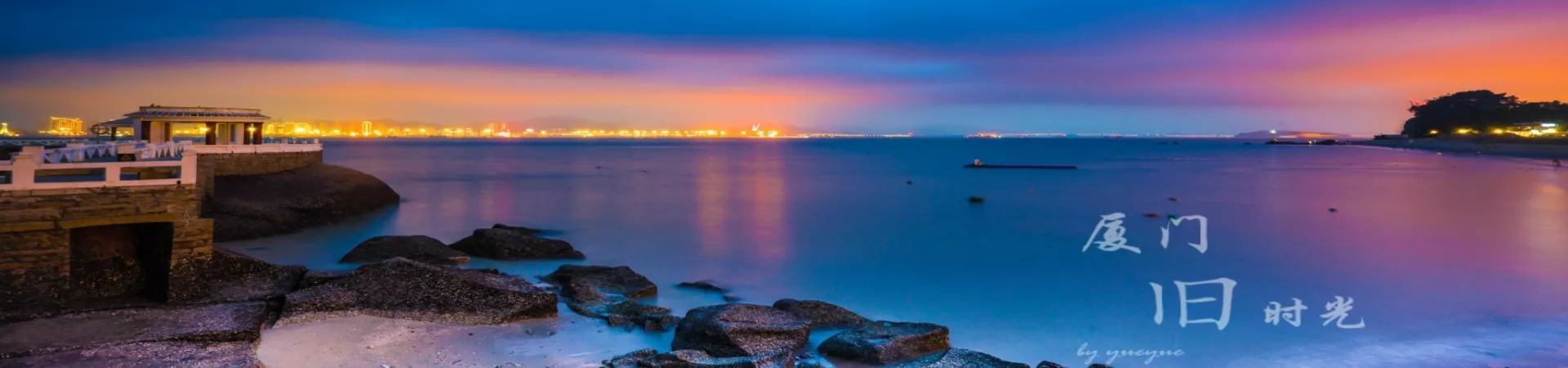
Subtitle: A Poetic Masterpiece Where Mountain Embraces Sea: The Artistry and Harmony of Shuzhuang Garden
Nestled on the picturesque island of Gulangyu in Xiamen, Shuzhuang Garden stands as a crowning jewel of early 20th-century Chinese landscape design. More than just a garden, it is a profound philosophical statement in horticultural form, a private paradise turned public treasure that encapsulates the classical Chinese ideal of harmony between humanity, architecture, and nature. Built in 1913 by Lin Erjia, a wealthy Taiwanese merchant, its name derives from the phonetic approximation of his courtesy name, "Shuzang." The garden is ingeniously divided into two complementary sections—the Mountain-Supplementing Garden (Bushan Yuan) and the Sea-Hiding Garden (Canghai Yuan)—each representing a distinct artistic pursuit and offering visitors a sequenced journey of discovery and wonder.
Part I: The Mountain-Supplementing Garden (Bushan Yuan)
The journey into Shuzhuang Garden typically begins with the Mountain-Supplementing Garden, a domain dedicated to the terrestrial and the crafted. This section is a testament to the Chinese garden tradition of creating microcosms of the natural world, where artificial hills and rockeries symbolize mountains and caves evoke a sense of mystical exploration.
1.1 The Labyrinthine Wonder: The Twelve Cave Heavens
The undisputed centerpiece here is the magnificent artificial rockery known as the "Twelve Cave Heavens" (Shi'er Dong Tian). This is not a single structure but a complex, interconnected labyrinth of 12 caverns and grottoes, built using local granite. Visitors are encouraged to lose themselves in its winding, narrow passages, climbing up and down, discovering hidden nooks and sudden openings that frame views of the garden's greenery. The design cleverly incorporates the ancient Chinese zodiac; each of the 12 cave entrances is subtly marked with the emblem of one of the Chinese zodiac animals. Finding your own birth-year animal adds a layer of personal interaction and playful engagement to the exploration. The rockery embodies the Taoist concept of a grotto-heaven—a secluded, otherworldly paradise within the earthly realm—and demonstrates superb craftsmanship in its construction, where every stone seems naturally placed.
Part II: The Sea-Hiding Garden (Canghai Yuan)
If the first part of the garden celebrates constructed beauty and playful concealment, the second part, the Sea-Hiding Garden, is a masterclass in spatial drama and the art of the reveal. True to its name, "Canghai" (Hiding the Sea), this section is designed to completely obscure the vast seascape that lies just beyond its walls, building anticipation for a breathtaking climax.
2.1 The Art of the Reveal: From Enclosure to Expanse
The genius of this design unfolds as visitors meander through serene courtyards, elegant pavilions, and lush foliage, with no hint of the nearby ocean. The sea is meticulously "hidden" behind walls, rock formations, and dense plantings. The pivotal moment comes when one passes through a classic circular "moon gate" or rounds a final corner. Suddenly, without warning, the vista opens up, and the boundless blue of the Taiwan Strait roars into view. This dramatic transition from enclosed intimacy to open grandeur is a powerful emotional experience, reflecting a core aesthetic principle in Chinese garden design: "obstruct and then release," meant to inspire awe and contemplation.
2.2 The Forty-Four Bridges: A Pathway Over the Waves
Once the sea is revealed, the best way to immerse oneself in it is by traversing the garden's most famous feature: the Forty-Four Bridges (Sishi Si Qiao). This is not a single long bridge, but a graceful, zigzagging causeway composed of 44 connected sections that seem to dance upon the waves. The number "44" is homophonous with "double joy" in the local dialect, adding an auspicious layer to its name. Walking along its length, with water lapping against the pillars on all sides, one feels at one with the sea. The bridge offers ever-changing perspectives: looking back toward the garden's pavilions nestled against the hillside, gazing out at the endless horizon, or watching waves crash against the reef rocks below. It serves as the ultimate viewing platform, perfectly embodying the integration of man-made structure with the raw power of the coastal landscape.
Part III: A Symphony of Culture: The Piano Museum
Adding a unique and enchanting cultural dimension to the natural and architectural splendor is the Piano Museum, housed within the garden's Tingtao Xuan (Wave-Listening Pavilion). This inclusion transforms Shuzhuang Garden from a purely classical Chinese space into a fascinating site of cultural fusion, reflecting Gulangyu's history as an international settlement and its nickname, "The Island of Pianos."
3.1 A Collection of Musical History
The museum boasts a valuable and diverse collection of over one hundred pianos from around the world, many of them antiques. Exhibits include ornate European grand pianos from the 19th century, rare automatic player pianos, elegant clavichords, and miniature "piano" curios. Each instrument tells a story of musical evolution and craftsmanship. Informative displays detail the history of the piano and its introduction to China, particularly to Xiamen and Gulangyu.
3.2 The Live Performance: Bringing History to Life
Beyond the static display, the museum truly comes alive with its regular live performances. Approximately every half-hour, a resident pianist performs an impromptu recital on one of the historic instruments. The sound of a century-old piano filling the pavilion, with the distant murmur of real ocean waves as an acoustic backdrop, creates an unforgettable sensory experience. This harmonious blend of visual art, garden design, and live Western classical music in a traditional Chinese setting is a highlight that distinguishes Shuzhuang Garden from any other.
Part IV: Practical Information for Visitors
To ensure a smooth and enjoyable visit, please note the following practical details regarding access, fees, and timing.
4.1 Admission Fees
The garden operates on a ticketed entry system designed to be accessible to a wide range of visitors. * Standard Ticket: 30 RMB per adult. * Concession Ticket (Half-price): Available for seniors aged 60-64 (with ID) and minors aged 6 to 17 (with ID or household register). * Free Admission: Granted to: seniors aged 65 and above (with ID); children under 1.2 meters tall or aged 6 and below (with ID); individuals with disabilities (with disability certificate); disabled military personnel (with certificate); active-duty and retired military officers (with valid certificate); and family members of martyrs or military personnel (with relevant valid certificates).
4.2 Opening Hours
Operating hours vary slightly by season to accommodate daylight and visitor flow. * Spring & Winter (January 1 - May 31): Open from 08:00 to 17:30, with last admission at 17:00. * Summer & Autumn (June 1 - September 30): Open from 08:00 to 18:00, with last admission at 17:30.
4.3 Suggested Duration & Contact
A comprehensive visit to explore both gardens, climb the rockeries, walk the bridges, and enjoy the Piano Museum typically requires 1 to 3 hours. For any specific inquiries prior to your visit, you may contact the garden at 0592-2067284.
Information last updated: September 28, 2023. Credit to contributors for editorial input.