Haoyue Park
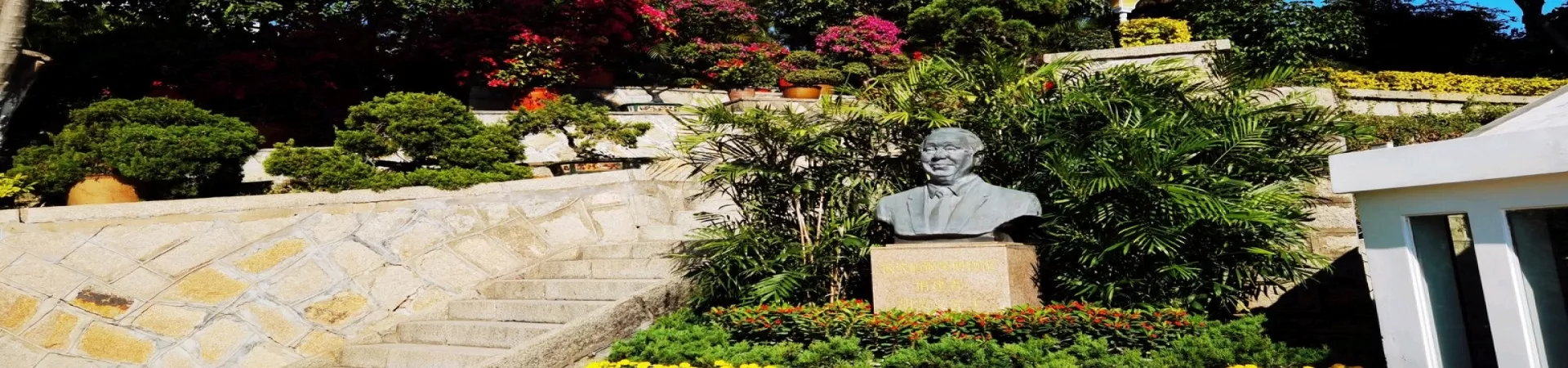
Subtitle: A Seaside Tribute to a National Hero on Gulangyu Island
1. Introduction: A Landscape of Remembrance Nestled along the eastern coastline of the picturesque Gulangyu Island in Xiamen, Haoyue Garden (皓月园) stands as a profound and scenic monument dedicated to the national hero, Koxinga (Zheng Chenggong). More than just a park, it is a tangible expression of collective memory, built specifically to commemorate his pivotal historical achievement: the驱逐 of Dutch colonists from Taiwan in 1662 and its subsequent reunification with China. The garden masterfully blends majestic sculpture, classical Chinese landscaping, and breathtaking coastal vistas, creating an environment that is both contemplative and visually stunning. Its very name, "Haoyue," meaning "bright moon," is imbued with poetic significance, drawn directly from a line in one of Zheng Chenggong's own poems: "思君寝不寐,皓月透素帏" ("Thinking of you, I lie awake; the bright moon penetrates the thin bed curtain"). This connection establishes a deeply personal and cultural layer to the site, transforming it from a mere memorial into a space that echoes the inner world of the hero it honors.
2. Historical Context and Symbolism 2.1. The Legacy of Koxinga (Zheng Chenggong) To fully appreciate Haoyue Garden, one must understand the figure at its heart. Zheng Chenggong, known in the West as Koxinga, was a Ming dynasty loyalist and military leader who became a legendary symbol of resistance and patriotism. In an era of turmoil, he held fast to his loyalist principles and achieved what was once thought impossible: seizing Fort Zeelandia from the powerful Dutch East India Company after a nine-month siege. This act not only ended 38 years of Dutch colonial rule on Taiwan but also reaffirmed Chinese sovereignty over the island. The garden, therefore, is fundamentally a landscape of triumph and resilience, celebrating a defining moment in East Asian history.
2.2. The Poetic Inspiration: "Haoyue" The choice of the name "Haoyue Garden" is a masterstroke of cultural design. By sourcing the name from Zheng Chenggong's poetry, the planners rooted the monument in the hero's own voice and sentiments. The imagery of the bright moon—a constant, pure, and watchful celestial body in Chinese literature—serves as a powerful metaphor. It symbolizes Zheng's enduring spirit, his unwavering loyalty (often associated with missing the Ming court), and the illuminating guidance he provided. This poetic link elevates the garden, suggesting that just as the moon's gentle light pervades the night, Zheng's legacy and spirit permeate this space by the sea.
3. The Garden's Features and Highlights 3.1. The Colossal Statue of Zheng Chenggong Undoubtedly, the centerpiece and most awe-inspiring feature of Haoyue Garden is the gigantic granite statue of Zheng Chenggong. The statue's scale is deliberately symbolic: it stands at a height approximately ten times the hero's actual stature, towering at 15.7 meters with a base of nearly 30 meters in circumference. This monumental size renders him a colossal, guardian-like figure overlooking the Taiwan Strait. Depicted in armor, with one hand resting on his sword and gazing determinedly toward the southeast—in the direction of Taiwan—the statue embodies vigilance, strength, and unfulfilled longing for complete national unity. It is a powerful visual statement and the most photographed element within the garden.
3.2. Architectural and Landscape Design The garden is laid out in a style that harmonizes with both its heroic theme and its natural coastal setting. Winding paths, traditional pavilions, lush greenery, and rockeries create a serene classical Chinese garden atmosphere. The design encourages leisurely strolls and quiet reflection. Key structures, such as the Shouting Platform and the Bronze Relief Wall depicting scenes from Zheng Chenggong's life and military campaigns, provide historical context and narrative depth. The layout ensures that the giant statue remains a focal point from various vantage points, constantly drawing the visitor's eye back to the hero.
3.3. A Premier Viewing Vantage Point Beyond its historical narrative, Haoyue Garden offers one of the most spectacular and iconic panoramic views in Xiamen. Its location on Gulangyu's eastern shore provides an unobstructed, postcard-perfect view across the Lujiang Strait toward Xiamen Island's modern skyline. Most notably, it is considered the absolute best spot on Gulangyu to view and photograph the twin towers of the Jianye Building (often referred to as the "Golden Twin Towers" or "Jinmao" towers). The juxtaposition of the ancient hero's stone gaze with the glittering symbols of contemporary Xiamen creates a poignant and striking contrast, beautifully encapsulating the city's blend of deep history and rapid modernization.
4. Practical Visitor Information 4.1. Location and Access Haoyue Garden is situated on the eastern side of Gulangyu Island, a car-free isle renowned for its colonial architecture and piano culture. To reach it, visitors must first travel to Gulangyu via ferry. * Ferry: From Xiamen Island, take the local citizen ferry (Lun-Du line) from the Xiamen International Cruise Center to Gulangyu's "Piano Pier." * On Foot: Upon disembarking at Piano Pier, the garden is a pleasant and well-signposted 8 to 10-minute walk southward along the island's eastern perimeter road. The route itself offers lovely seaside views.
4.2. Admission Fees and Hours * Opening Hours: * Summer Schedule (approx. May - October): 08:00 - 18:00 * Winter Schedule (approx. November - April): 08:00 - 17:30 * These hours apply year-round, Monday through Sunday. * Admission Tickets: * Standard Ticket: 10 RMB per adult. * Concession Ticket (Half-price): Available for children aged 6 (inclusive) to 17 (inclusive) and seniors aged 60 (inclusive) to 64 (inclusive). Valid identification may be required. * Free Admission: Granted to children under 6 years old (inclusive) or with a height of 1.2 meters and below, and to seniors aged 65 and above.
4.3. Suggested Visit Duration and Tips A comprehensive visit to Haoyue Garden typically requires 1 to 3 hours, depending on one's pace. This allows ample time to admire the statue, explore the garden pathways, read the informational plaques, and soak in the magnificent views. For photographers, the late afternoon light provides excellent conditions for capturing both the statue and the skyline, especially the golden glow on the twin towers during sunset. Given the garden's outdoor nature, it is advisable to check the weather forecast and bring sun protection or rain gear as appropriate. Comfortable walking shoes are recommended for exploring the garden's pathways.