Zhongshan Memorial Hall
Subtitle: A Journey Through History and Legacy in Wuzhou
1. Introduction: A Monument of National Significance
Nestled in the heart of Wuzhou, Guangxi, the Sun Yat-sen Memorial Hall stands as a profound testament to the enduring legacy of Dr. Sun Yat-sen, the revered forerunner of China's democratic revolution. Its significance is underscored by its designation as a National Key Cultural Relic Protection Unit by the State Council in 2006 and its role as an Autonomous Region-level Patriotism Education Base for Guangxi Zhuang Autonomous Region. Notably, it holds the distinction of being the second earliest memorial hall dedicated to Sun Yat-sen constructed in China, marking it as a site of considerable historical importance. The hall's architectural presence is both dignified and serene, occupying a spacious area of over 1,630 square meters. Oriented southward, its pristine white exterior walls harmonize beautifully with the lush, evergreen ancient trees that surround it, a symbolic representation of the perpetual vitality of Sun Yat-sen's spirit and ideals.
2. Architectural Layout and External Features
2.1. The Approach and Forecourt The visitor's experience begins in the forecourt, a transitional space that sets a reverent tone. At its center stands a full-body statue of Dr. Sun Yat-sen, a dignified bronze figure that gazes forward, inviting contemplation. The entrance to the memorial hall itself is flanked by traditional stone lions and ornamental flower beds, elements that blend cultural tradition with commemorative purpose. A distinctive lotus pond graces the front of the complex, adding an element of tranquility and symbolic purity. From here, a stone stairway descends directly to the foot of the hill, physically and symbolically connecting the monument to the city of Wuzhou below.
2.2. The Hall's Structure The architecture of the memorial hall is a compelling blend of Western and Chinese influences, characteristic of early 20th-century commemorative structures. The front section is a four-story tower crowned with a domed roof, creating a striking silhouette against the sky. Above the main entrance, the inscribed name "中山纪念堂" (Sun Yat-sen Memorial Hall) is prominently displayed, calligraphed by Chen Jitang, who served as the Governor of Guangdong Province at the time of its construction. This front section leads to the rear section, which houses the main auditorium, capable of seating an assembly of one thousand people.
3. The Main Auditorium: Heart of the Memorial
The primary functional and spiritual core of the building is the grand auditorium. Its design focuses attention on the central podium.
3.1. The Podium and Central Imagery Dominating the wall above the podium is a bronze-colored bust of Sun Yat-sen, rendered with solemn detail. Directly beneath this bust, the complete text of Sun Yat-sen's Last Testament is inscribed for all to see. This powerful juxtaposition serves as a constant reminder of his vision and final exhortations to the nation.
3.2. The Historic Admonition Flanking the podium on both sides are the immortal words that have become synonymous with Sun Yat-sen's unfinished mission: “革命尚未成功,同志仍须努力” ("The revolution is not yet successful, comrades must still strive"). This admonition, echoing through the hall, captures the ongoing spirit of perseverance and dedication he championed.
4. Exhibitions and Historical Context
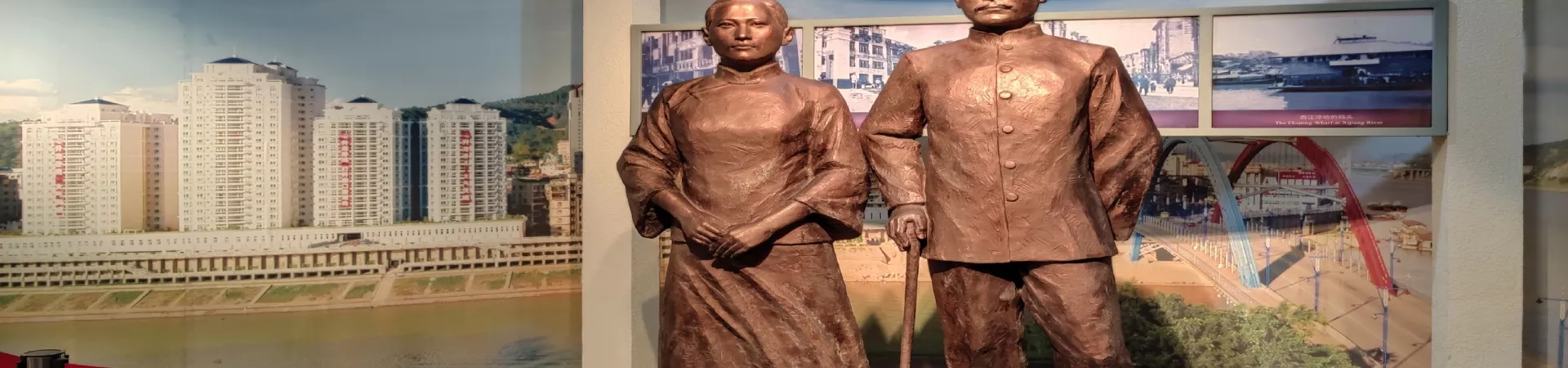
4.1. The Life and Work of Sun Yat-sen Beyond the auditorium, the memorial hall serves as an informative museum. It houses a comprehensive exhibition of photographs and replicated artifacts that systematically chronicle the life, philosophy, and revolutionary endeavors of Sun Yat-sen. These displays provide visitors with essential context about his pivotal role in ending millennia of imperial rule and his efforts to establish a modern republic.
4.2. Focus on the Wuzhou Connection A particularly significant part of the exhibition is dedicated to illuminating Sun Yat-sen's special and direct connection with the city of Wuzhou. It highlights his three visits to the city in early 1922, a critical period in Chinese history. During these visits, he was actively involved in directing the Northern Expedition, a military campaign aimed at unifying the country. Furthermore, the exhibition details his hands-on guidance to the local people of Wuzhou, offering advice on urban development, hometown construction, and the crucial task of managing and regulating the West River waterway. This focus transforms the memorial from a general tribute into a deeply local narrative, showcasing how national history is interwoven with regional development.
5. Practical Visitor Information
5.1. Opening Hours The Sun Yat-sen Memorial Hall is open to the public from 9:00 AM to 5:00 PM, Tuesday through Sunday, throughout the year. Please note that the hall is closed to visitors every Monday.
5.2. Suggested Duration To fully appreciate the architecture, the exhibitions, and the historical ambiance, a visit of approximately 1 to 3 hours is recommended.
5.3. Transportation Reaching the memorial hall is straightforward. Visitors can take public bus routes 2 or 3 to the "Square" (广场) stop in the Hexi district. From the bus stop, proceed northward, ascending a gentle slope which leads directly to the memorial hall grounds.