Si En Temple
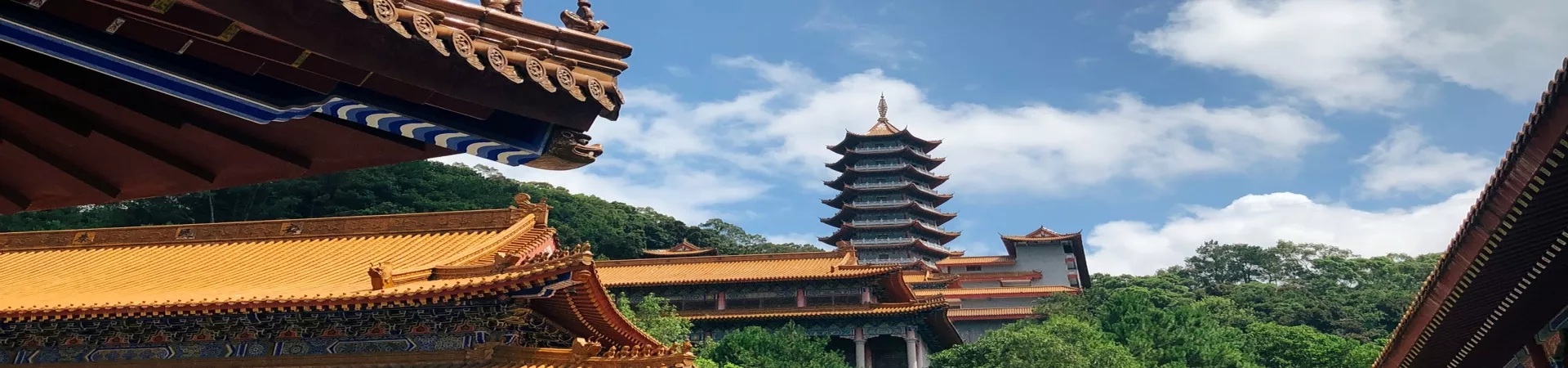
Subtitle: A Sanctuary of Serenity: Unveiling the Spiritual Grandeur of Wuzhou's Si'en Temple
1. Introduction: A Beacon of Buddhism in Southern China
Nestled into the lush midslope of Baiyun Mountain in Wuzhou, Guangxi, Si'en Temple stands as a monumental testament to modern Chinese Buddhist architecture and deep-rooted spiritual tradition. More than just a scenic landmark, it holds the distinguished title of being the sole precept-platform temple in Guangxi—the only site in the region where monastic ordination ceremonies are conducted—and is widely recognized as the largest modern Buddhist temple complex in South China. Its strategic placement offers a profound sense of harmony with nature: backed by the majestic ridges of the Wuling mountain range and overlooking the serene flow of the Xi River, which winds like a jade belt in the valley below. This setting creates an immediate atmosphere of tranquility, separating visitors from the urban bustle and preparing them for a journey through architectural splendor and spiritual contemplation.
2. Architectural Philosophy and Layout: A Journey Through Seven Terraces
The temple complex is a magnificent representation of Ming and Qing dynasty architectural styles, characterized by its imposing scale, symmetrical balance, and稳重 (wěnzhòng –稳重) or稳重 (wěnzhòng –稳重) aesthetic. This design is not merely for visual impact; it meticulously adheres to traditional Chinese cosmological principles of阴阳 (Yin-Yang) harmony, creating a space that feels both grand and fundamentally balanced.
The most defining aspect of its master plan is its unique structure across seven ascending terraces. This is a direct architectural embodiment of the Buddhist proverb "胜造七级浮屠" (shèng zào qī jí fútú), which means "better than building a seven-storied pagoda"—a metaphor for performing acts of great merit and compassion. Each platform represents a step in a symbolic ascent, guiding pilgrims and visitors through both physical elevation and spiritual progression.
2.1. The Approach and Outer Courtyards The journey begins with the grand 上山进寺台阶 (Mountain Ascension Stairway), setting a tone of reverence. The first major terraces house the guardian halls. The 天王殿 (Hall of the Heavenly Kings) introduces the protectors of the Buddhist realm, while the 韦驮殿 (Hall of Skanda) honors the devoted guardian of Buddhist monasteries. Flanking the central axis, the 钟楼 (Bell Tower) and 鼓楼 (Drum Tower) stand in symmetrical perfection, their instruments historically regulating the daily rhythms of monastic life.
3. The Heart of the Complex: Central Halls and Sacred Spaces
Ascending to the central and most significant terrace, one encounters the core of the temple: the 大雄宝殿 (Great Hero Hall or Main Buddha Hall). This is the architectural and spiritual centerpiece, housing majestic statues of the Buddhas. Its vast interior, often filled with the scent of incense and the murmur of prayers, inspires awe and devotion.
3.1. Flanking Halls and Bodhisattva Devotion To the east and west, the 东厢房 (East Wing) and 西厢房 (West Wing) provide necessary monastic facilities. Radiating from the core are halls dedicated to the great Bodhisattvas. The 观音殿 (Hall of Guanyin) is a place for prayers for compassion and mercy, while the 地藏殿 (Hall of Ksitigarbha) is dedicated to the vow to save all beings, even from the sufferings of the underworld. The 文殊殿 (Hall of Manjushri) and 普贤殿 (Hall of Samantabhadra) honor the Bodhisattvas of wisdom and virtuous action, respectively, completing a quartet representing key Buddhist virtues.
4. Repository of Wisdom and Panoramic Views
The upper terraces are dedicated to study and preservation. The 法堂 (Dharma Hall) serves as a lecture hall for scriptural teachings and discourses. Towering above, the 藏经楼 (Scripture Library) safeguards the temple's collection of Buddhist sutras and texts—the literary treasury of Buddhist wisdom.
4.1. The Summit: Pagoda and Pavilion Crowning the complex, a majestic 宝塔 (Pagoda) likely offers panoramic views of the surrounding mountain ranges and the winding Xi River. This structure symbolizes the axis of the world and the path to enlightenment. Nearby, the 阅经亭 (Scripture-Reading Pavilion) provides a tranquil, open-air space for quiet reflection or meditation amidst the clouds, representing the culmination of the temple's symbolic ascent.
5. Practical Information for Visitors
5.1. Getting There Public transportation provides convenient access. Visitors can take Wuzhou city bus routes 23 or 33 and alight at the dedicated 四恩寺站 (Si'en Temple Station).
5.2. Opening Hours The temple is open to the public daily from 07:00 to 16:00, throughout the year.
5.3. Suggested Duration and Tickets A comprehensive visit to explore the seven terraces, appreciate the architecture, and enjoy the peaceful ambiance typically requires 1 to 3 hours. For detailed information regarding admission tickets, it is recommended to consult directly with the temple or local tourist information centers upon arrival, as policies may be subject to change.