Li Jishen's Former Residence
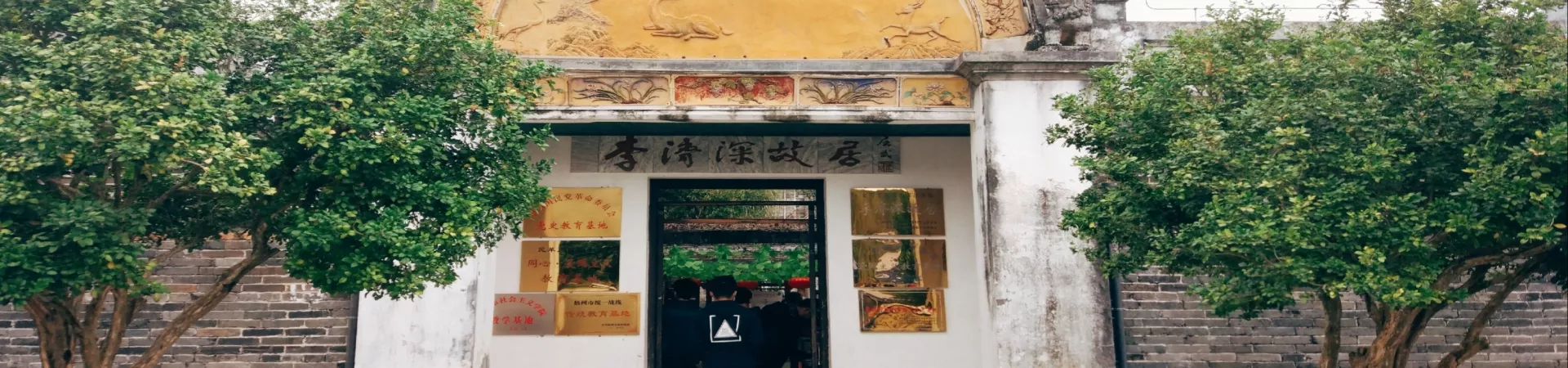
Subtitle: The Former Residence of Li Jishen: A Historical and Architectural Gem in Wuzhou
1. Introduction to the Site Nestled in Wuzhou, Guangxi, the Former Residence of Li Jishen stands as a significant cultural and historical monument. Constructed in 1925, this estate-style complex masterfully blends Chinese architectural traditions with strategic defensive features, reflecting the turbulent times of its era. Spanning an area of 3,040 square meters, it is not merely a dwelling but a testament to the life of a pivotal Chinese political figure and a stage for critical historical events during the Republican and Second Sino-Japanese War periods. Recognized for its profound heritage value, the residence was designated a National-Level Key Cultural Relic Protection Unit in 1997 and serves as an Autonomous Region-level patriotic education base, drawing visitors interested in modern history, architecture, and the legacy of Li Jishen.
2. Architectural Layout and Design 2.1. Overall Structure and Defensive Features The residence is a brick-and-wood structure designed as a manor. Its core layout follows the traditional Chinese siheyuan (courtyard house) style, featuring main halls and side wings with grey bricks and tiled roofs. However, it is uniquely fortified by a surrounding wall and, most notably, four corner artillery towers. These towers are connected by a distinctive raised,墩子式 (dunzi-style) pedestrian walkway that runs along the roofline, creating a continuous defensive perimeter. This ingenious integration of a residential compound with formidable fortifications made it a structure capable of both defense and offense, truly "a building from which one could advance to attack or retreat to defend."
2.2. Interior Spaces and Artistic Details The architectural appeal lies in its synthesis of Eastern and Western elements. The main entrance is set with a marble stone inscribed with five large characters, "李济深故居" (The Former Residence of Li Jishen), penned by Hu Yaobang. Inside, ascending to the second floor via a staircase reveals elegant Western-style railings along the surrounding veranda. The doors and windows are adorned with exquisite carvings of floral and plant patterns, adding a layer of classical, antique charm. The interior spaces on this floor, including Li Jishen's bedroom, reception room, and telegraph room, have been largely preserved with their original furnishings, offering an authentic glimpse into the past.
2.3. Integration with the Natural Environment The residence is complemented by its serene natural setting. Behind the main courtyards lies a small, lush forest of ancient Tie li mu (Mesua ferrea) trees, their verdant foliage providing a tranquil and picturesque backdrop that contrasts with the building's martial features, creating an atmosphere of quiet elegance.
3. Historical Significance and Key Events 3.1. A Center for Political Activity The residence was far more than a private home; it was a crucial hub for political discourse and strategy. Following his release from imprisonment by Chiang Kai-shek in 1929, Li Jishen returned to live here. In 1936, it hosted a meeting of the National Revolutionary Alliance. Its most active period came during the Second Sino-Japanese War (World War II).
3.2. Wartime Headquarters and Coordination Center During the anti-Japanese resistance, Li Jishen used the residence as a base to liaise between the Kuomintang and the Communist Party, as well as with influential cultural figures. Key personalities such as Chen Mingshu, Jiang Guangnai, Cai Tingkai, Zhu Yunshan, Mei Gongbin, Chen Xizhou, and Xian Xiafu gathered here to discuss crucial matters concerning resistance activities behind enemy lines. In 1944, acting on a suggestion from Zhou Enlai, Li Jishen returned to his old residence to organize local armed militias. Furthermore, in collaboration with a group of patriotic intellectuals dispatched by Dong Biwu, he established the Southern District Anti-Japanese Committee here. This committee actively organized resistance efforts and maintained vital telegraphic communications with the Communist base in Yan'an.
4. Visitor Information and Experience 4.1. Practical Details for Planning a Visit * Opening Hours: The site is open daily from 08:00 to 18:30. * Closure Note: It is closed to the public on Mondays, except for important public holidays. * Admission Fee: Entry is free of charge. * Recommended Duration: Visitors typically spend 1 to 3 hours exploring the residence, its courtyards, and the exhibition spaces.
4.2. The Modern Visitor's Perspective Today, visitors explore the well-preserved complex, often marveling at the seamless and awe-inspiring combination of Chinese and Western architectural artistry, as well as the unique functional fusion of domestic living quarters and military stronghold. Walking through the courtyards, ascending to the fortified walkways, and viewing the historical rooms allows one to vividly imagine the weighty discussions and pivotal decisions that took place within these walls. The residence stands as a silent yet powerful narrator of a complex chapter in 20th-century Chinese history.