China Arcade City
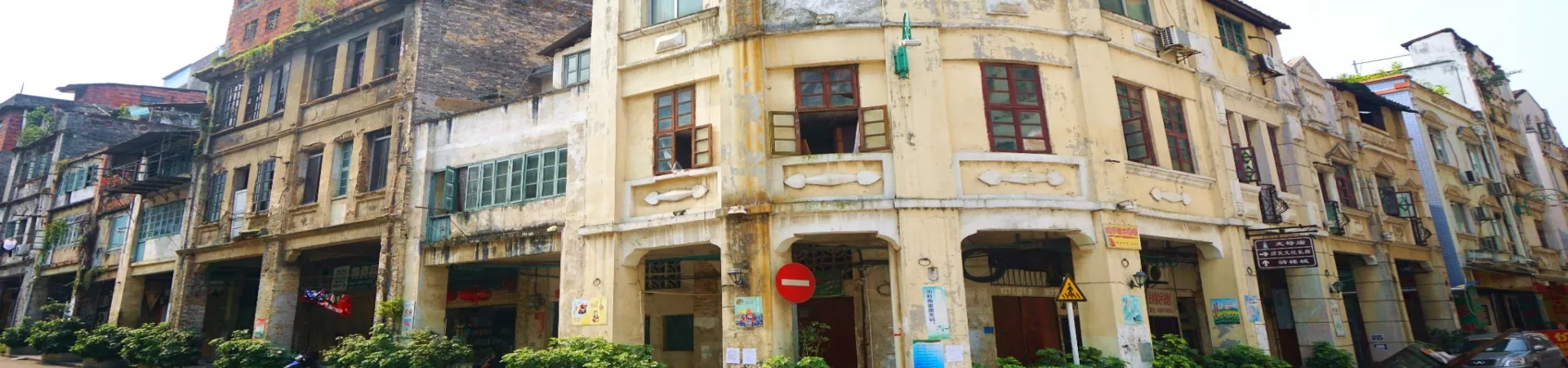
Subtitle: A Living Chronicle of Wuzhou's Mercantile Heritage
1. Introduction to Wuzhou's Qilou City
Nestled along the banks of the Xi River in Guangxi, Wuzhou's Qilou City stands as one of China's most extensive and remarkably preserved collections of arcaded architecture. With 22 distinct streets spanning approximately 7 kilometers in total, encompassing over 560 individual Qilou buildings, the scale and concentration here are unparalleled in the country. This architectural forest, where the ground floors are recessed to form continuous, sheltered colonnades, is far more than a streetscape; it is the physical embodiment of Wuzhou's identity as a historic mercantile powerhouse. As noted by the renowned contemporary Chinese cultural scholar Xiao Jian, the Qilou City serves as the definitive historical witness to a century of modern commercial prosperity in Wuzhou. A day spent wandering its shaded walkways offers a tangible journey through more than two millennia of the city's social and economic narrative.
2. Architectural Scale and Historical Significance
2.1 The Layout and Scope The Qilou district forms a dense urban web, with key thoroughfares including Dandong Shang Road, Dandong Xia Road, Sha Street, Danan Road, Xiaonan Road, Sifang Road, Wufang Road, Jiufang Road, Nanhuan Road, Dazhong Road, Guilin Road, Guibei Road, Beihuan Road, Minzhu Road, Jianshe Road, and Zhongshan Road. The longest single stretch runs for an impressive 2,530 meters. This interconnected complex was not merely residential; it was the bustling heart of commerce. At its zenith, these streets hosted over 1,500 commercial establishments of all sizes, fostering the success of tens of thousands of merchants and cementing Wuzhou's role as a critical trading hub connecting inland regions with the Pearl River Delta and beyond.
2.2 Function and Form: Adaptation to a Subtropical Climate The Qilou design is a masterpiece of pragmatic adaptation. The characteristic covered walkways, supported by rows of pillars, provided essential shelter for pedestrians and shoppers from the region's frequent rainfall and intense summer sun. This clever design allowed commercial and social life to thrive regardless of the weather, with shops opening directly onto the cool, shaded colonnades. The upper floors, typically projecting over the walkway, often served as residential or storage space, creating a vibrant, integrated environment where business and daily life coexisted seamlessly.
3. Exploring the Heart of Qilou City: Key Landmarks and Streets
3.1 Iconic Historical Buildings Scattered throughout the district are several edifices that stand out for their architectural grandeur or historical importance. Among the most classic are: * The Former Wuzhou Customs House: A symbol of the city's historical significance in regional trade and international exchange. * The Former Stout Memorial Hospital (SiDa Gong Hospital): Reflecting the influence of modern medicine and missionary activity in early 20th-century Wuzhou. * Historic Hotels and Restaurants: Establishments like the Datong Hotel, the New West Hotel (Xinxi Lüshe), the Dandong Restaurant, and the Yuexilou Restaurant were once the social and dining hubs for the city's wealthy merchants and travelers, echoing with past opulence.
3.2 Streets Steeped in Culture While the commercial arteries buzz with activity, certain lanes offer a deeper dive into local history. * Mawang Street and Jinlong Lane: These are considered the areas with the richest historical and cultural底蕴 (heritage). They often feature more residential-style Qilou and provide a quieter, more intimate glimpse into the neighborhood's past community life.
3.3 The Central Core: From Memorial Arch to Cultural Promenade The focal point of Qilou City stretches from its ceremonial entrance archway to the Central Courtyard Square. This area houses statues of pivotal figures from Wuzhou's long history, such as Zhao Guang and Mouzi, allowing visitors to connect faces with the city's story. A particularly unique cultural feature is the 1.4-kilometer-long Wuzhou Historical and Cultural Corridor, located on the inner wall of the flood embankment between the New West Hotel and the Longmu Temple. This extensive mural or series of exhibits visually chronicles the city's 2000-year evolution, making it possible to, as locals say, "comprehend Wuzhou's millennia of history in a single day" by strolling this promenade.
4. Visitor Information and Practical Details
4.1 Admission and Opening Hours Access to the Qilou City streets and their external architecture is completely free of charge. The district is an open public space, allowing for exploration at any time. It is officially listed as open 24 hours a day, every day of the year. This permits not only daytime visits to appreciate architectural details and museum exhibits but also evening strolls to experience the area illuminated by night lights, when the buildings take on a different character.
4.2 Suggested Duration and Contact To fully appreciate the scale, explore the key buildings, visit the central square, and walk a section of the Cultural Corridor, a minimum of 3 hours is recommended. More leisurely exploration, including time for local snacks from vendors under the colonnades or visits to specific museums, can easily fill half a day or more. For specific inquiries, such as guided tour availability or information on particular heritage sites within the district, the local tourism information can be contacted at 0774-2823611.