Tianmen Mountain
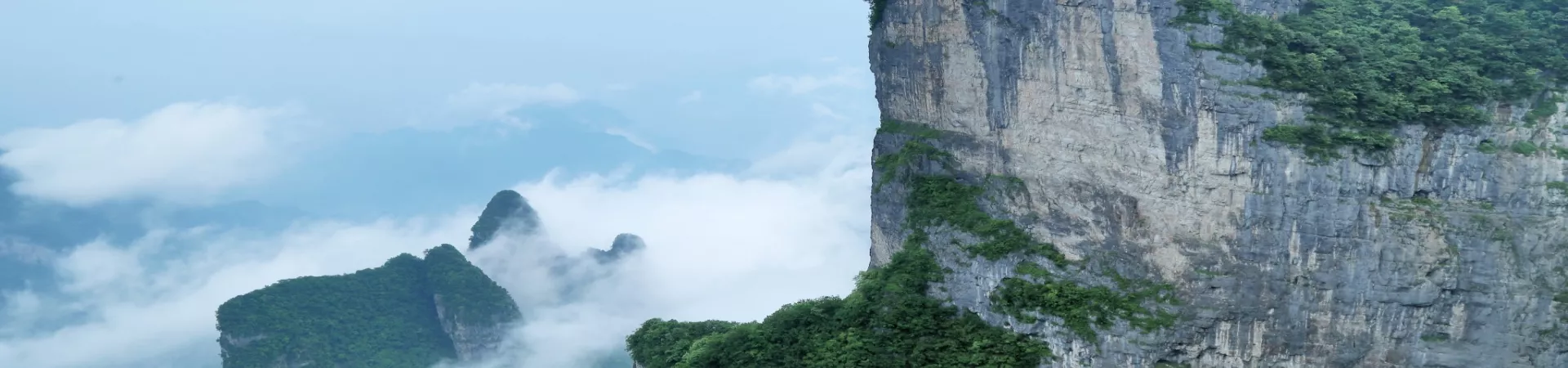
Subtitle: A Journey to the Poetic Gateway of the Yangtze
Nestled within Daqiao Town, Jiujiang District of Wuhu City in Anhui Province, the Tianmen Mountain Scenic Area stands as a majestic sentinel on the northern banks of the Yangtze River. Its fame is eternally intertwined with the verses of Li Bai, the legendary Tang Dynasty poet, whose poem "Gazing at Tianmen Mountain" catapulted this natural wonder into the realm of cultural immortality. The site is not a single peak but a dramatic pair—the East Liang Mountain and the West Liang Mountain—facing each other squarely across the rushing river, a formation poetically described as "clamping the river in对峙 (confrontation)."
The Geological Drama and Poetic Landscape
· The Pillars of the River The core spectacle of Tianmen Mountain lies in its formidable geography. The East Liang Mountain, the more precipitous of the two, rises abruptly from the very heart of the Yangtze's channel. Its cliffs appear as if cleaved by a divine axe, sheer and imposing. This natural bulwark stands as an immovable pillar mid-current, performing a breathtaking act of hydrological defiance: it forces the mighty, eastward-flowing Yangtze to dramatically swerve north. This creates the iconic scene captured in Li Bai's line, "The green water eastward here rolls back." The sight of the powerful river repulsed and changing course at the foot of the unyielding mountain is a humbling display of nature's force and persistence.
· A Canvas for Poets and Artists This unique interplay of mountain and water has, for over a millennium, served as a powerful muse. The "意境 (artistic conception)" of "天门烟浪 (Tianmen's Misty Waves)"—where the towering cliffs meet the swirling, mist-covered waters—has drawn generations of scholars, painters, and poets. They came to witness this grandeur, leaving behind a rich tapestry of inscriptions and verses that layer historical depth upon the physical landscape. Yet, amidst all literary contributions, it is Li Bai's quatrain that resonates with unmatched vigor and remains the definitive portrait of the scene: "Breaking through Tianmen Mountain, the great River rolls through; The green water eastward here rolls back, turning north. From the two river banks, blue hills tower against each other; A lonely sail comes floating from the edge of the sun." His words perfectly freeze in time the dynamic energy of the converging hills, the redirected river, and the solitary journey upon it.
Practical Information for Visitors
· Admission and Operating Hours A significant advantage for travelers is that access to the Tianmen Mountain scenic area is completely free of charge. Visitors can enjoy its natural and cultural splendors without an entrance ticket. Furthermore, the area is open 24 hours a day, every day of the year, offering flexibility for those wishing to experience the sunrise over the Yangtze or the serene atmosphere under the stars.
· Planning Your Visit A full exploration of the area, including hiking the paths for different vantage points, contemplating the historical sites, and absorbing the panoramic views, typically requires a full day. It is advisable to wear comfortable walking shoes and carry water and sun protection. The site's accessibility around the clock allows for a personalized pace, whether one seeks a vigorous morning hike or a contemplative evening by the riverside.
· Contact Information For specific inquiries before your visit, you can contact the scenic area at 0553-5317588.
Information last updated: January 5, 2023. Credit and thanks to contributors from the travel community for their valuable input.