Wuhan Yangtze River Bridge
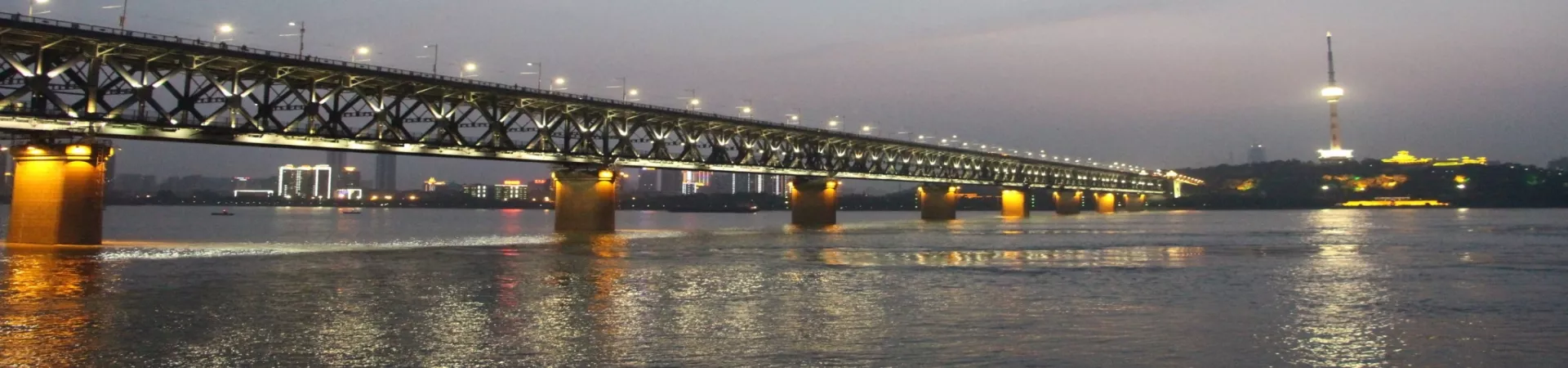
Subtitle: A Monument to Modernity: Exploring Wuhan Yangtze River Bridge
I. An Engineering Marvel Forging a Nation's Future
Spanning the mighty Yangtze River with an imposing length of approximately 1,670 meters, the Wuhan Yangtze River Bridge stands as a monument of profound historical and symbolic significance. Its primary claim to fame is its status as the very first bridge built across the Yangtze River after the founding of the People's Republic of China. Completed in 1957, it earned the venerable title "The First Bridge of the Ten Thousand Li Yangtze," marking a pivotal moment in China's modern infrastructure development. For the first time, it permanently linked the historical tri-cities of Wuchang, Hankou, and Hanyang (collectively forming modern Wuhan), transforming them from separate entities bound by ferries into a unified, interconnected metropolis. This bridge was not merely a transportation link; it was a powerful statement of national rejuvenation and industrial capability, a concrete symbol of a new era forging connections where none permanently existed before.
II. Architectural Design and Aesthetic Character
The bridge's design is a fascinating snapshot of its era, reflecting the international political landscape of the 1950s.
A. Structural Layout and Functionality The bridge is a masterclass in efficient, dual-purpose design. It employs a two-tier structure that seamlessly handles both road and rail traffic. The upper deck is a four-lane roadway, flanked on both sides by wide pedestrian walkways that offer visitors safe and panoramic pathways. The lower deck accommodates a double-track railway line, which remains a crucial artery in China's extensive rail network. This ingenious vertical separation allows for the uninterrupted flow of diverse types of traffic, a design principle that was revolutionary for its time in China.
B. The Iconic Bridge Towers and Soviet Influence Perhaps the most visually distinctive features are the majestic bridge towers at either end. These formidable structures were built with the support and technical assistance of the Soviet Union, and their design is imbued with a pronounced, robust Russian architectural style. Characterized by their solid, monumental forms and decorative elements reminiscent of Socialist Classicism, the towers serve as both functional anchor points for the suspension cables and powerful aesthetic statements. They stand as enduring reminders of the Sino-Soviet collaboration during the early years of the PRC, adding a layer of historical depth to the bridge's visual appeal.
III. The Visitor Experience: Perspectives and Pathways
A visit to the Wuhan Yangtze River Bridge is more than just sightseeing; it is an immersive experience that engages the senses and offers multiple vantage points of the city.
A. The Pedestrian Walk: A Must-Do Urban Hike The most highly recommended way to appreciate the scale and grandeur of the bridge is to traverse it on foot via the elevated pedestrian walkways. A walk across the entire span takes roughly 30 to 50 minutes at a leisurely pace. This journey provides an unparalleled, 360-degree open-air panorama of Wuhan. To the north, you can gaze upon the bustling skyscrapers of Hankou's financial district; to the south, the rolling hills and historical sites of Wuchang. The endless flow of the Yangtze River beneath your feet, dotted with barges and ships, completes the dynamic scene. It is particularly breathtaking at sunset or when the city lights begin to twinkle at dusk.
B. Exploring the Bridgehead Areas and Connectivity The bridge serves as an excellent central point for exploring several key attractions. At the Wuchang end, the bridge is in close proximity to the iconic Yellow Crane Tower (Huanghelou), a short distance away. A visit can easily combine a historical poetic journey at the tower with the modern engineering spectacle of the bridge. Nearby, the Wuchang Uprising Memorial Museum (Xinhai Revolution Museum) commemorates the 1911 revolution, allowing for a deep dive into China's modern history within a compact area. Exploring the plazas and gardens around the bridgeheads themselves offers closer views of the Soviet-style towers and the intricate details of the bridge's construction.
IV. Practical Information for Planning Your Visit
A. Transportation Access The bridge is easily accessible by public bus. Key routes that stop near the Wuchang (southern) approach include buses 11, 18, 25, 43, 514, 566, and 916. Alight at the Linjiang Avenue Pinghumen Station and follow signs for a short walk to the bridge entrance. Taxis and ride-hailing services are also convenient options for direct access.
B. Admission and Services * Bridge Access: Admission to walk onto the bridge is completely free of charge. * Bridge Tower Elevators: For a small fee of 2 RMB, visitors can take an elevator inside one of the bridge towers. This offers a unique, elevated perspective from the tower itself and a closer look at its internal structure, though the views from the walkway are generally considered more comprehensive.
C. Suggested Duration and Opening Hours A visit can be tailored to your interests. A brisk walk across and back, with some photography, can be accomplished in about 1 hour. Allowing 2-3 hours is recommended if you plan to ascend the tower via elevator, explore the bridgehead areas in detail, or combine the visit with a stroll to nearby scenic overlooks. The bridge is open to pedestrians 24 hours a day, every day of the year. The experience varies dramatically from the bright, clear vistas of daytime to the mesmerizing glow of the city illuminated at night.
Information last verified: July 2023