Gude Temple
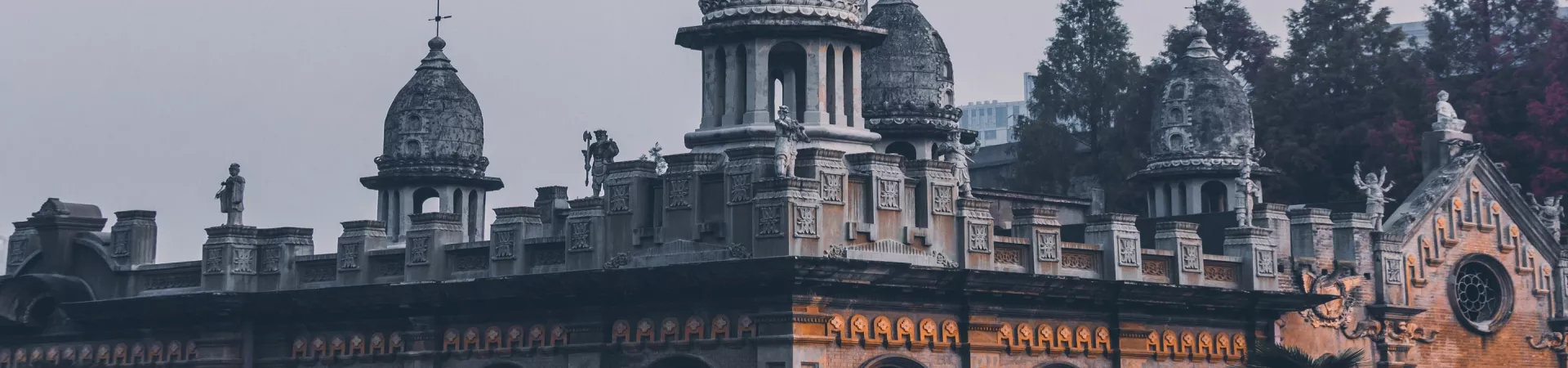
A Hidden Jewel of Wuhan: The Architectural and Spiritual Marvel of Gude Temple
Nestled unassumingly amidst the modern high-rises of Wuhan, a city more famously associated with its bustling commerce and historic role as a transport hub, lies a spiritual sanctuary of profound beauty and unique heritage: Gude Temple. For many years, this architectural gem remained a secret, unknown even to numerous long-time residents of Wuhan, quietly preserving its sanctity within the urban sprawl. Today, it stands not only as an active place of Buddhist worship but also as a monument of immense historical and architectural significance, offering visitors a startling and serene journey into a fusion of cultures and faiths.
The Essence of Gude: Philosophy in Name and Form
The temple's name, "Gude," is derived from the Buddhist phrase "Xinxing haogu, pudu yi de," which translates to "A heart inclined towards antiquity, delivering all with virtue." This philosophy is deeply embedded in the temple's very essence. Founded during the late Qing Dynasty in 1877, its history is one of resilience, having been rebuilt and expanded following destruction. The most extraordinary aspect of Gude Temple, however, is its breathtaking physical form, which seems to transport visitors far beyond China's borders.
An Architectural Anomaly: The Hall of Śākyamuni
The centerpiece of the temple complex, the main hall enshrining Śākyamuni Buddha, is an architectural masterpiece that defies all expectations of traditional Chinese temple design.
A Burmese Inspiration The hall is a meticulous replica of the renowned Ananda Temple in Bagan, Myanmar. This direct architectural homage results in a structure of stunning exoticism, making it one of only two surviving Buddhist buildings of this specific style in the entire world. Its presence in central China is nothing short of remarkable.
Deconstructing the Hybrid Style The hall's design is a sophisticated synthesis of elements from diverse architectural traditions. At its core, the layout follows a classic Greek cross plan, with four facades of nearly identical design. Soaring above this base are Gothic-style pointed arch windows and vaults, lending the structure a sense of vertical aspiration. The most striking features are the spires and pagodas that crown the roof. Here, one can see the clear influence of Burmese Buddhist pagodas, yet their intricate carvings and forms also echo motifs found in Indian, Thai, and even European Christian architectural traditions. This fearless fusion creates a visually harmonious yet intellectually complex whole.
Symbolism in Stone and Space Every architectural element carries symbolic weight. The multiple spires represent various Buddhist doctrines and realms. The spacious, column-free interior of the main hall, achieved through innovative structural techniques for its time, creates an overwhelming sense of openness and tranquility, focusing the devotee's or visitor's mind entirely on the majestic golden Buddha statues within.
A Visitor's Guide: Practical Information for Your Journey
To fully appreciate the serenity and grandeur of Gude Temple, a visit requires some practical planning.
Location and Ambiance The temple's location at 74 Huangpu Road, Jiang'an District, is a study in contrasts. The moment you step through its gate, the noise and pace of the modern city fade away, replaced by the quiet murmur of prayers, the scent of incense, and the awe-inspiring sight of the temple set against a backdrop of contemporary apartment buildings. This juxtaposition heightens its otherworldly charm.
Admission and Etiquette Gude Temple operates on a unique access model. Entry to the temple grounds is free of charge, allowing everyone to appreciate its external architecture and peaceful courtyards. However, for those wishing to enter the main hall to pay respects to the Buddhas, a small fee is required to purchase incense vouchers (香卷). These vouchers typically cover a bundle of incense, adhering to the temple's practice. It is crucial to remember that this is primarily an active monastery; visitors are expected to dress modestly, speak softly, and observe all posted guidelines, especially regarding photography inside the halls.
Getting There Reaching the temple is straightforward via Wuhan's public bus system. Visitors can take bus 671 or trolleybus 3 and alight at the "Gongnongbing Road Kongjun Yiyuan" (Workers-Soldiers-Peasants Road Air Force Hospital) stop. From there, a short and pleasant walk will lead you to the temple entrance.
Planning Your Visit The temple is open daily from 8:30 AM to 4:00 PM, with last entry at 4:00 PM. Allocating 1 to 3 hours is recommended to leisurely explore the complex, absorb the details of the architecture, and experience the calming atmosphere. As with all cultural sites, it is advisable to verify opening hours before your visit, as they may be subject to change for special religious observances.
Gude Temple is far more than a mere tourist attraction. It is a living testament to the universal reach of spiritual aspiration and artistic expression. It challenges architectural conventions and invites contemplation. In a city constantly looking forward, Gude Temple offers a profound, beautiful, and utterly unique pause—a space where history, faith, and global artistry converge in silent, majestic harmony.