Linkeng Ancient Village
Subtitle: A Journey Through Time in the Misty Mountains: Discovering Linkeng Village
1. Introduction: An Echo from the Past Nestled deep within the Huangnan Township of Yongjia County, Wenzhou, Zhejiang Province, lies Linkeng Village, a hidden gem that seems to have been forgotten by the relentless march of time. This ancient settlement, with a history stretching back over 700 years, offers a rare and profound glimpse into a traditional Chinese way of life that has all but vanished elsewhere. The village’s story is one of quiet resilience and serene beauty, suddenly brought into the modern world’s consciousness through a poignant event. Today, it stands not as a mere museum piece, but as a living, breathing community where the past and present coexist in a delicate, mist-shrouded balance. For the discerning traveler seeking authenticity over artifice, Linkeng is a destination that promises both visual poetry and a deep sense of tranquility.
2. A Tapestry of History and Legend 2.1. Origins and the Legacy of the Mao Clan The historical narrative of Linkeng is woven with threads of legend and familial continuity. Interestingly, despite its name suggesting a "Forest Pit" or a settlement founded by the Lin family, the village is overwhelmingly inhabited by descendants of the Mao clan. Local lore recounts that the Lin family were the original settlers, but for reasons lost to time, they exchanged locations with the Mao family from the nearby Daoji Village centuries ago. This fateful exchange allowed the Mao lineage to take root in this fertile mountain basin, where they have thrived and preserved their heritage for more than seven generations. Walking through the village, one walks through the living history of this single, enduring family.
2.2. The Turning Point: A Bittersweet Discovery For most of its existence, Linkeng remained a secluded secret, known only to its inhabitants and a handful of locals. Its transformation began in 2001, following a tragic accident that resonated across China. Zhao Qunli, the deputy director of Hong Kong's Phoenix Television and a renowned pioneer of aerial photography in China, lost his life in a crash while filming the breathtaking landscapes around Linkeng. His mission was to capture the untouched beauty of the region, and in a cruel twist of fate, his final footage brought this obscure village into the national spotlight. This event, while sorrowful, unveiled Linkeng’s majestic scenery to the world, transforming it from an anonymous hamlet into a cherished destination for photographers, cultural enthusiasts, and travelers seeking paths less trodden.
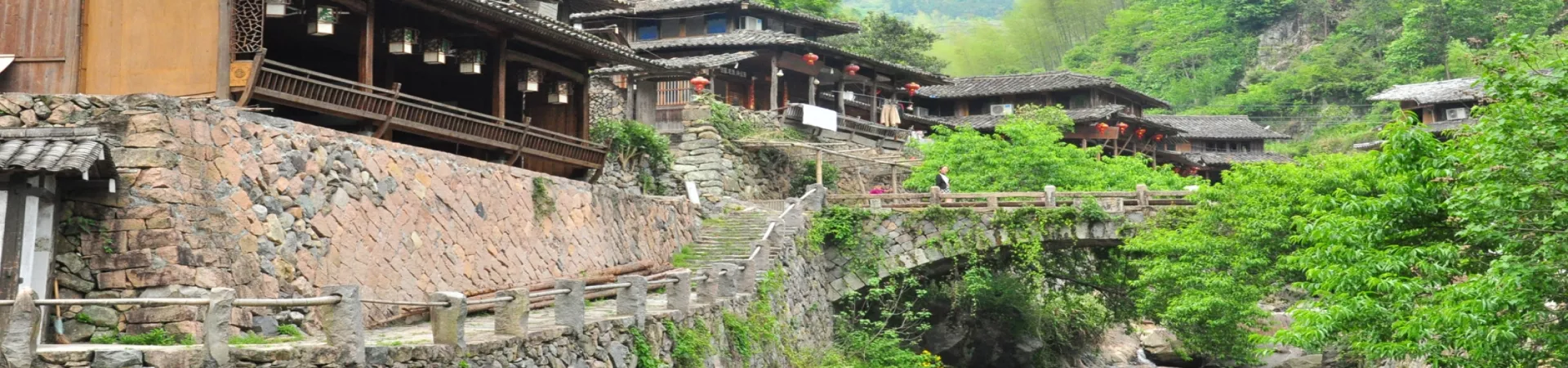
3. The Architectural Soul: A Living Museum 3.1. Masterpieces of Wood and Stone Linkeng’s true claim to fame lies not just in its history, but in its extraordinary physical preservation. It is renowned as the location of the most complete and well-preserved collection of mountain-dwelling vernacular architecture in the entire Nanxi River basin. These are not reconstructed replicas; they are authentic homes with soul. The village is a harmonious ensemble of wooden houses, many exceeding 100 years in age, with the most ancient among them proudly standing for over two centuries. Their construction follows ancient wisdom, utilizing local timber and stone, built to withstand the humid mountain climate without the need for nails in some cases, relying instead on sophisticated mortise-and-tenon joinery.
3.2. Harmony with Nature: The Village Layout The genius of Linkeng’s design is its sublime integration with the natural environment. The houses are not placed upon the land but emerge from it. They cling ingeniously to the steep mountain slopes in cascading tiers, creating a captivating, multi-layered panorama. This staggered arrangement ensures that every home receives sunlight and enjoys views of the lush surroundings, while also facilitating natural drainage. The overall effect is one of impeccable balance and organic unity. The structures, with their dark grey tiled roofs, weathered wooden façades, and elegantly carved eaves, appear as natural extensions of the forested hillsides—a testament to the philosophy of living in harmony with nature.
4. The Immersive Experience: A Landscape Painting Come to Life 4.1. The Symphony of Elements To visit Linkeng is to step into a classical Chinese landscape painting. The village is a living composition of elemental beauty. Crystal-clear streams, fed by mountain springs, meander through the settlement, their gentle murmur providing a constant soundtrack. Simple yet elegant stone arch bridges connect the pathways, framing picturesque views of the water flowing beneath. In the early mornings or during the preparation of meals, thin wisps of cooking smoke curl upwards from the chimneys, blending with the low-hanging clouds that frequently embrace the village. This ethereal fog often shrouds the peaks, softening the outlines of the ancient houses and creating a dreamlike, almost mystical atmosphere where the boundaries between earth and sky gracefully dissolve.
4.2. Practical Information for the Visit 4.2.1. Duration and Pace To fully appreciate the tranquility and details of Linkeng, a visit of three hours or more is highly recommended. This allows ample time to wander the stone-paved lanes at a leisurely pace, cross its charming bridges, observe the daily rhythms of local life, and perhaps enjoy a simple meal while absorbing the panoramic views. Rushing through would mean missing its essence.
4.2.2. Admission and Accessibility In a welcome contrast to many commercialized attractions, entrance to Linkeng Village is free of charge. Visitors can explore its lanes and public spaces without a ticket. (As with all travel, it is advisable to verify this information with official sources prior to your visit, as policies can occasionally change.)
4.2.3. Opening Hours The village is accessible 24 hours a day, every day of the year. This round-the-clock access allows for experiencing different moods—the fresh, vibrant mist of dawn, the soft golden light of late afternoon, or the serene quietude under a starry night sky. The open schedule underscores the village’s nature as a living community rather than a gated scenic spot.