Weifang Shihu Garden Museum
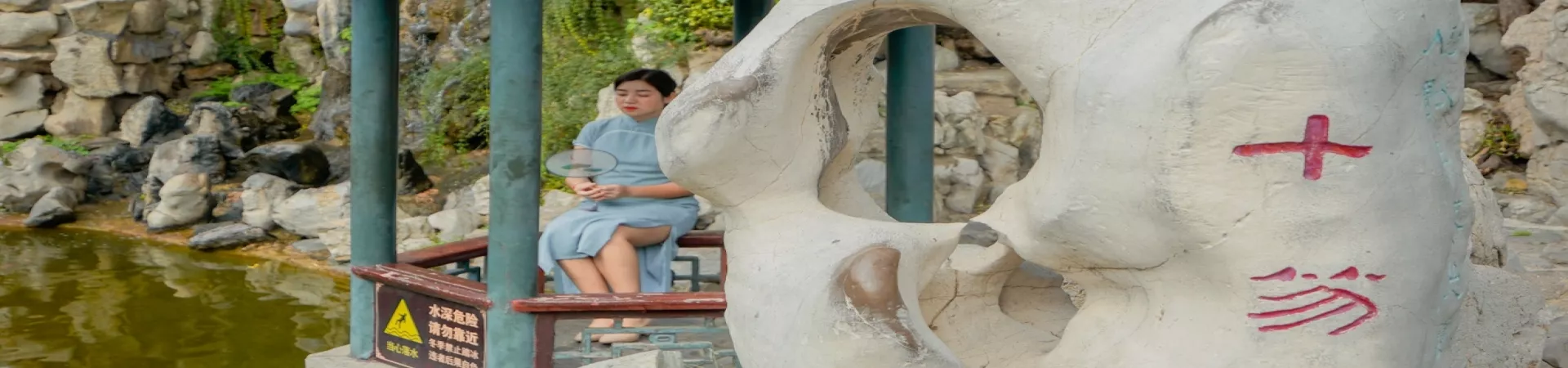
Subtitle: A Journey Through Time: Exploring the Miniature Grandeur of Shihu Garden, a Northern Chinese Classical Oasis
Introduction: A Pocket-Sized Masterpiece in the Heart of Weifang
Nestled within the bustling urban landscape of Weifang City, Shandong Province, lies a serene and exquisite counterpoint: the Shihu Garden Museum. More than just a garden, it is a profound testament to the philosophical and aesthetic ideals of classical Chinese landscape design, masterfully condensed into a remarkably intimate space. Known historically as the Ding Family Garden, this architectural and horticultural gem dates back to the Ming Dynasty, with its current form largely shaped during the late Qing Dynasty. Its very name, "Shihu," meaning "Ten Tablet Garden," poetically alludes to its compact size—comparable to the combined area of ten ancient official tablets (笏, hù)—yet within this modest footprint of approximately 2,000 square meters unfolds a world of boundless artistic imagination and natural harmony. Recognized for its exceptional cultural value, it was designated as a National Key Cultural Relics Protection Unit by the State Council of China in 1988, solidifying its status as a pinnacle of northern Chinese private garden art.
1. Historical Roots and Architectural Philosophy
1.1. From Ming Dynasty Beginnings to Qing Dynasty Refinement The garden's origins trace back to the Ming Dynasty, serving as a private retreat for successive scholars and officials. It was during the late Qing period, under the ownership of the Ding family, a lineage of wealthy merchants and literati, that the garden underwent significant expansion and artistic enhancement. This evolution reflects a perfect fusion of merchant wealth and scholarly taste, aiming to create an idealized microcosm of the natural world that adhered to the principles of balance, concealment, and symbolic representation.
1.2. The Philosophy of "Borrowing Scenery" and Spatial Illusion The core genius of Shihu Garden lies in its ingenious spatial design, which masterfully employs techniques such as "borrowing scenery" (借景, jiè jǐng) and strategic partitioning to create an illusion of depth and expansiveness far beyond its physical confines. Winding paths, strategically placed rockeries, latticed windows, and a careful arrangement of buildings guide the visitor through a sequence of carefully composed vistas, each revealing itself unexpectedly, ensuring that no single viewpoint captures the entirety of the garden. This design encourages contemplation and slow discovery, embodying the Taoist and Confucian ideals of harmony between humanity and nature.
2. A Guided Tour Through the Garden's Landscape
2.1. The Central Water Feature: Heart of the Composition At the physical and symbolic center of the garden lies a tranquil pond, around which the entire layout revolves. This body of water acts as a mirror to the sky and surrounding pavilions, amplifying light and space. Ornamental fish glide beneath its surface, while the reflections of elegant structures like the "Rainbow-Bridge Water Pavilion" double the visual poetry. The pond is encircled by a meticulously crafted arrangement of Taihu rocks, their weathered, porous forms representing miniature mountain ranges, a hallmark of Chinese garden artistry.
2.2. Pavilions, Towers, and Verandas: Architecture in Harmony with Nature The garden is dotted with a variety of classical structures, each with a poetic name and specific function for leisure, study, or appreciation of the seasons. * The Four-Sided Pavilion (四照亭): Often positioned as a central viewing platform, this open pavilion offers framed perspectives in all directions. * The Rockery Study (假山书房): Built against or within artificial hills, such retreats provided a secluded environment for reading, painting, and intellectual pursuit, surrounded by the inspiration of "mountain" scenery. * Winding Corridors (回廊): These covered walkways not only provide shelter but also act as connective threads, subtly dividing spaces and controlling the narrative of the visitor's journey, with latticed windows offering tantalizing glimpses of what lies ahead or beside.
2.3. Flora, Inscriptions, and Symbolic Detail Beyond architecture, the garden's essence is conveyed through its botanical choices and literary embellishments. Carefully pruned pines, symbolizing longevity, winter-blooming plum blossoms representing resilience, and fragrant osmanthus are interspersed throughout. Couplets and horizontal plaques, inscribed with calligraphy by masters, adorn pillars and lintels. These inscriptions, often quoting classical poetry or philosophical phrases, directly invite the visitor to interpret the scene before them through the lens of cultured reflection, deepening the immersive experience.
3. Practical Information for the Visit
3.1. Location and Access Shihu Garden Museum is situated at Hu Jia Pai Fang Street in Weifang City. It is accessible by local taxi, public bus, or as a key stop on city cultural tours. Its central location makes it a convenient and essential destination for understanding Weifang's historical and cultural fabric beyond its famous kite heritage.
3.2. Visiting Hours and Admission The garden is open to the public daily from 9:00 AM to 5:00 PM, with the last admission granted at 4:30 PM. These hours apply throughout the year, from January 1st to December 31st. Admission is ticketed, with a standard adult ticket priced at 22 RMB. It is advisable to check for any potential adjustments during national holidays or for special student or group rates.
3.3. Suggested Duration and Experience A meaningful visit to Shihu Garden requires a pace of unhurried appreciation. While one can walk through its paths in under an hour, a stay of 1 to 3 hours is recommended to fully absorb the atmosphere, decipher the inscriptions, observe the play of light, and appreciate the intricate details. Each season offers a distinct charm: lush greenery in spring and summer, golden hues in autumn, and a stark, poetic beauty when dusted with winter snow.
4. The Garden as a Living Museum
4.1. Preservation and Cultural Role As a protected national heritage site, the Shihu Garden Museum's role extends beyond tourism. It serves as an active center for the preservation and study of traditional garden architecture, landscaping techniques, and the literati culture of northern China. Restoration and maintenance work is conducted with strict adherence to historical methods and materials, ensuring the authenticity of this living artifact.
4.2. An Immersive Encounter with Chinese Aesthetics A visit to Shihu Garden is ultimately an immersive lesson in classical Chinese aesthetics. It demonstrates how space, architecture, poetry, and nature can be woven together to create a sanctuary for the spirit. It stands as a powerful reminder that grandeur is not a function of scale, but of depth of thought and refinement of execution. For the modern visitor, it offers a rare opportunity to step into a perfectly composed landscape painting and experience, firsthand, the timeless pursuit of harmony that defines a cornerstone of China's cultural heritage.