Fangongting Park
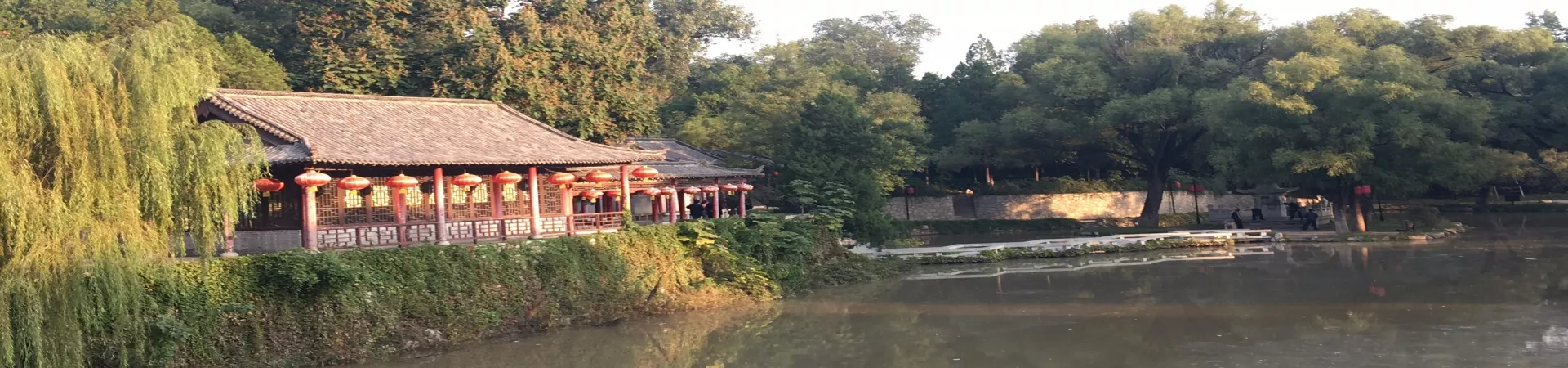
Subtitle: A Journey Through History, Nature, and Culture in Weifang's Green Heart
1. Introduction to Fangongting Park Nestled in the historic city of Weifang, in China's Shandong province, Fangongting Park stands as a serene and culturally profound oasis that seamlessly blends natural beauty with deep historical significance. More than just a public garden, it is a living tribute to Fan Zhongyan, one of China's most revered statesmen, poets, and philosophers from the Northern Song Dynasty. The park's very name, "Fangongting," translates to "Pavilion of Lord Fan," anchoring the entire landscape around his legacy. For visitors, the park offers a multifaceted experience: it is a place for quiet contemplation amidst ancient trees and tranquil ponds, an open-air museum of classical Chinese architecture and literature, and a vibrant community space where locals practice tai chi, stroll, and socialize. Its unique charm lies in this harmonious fusion, providing a peaceful retreat from urban life while inviting exploration into the rich tapestry of Chinese intellectual history and horticultural tradition.
2. Historical Significance and Core Attractions 2.1. The Legacy of Fan Zhongyan The soul of the park is inextricably linked to Fan Zhongyan (989-1052 AD), whose famous dictum, "Be the first to bear hardship, and the last to enjoy comfort," has resonated for nearly a millennium. The park is built around sites associated with his tenure in Qingzhou (modern-day Weifang). His concern for the well-being of the common people is a central theme embodied within the grounds.
2.2. Architectural and Cultural Landmarks At the heart of the park lies the Fangongting Pavilion itself. This elegant, traditional structure is not merely a scenic spot but a symbol of virtuous governance. Nearby, the Sanyuan Temple complex adds a spiritual dimension. It commemorates three top scholars from the Qingzhou region who achieved the highest honors in the imperial examinations, reflecting the area's historical emphasis on education and literary excellence.
Another cornerstone is the Fan Gong Well. Legend holds that Fan Zhongyan had this well dug to provide clean water for the populace during a drought. To this day, the well serves as a powerful physical reminder of his practical benevolence and connection to the people. Scattered throughout the park, visitors will find stone tablets and steles inscribed with Fan's poetry and excerpts from his writings. These artifacts transform a simple walk into a literary journey, allowing one to engage directly with the thoughts of the ancient sage.
3. Natural Landscape and Garden Design 3.1. Layout and Flora Fangongting Park is a classic example of Chinese landscape garden design, which prioritizes the creation of a miniature, idealized natural world. The layout incorporates the essential elements of water, rocks, plants, and architecture in a balanced, asymmetrical composition. Meandering pathways encourage leisurely exploration, with each turn offering a new, carefully framed vista.
The park is celebrated for its ancient and revered trees. Majestic cypresses, ginkgos, and willows, some hundreds of years old, provide deep shade and a sense of timelessness. Their gnarled trunks and expansive canopies are living monuments. Seasonal changes dramatically alter the park's palette: the delicate blossoms of cherry and peach trees in spring, the lush, cooling greens of lotus leaves covering the ponds in summer, the fiery hues of maple trees in autumn, and the stark, poetic beauty of snow-dusted pines and rocks in winter.
3.2. Water Features and Rockeries Water is the lifeblood of the garden. Serene ponds reflect the surrounding pavilions and trees, creating dreamlike mirror images. Ornamental bridges arch over quiet streams, and in summer, the ponds are adorned with fragrant lotus flowers, a Buddhist symbol of purity. Complementing the water are artfully arranged rockeries. These artificial hills made of weathered Taihu stones, with their characteristic holes and textures, represent mountain ranges in microcosm and are central to the garden's philosophy of encapsulating vast nature within a limited space.
4. Visitor Experience and Practical Information 4.1. Activities and Ambiance A visit to Fangongting Park is typically a calm, immersive experience. It is an ideal place for photography, especially for capturing traditional Chinese scenery. The peaceful environment is perfect for reading, sketching, or quiet reflection. In the mornings, the park comes alive with locals engaging in group exercises like tai chi and fan dancing, offering visitors a glimpse into contemporary Chinese community life harmonizing with the historical setting. The park also hosts occasional cultural exhibitions and flower shows, particularly during traditional festivals.
4.2. Essential Details for Planning Your Visit * Opening Hours: The park is open to the public 24 hours a day, every day of the week, throughout the entire year. This round-the-clock access allows for remarkable flexibility—visitors can enjoy the dawn mist over the ponds, the bright greenery of midday, the golden glow of sunset, or the park's tranquil atmosphere under evening lights. * Location and Access: Conveniently located within Weifang's city center, the park is easily accessible by public bus, taxi, or ride-hailing services. Its central location makes it easy to combine with a visit to other city attractions. * Admission: The park generally requires an entrance ticket, which is modestly priced. Fees for entering specific historical buildings within the park, such as Sanyuan Temple, may be separate. * Best Times to Visit: While beautiful in any season, spring (April-May) and autumn (September-October) offer the most comfortable weather and striking floral displays or foliage. Early mornings on weekdays are usually the least crowded times to enjoy the park's serenity.
5. The Enduring Appeal Fangongting Park transcends the definition of a typical urban park. It is a cultural sanctuary where the philosophical ideals of one of China's greatest minds are given physical form through pavilions, wells, and inscribed poetry. It is a botanical haven that showcases the artistry of Chinese garden design across the seasons. Ultimately, it serves as a communal living room for the city of Weifang. For the international visitor, it provides a profound, accessible, and aesthetically pleasing entry point into understanding Chinese historical values, literary traditions, and the deep-seated appreciation for harmony between humanity and nature. A stroll through its pathways is more than a walk in a garden; it is a dialogue with history, a meditation on nature, and an experience of enduring peace.