Yunshe Village
Subtitle: A Journey into the Heart of Tujia Culture—Yunshe Village, Tongren
Introduction: The Legendary Gateway to Simplicity
Nestled at the foot of the majestic Fanjing Mountain and cradled by the gentle waters of the Taiping River lies Yunshe Village, a place often hailed as "The Premier Tujia Village Under Heaven." Its very name whispers of myth, suggesting a past where this land was the dwelling place of immortals. Today, it offers a different kind of transcendence—an escape into a preserved world of profound cultural heritage and serene, unspoiled natural beauty. The air carries the crisp, clean scent of the mountain wilderness, a prelude to the authentic experience that awaits. For the traveler seeking to move beyond the typical tourist path and immerse themselves in the living traditions and tranquil landscapes of rural China, Yunshe presents an unparalleled destination. It is not merely a village to visit but a timeless realm to be felt and understood.
Section 1: The Natural Canvas: Rivers, Fields, and Mountain Air
1.1 The Taiping River: A Symphony of Water and Stone The journey into Yunshe begins with its lifeline: the Taiping River. Flowing below the access road, it is a masterpiece of natural artistry. The riverbed is wide, strewn with rugged, water-smoothed boulders over which crystal-clear, shallow waters dance and disperse. This creates a dynamic landscape of scattered sandbars and islets, each one a thriving micro-habitat. These patches of land are densely covered with lush, native shrubs and vibrant green grasslands, presenting a picture of pure, unchecked ecological vitality.
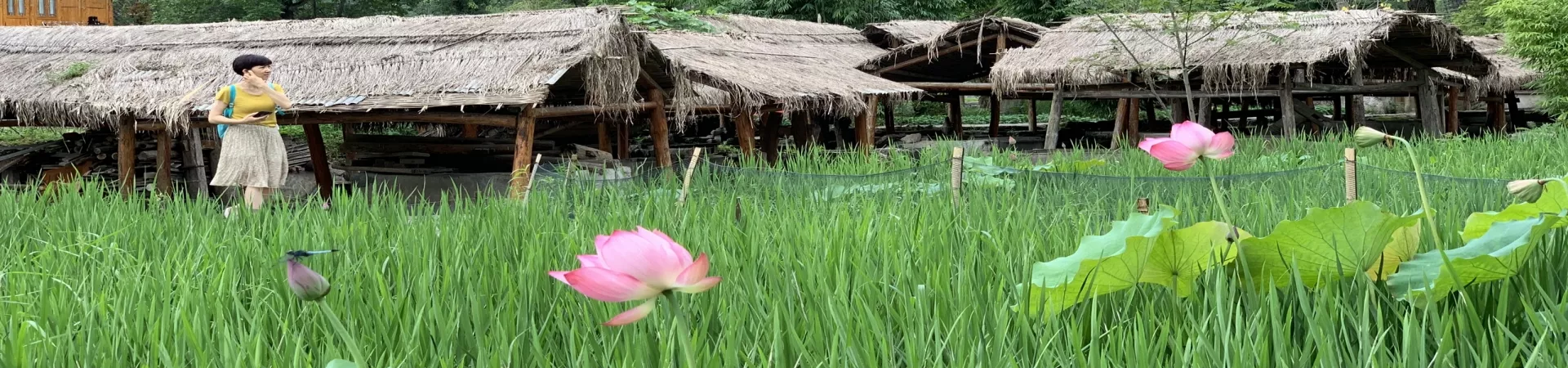
1.2 A Tapestry of Pastoral Serenity Beyond the riverbanks, the view opens dramatically into a vast, fertile plain. This is a patchwork of meticulously tended fields that stretch to the horizon—a testament to the agricultural harmony between the village and its environment. As you approach Yunshe, the route is flanked by this idyllic scenery. The peaceful ambiance is occasionally punctuated by the distant, comforting low of cattle or the bleat of sheep, sounds that anchor the experience in rustic authenticity. This seamless blend of lively waterways and pastoral calm sets a profoundly peaceful tone for the exploration ahead.
Section 2: Architectural Ingenuity: The Maze of Preservation
2.1 First Impressions: A Puzzle of White and Black Upon entering the village core, visitors encounter a fascinating architectural uniformity that is immediately striking. The dominant visual theme is a harmonious contrast: pristine white walls, dark grey tiled roofs, and white ridgelines. These structures are connected by a network of stone-paved pathways, their surfaces worn smooth by centuries of use, gleaming like dark mirrors under the sun. This consistency creates a peculiar and captivating sensation—a constant, disorienting feeling of déjà vu, as if every alleyway and courtyard has been seen before, yet remains distinctly unfamiliar.
2.2 The Reason Behind the Maze: Defense as Art This disorientation is not accidental but a brilliant feat of historical urban planning. Centuries ago, Yunshe's ancestors designed their community as a defensive labyrinth to protect against bandits and invaders. The village layout is an intentional maze of winding, interconnected lanes. The primary architectural form is the distinctive "Fenghuo Tongzi Wu," or sealed bucket-house—a sturdy, enclosed courtyard residence with high walls built from solid, square-fired bricks on all four sides.
2.3 A Legacy in Stone and Layout This strategic combination of convoluted alleyways and imposing, fortress-like homes made the village incredibly difficult for outsiders to navigate or attack. What was once a practical security measure has today evolved into an open-air museum of ingenious design. The comprehensive, systematic, and creative vision of Yunshe's founders is palpable with every turn, leaving modern visitors in awe of a community planned not just for living, but for enduring.
Section 3: Practical Information for the Visit
3.1 Duration and Pace To fully appreciate Yunshe's layers—from its riverside beauty and farmlands to the exploration of its architectural maze and quiet courtyards—a minimum of three hours is recommended. However, the village truly rewards a leisurely pace. Allowing half a day or more enables deeper immersion: observing daily Tujia life, perhaps interacting with local artisans, and simply soaking in the atmosphere without rush.
3.2 Admission and Accessibility A significant advantage for travelers is that access to Yunshe Village is free of charge. There is no ticket required to wander its ancient lanes and enjoy its public spaces, making it an accessible and valuable cultural experience.
3.3 Opening Hours The village is open to visitors 24 hours a day, every day of the year. This flexibility allows for different experiences, from sunny daytime explorations perfect for photography to peaceful morning or evening strolls when the lanes are at their quietest.
Important Note for Travelers: The information provided here is intended as a general guide. For the most current details regarding specific site access, weather conditions, or local event schedules, it is always advisable to check with the local tourism information center or your accommodation upon arrival.