Yixiantian
The Spectacle of Nature's Precision: A Journey Through Tongren's "One-Line Sky"
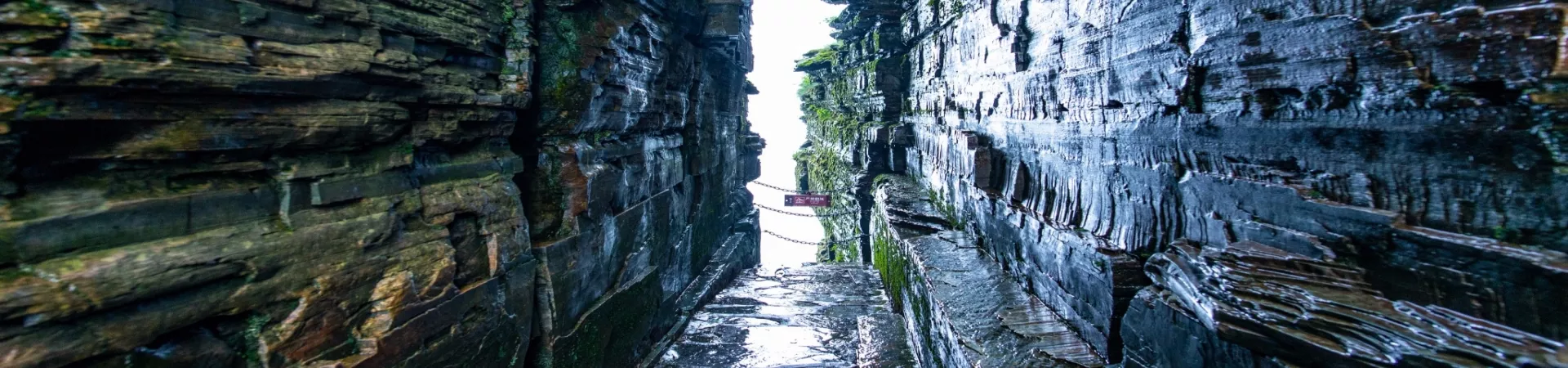
After marveling at the Mushroom Stone—a peculiar rock formation shaped by millennia of wind and erosion—the journey westward leads to the highest peak of the area. Here, the landscape undergoes a dramatic transformation. As you ascend past the serene Guanyin Cave (Avalokitesvara Cave), a site often associated with quiet reflection and spiritual reverence, the path narrows and the terrain becomes more rugged. Suddenly, the mountain seems to split in two, revealing a breathtaking geological wonder known as "One-Line Sky" (一线天). This natural fissure, measuring less than a meter in width, slices through the rock face with astonishing precision, creating a corridor so narrow that it feels as though the earth itself has been carefully carved apart.
The Ascent: From Mushroom Stone to the Mountain's Divide
The adventure begins at the iconic Mushroom Stone, a testament to the creative forces of nature. This unique formation, resembling a giant stone mushroom balancing delicately on its stem, serves as a gateway to the more secluded and awe-inspiring sections of Tongren's landscape. From here, the trail winds upward, offering glimpses of lush greenery, distant mist-shrouded peaks, and the occasional glimpse of local wildlife. The climb is moderate but steady, with each step bringing you closer to the sky and deeper into the heart of the mountain's geological history.
As you approach the Guanyin Cave, the atmosphere shifts. This cave, often visited for its tranquil ambiance and cultural significance, provides a moment of respite. Inside, the air is cool and still, with faint echoes of dripping water and the subtle scent of damp stone. It is a place where many pause to reflect, drawing inspiration from the natural serenity before continuing the ascent. Beyond the cave, the path becomes steeper, and the vegetation thins, giving way to exposed rock and sweeping vistas. The anticipation builds with every step, culminating in the sudden appearance of the mountain's great divide.
The Fissure: A Narrow Passage Through Ancient Rock
The "One-Line Sky" is not merely a crack in the mountain; it is a masterpiece of natural architecture. Formed over countless centuries through tectonic shifts, erosion, and the relentless work of water and wind, this fissure represents a snapshot of the earth's dynamic history. As you stand at its entrance, the scale of the formation becomes overwhelming. The rock walls rise vertically on either side, soaring dozens of meters into the air. Their surfaces are textured with layers of sediment, mineral streaks, and the occasional hardy plant clinging to life in the crevices.
Stepping into the fissure is an experience that engages all the senses. The width, often less than a meter, forces you to move slowly and deliberately. Shoulders may brush against the cool, rough stone, and the sound of your footsteps echoes softly in the confined space. Above, the sky is reduced to a slender ribbon of light, a vivid blue or gray line contrasting sharply with the dark, shadowy walls. This visual effect—where the heavens seem to be compressed into a single thread—gives the formation its poetic name. On overcast days, the light diffuses softly, creating an ethereal glow; on sunny days, the beam of sunlight that penetrates the gap can feel almost divine, illuminating dust particles and casting dramatic shadows.
The Sensory Experience: Pressure, Awe, and Intimacy
Moving through "One-Line Sky" is as much a psychological journey as a physical one. The narrow confines create a palpable sense of pressure, as if the mountain is gently embracing you—or perhaps testing your resolve. This feeling of compression is not oppressive but rather humbling, reminding visitors of their small place within the vastness of nature. The air within the fissure is often cooler and damper, carrying the earthy scent of rock and moss. Sounds from the outside world—birdsong, distant conversations, the rustle of leaves—are muffled, replaced by the intimate acoustics of the passage itself: the whisper of wind through the gap, the occasional drip of water, and the echo of your own breath.
For many, this segment of the hike becomes a moment of introspection. The combination of physical challenge and natural beauty encourages a mindful presence. Some visitors report feeling a deep connection to the earth, as if walking through a sacred corridor formed long before human history began. Others are struck by the sheer artistry of the formation, a reminder of nature's ability to create structures that no human hand could replicate. The experience is brief—the passage typically takes only minutes to traverse—but its impact lingers, often becoming a highlight of the Tongren journey.
Geological and Cultural Significance: More Than a Scenic Wonder
Beyond its immediate visual and sensory appeal, "One-Line Sky" holds deeper significance. Geologically, it offers a window into the forces that have shaped the region. The precise alignment of the fissure suggests a history of seismic activity, while the smoothness of the walls hints at prolonged water erosion. For scientists and nature enthusiasts, it is a living classroom, showcasing the slow, powerful processes that continue to mold the landscape.
Culturally, the formation is woven into local lore. In Chinese tradition, such natural wonders are often seen as embodiments of harmony between heaven and earth. The name "One-Line Sky" itself evokes imagery from poetry and painting, where narrow gaps between peaks are depicted as portals to other realms. Nearby, the Guanyin Cave adds a layer of spiritual meaning, linking the physical journey through the mountain to themes of enlightenment and perseverance. Together, these elements create a narrative that transcends mere sightseeing, inviting visitors to engage with the landscape on a deeper level.
Practical Considerations for Visitors
To fully appreciate "One-Line Sky," it is advisable to plan your visit with care. The climb from Mushroom Stone to the fissure involves uneven terrain and steep sections, so wearing sturdy hiking shoes and carrying water is essential. The best times to visit are during the spring or autumn months, when the weather is mild and the surrounding foliage adds vibrant color to the experience. Early mornings or weekdays may offer a quieter atmosphere, allowing for uninterrupted contemplation of the formation's beauty.
While the passage is narrow, it is generally accessible to most able-bodied visitors. However, those with claustrophobia or mobility concerns may want to view the fissure from its entrance rather than traversing its full length. As always, respecting the natural environment is crucial: avoiding loud noises, refraining from touching fragile rock surfaces, and carrying out any trash help preserve this wonder for future generations.
In Tongren, "One-Line Sky" stands as a testament to the delicate balance of power and precision in the natural world. It is a place where the earth opens up to reveal its history, where light and shadow play in a narrow theater of stone, and where every visitor can find a moment of awe amidst the grandeur of the mountains. Whether you are a seasoned hiker, a geology enthusiast, or simply a seeker of beauty, this remarkable fissure offers an unforgettable encounter with the forces that shape our planet.