Red Cloud Golden Summit
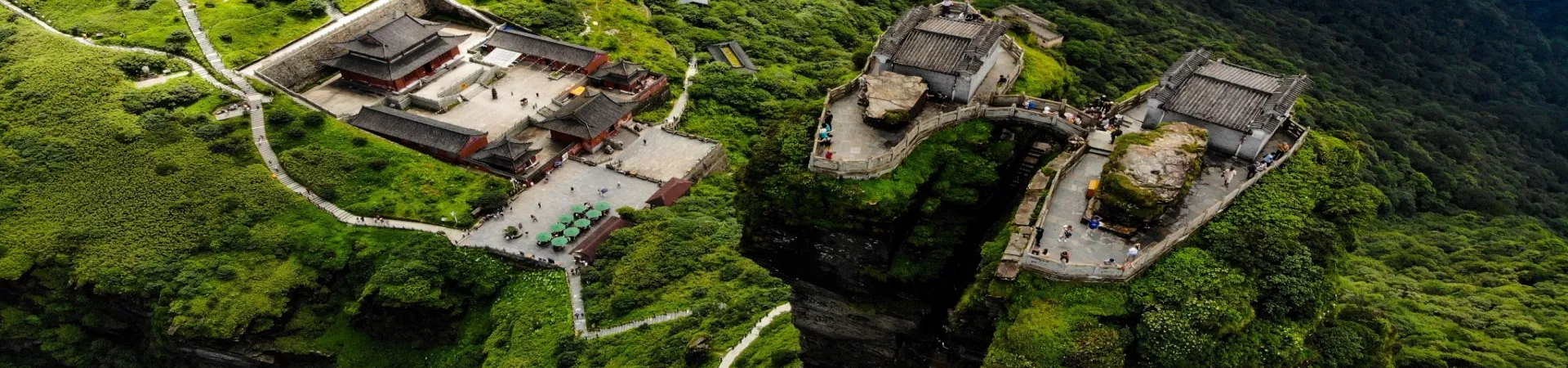
Subtitle: A Sacred Ascent: Unveiling the Mystical Splendor of Hongyun Golden Summit
1. Introduction: The Crown Jewel of Fanjing Mountain
Rising with an almost supernatural abruptness from the lush, verdant tapestry of the Fanjing Mountain range in Tongren, Guizhou, the Hongyun Golden Summit (红云金顶, Hóngyún Jīndǐng) is not merely a geological wonder but a profound spiritual symbol. This singular peak, the very emblem of the UNESCO World Heritage Site "Fanjingshan," represents a breathtaking fusion of awe-inspiring natural architecture and deep-rooted Buddhist sanctity. For visitors, the journey to and upon the Hongyun Golden Summit is a multifaceted experience—a physical challenge, a visual feast, and a contemplative pilgrimage. It stands as a testament to nature's power and humanity's quest for the divine, offering an encounter that is as unforgettable as it is transformative.
2. The Geological Marvel and Architectural Triumph
2.1. A Precipitous Rise The first and most striking feature of the Hongyun Golden Summit is its dramatic form. The colossal rock pillar erupts vertically from the mountain's core, achieving a sheer drop of approximately 100 meters from its base to its summit. This monumental column of stone, shaped by millennia of wind and erosion, appears as a colossal natural monument, defying gravity and logic. Its sheer cliffs, often shrouded in swirling mists, present a formidable and majestic sight, setting the stage for an ascent that feels both adventurous and reverent.
2.2. The Summit's Sacred Divide The summit itself performs a natural miracle that forms the heart of its legend. The massive rock pillar is perfectly split into two distinct peaks by a deep, narrow fissure. This dramatic separation is bridged ingeniously by a stone archway known as the "Immortal's Bridge" or "天桥" (Tiān Qiáo). This bridge is the vital link between the two halves of the sacred summit, a man-made connection over a profound natural divide.
2.3. Temples in the Sky Perched precariously atop each of these twin peaks is a small, ancient temple, clinging to the rock as if grown from it. These shrines are the culmination of the site's spiritual narrative. One temple is dedicated to Sakyamuni Buddha (释迦佛), the historical Buddha representing the present and the teachings of our current era. The opposite temple venerates Maitreya Buddha (弥勒佛), the Buddha of the Future, who embodies compassion and the promise of a coming age of enlightenment. This architectural duality is deeply intentional, physically manifesting a core Buddhist philosophical concept: the transition from the current cosmic cycle presided over by Sakyamuni to the future cycle awaiting Maitreya. Standing on the bridge between them, one is literally and metaphorically positioned between the present and the future.
3. The "Hongyun" Phenomenon and Visitor Experience
3.1. The Enchantment of the Red Clouds The name "Hongyun Golden Summit" translates directly to "Red Clouds Golden Summit," a title derived from one of its most magical atmospheric phenomena. Frequently at dawn, and often after rainfall, the summit is enveloped in a radiant, ethereal glow. The interplay of sunlight with the lingering mist and clouds can bathe the entire rock formation in hues of brilliant gold and fiery red, making it resemble a blazing pillar or a peak forged from precious metal and light. This "red cloud and auspicious aura" (红云瑞气) is considered a profoundly lucky and sacred sight, reinforcing the peak's status as a blessed, spiritual axis mundi.
3.2. The Ascent and Practicalities Reaching the Hongyun Golden Summit requires a commitment of time and energy. The visit is typically integrated into a broader exploration of the Fanjing Mountain scenic area.
- Access & Duration: The summit is accessed via a combination of cable cars and a demanding final climb involving steep staircases carved into or attached to the cliff face. The final ascent involves navigating narrow passages and holding onto chains, offering an exhilarating challenge. Visitors should allocate a minimum of 1-3 hours specifically for the round trip to and from the summit after arriving at the main upper cable car station.
- Admission: Access to the Hongyun Golden Summit is included within the general admission ticket to the Fanjing Mountain National Nature Reserve. There is no separate entrance fee for the summit itself.
- Operating Hours: The site is generally open from 8:00 AM to 6:00 PM daily. It is crucial to note that the last admission is typically at 3:00 PM to ensure all visitors have sufficient time to descend safely. These hours are subject to change due to weather conditions, which can be unpredictable at high altitude.
4. A Journey of Multifaceted Significance
4.1. A Pilgrimage for the Spirit For Buddhist pilgrims and spiritually inclined travelers, the Hongyun Golden Summit is a powerful destination. The arduous climb mirrors the path to enlightenment—difficult but rewarding. Reaching the top, crossing the bridge between the temples of Present and Future, and witnessing the awe-inspiring landscape fosters a deep sense of peace and contemplation. It is a place for reflection on time, impermanence, and spiritual continuity.
4.2. A Paradise for Nature and Photography Enthusiasts Beyond its religious weight, the summit is a premier destination for lovers of natural beauty and photographers. The panoramic views from the top are nothing short of spectacular, offering vistas of rolling mountain ranges, sea of clouds, and unique rock formations. The ever-changing play of light, shadow, mist, and the famous red clouds provides endless opportunities for capturing breathtaking images.
4.3. Essential Tips for Visitors Prospective visitors are advised to wear sturdy, non-slip hiking shoes and dress in layers to adapt to rapidly changing temperatures and weather. It is also recommended to carry water and snacks, start the ascent early to avoid afternoon crowds and potential weather closures, and always check the official website or contact the scenic area at 400-997-6999 or 0856-6720000 for the most current information on openings, weather-related closures, and crowd conditions before your visit.
Information last verified: January 2023. Credit to contributing community editors.