Cinnabar Ancient Town
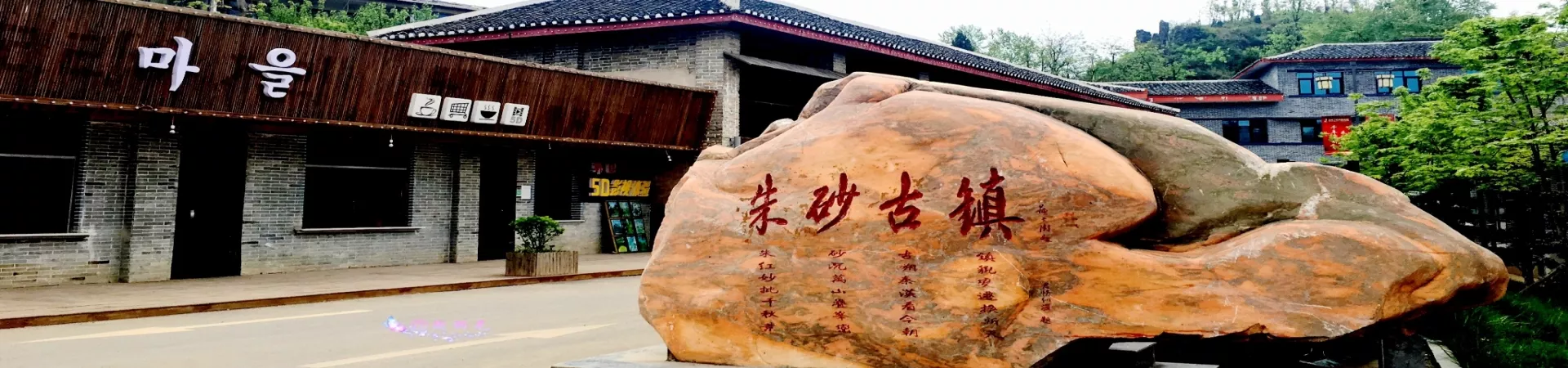
Subtitle: From Cinnabar Capital to Living Heritage: A Journey Through Wanshan's Mercury Mining Legacy
1. Introduction: The Cinnabar Kingdom's Living Testament
Nestled within the Tongren region of Guizhou Province, the Zhusha Ancient Town (Cinnabar Ancient Town) stands not as a relic of antiquity in the traditional sense, but as a profound and immersive monument to China's modern industrial heritage. Its story is inextricably linked to the rich red mineral—cinnabar (mercury sulfide)—that gave the town its name and shaped its destiny. The surrounding Wanshan District, so abundant in this resource that it earned the moniker "The Cinnabar Kingdom," holds a unique place in history, having been designated as the country's first county-level special administrative zone in the 1950s due to the strategic importance of its mercury mines. Today, Zhusha Ancient Town has been meticulously transformed from a dormant mining community into a vibrant cultural destination. It shoulders the critical mission of preserving, interpreting, and revitalizing the immense industrial cultural heritage of the Wanshan Mercury Mine, breathing new life into a millennium-old mining landscape and its associated living quarters to narrate a compelling saga of geological fortune, human endeavor, and historical transition.
2. The Core Experience: A Multi-Layered Immersion into Mining Life
The town's genius lies in its site-specific approach to heritage conservation and experiential tourism. Rather than building anew, the project focuses on the sensitive restoration and adaptive reuse of the original mining infrastructure.
2.1. Architectural Revival and Cultural Infusion The residential compounds for mine workers and administrators, the former Soviet experts' building (a testament to mid-20th-century technical cooperation), the research institute, the grand auditorium, the cinema, and the original network of mining roads have all been carefully repaired. This goes beyond mere structural preservation. The exteriors have been enhanced, thoughtfully integrating mining industrial design elements. Through detailed humanistic curation, authentic life scenes from the past have been recreated. This approach offers visitors an intuitive and powerful window into the spiritual demeanor, living conditions, and glorious years of the revolutionary workers in the decades following the founding of the People's Republic of China. It allows one to viscerally comprehend the social and cultural ecosystem that supported one of China's most critical industrial operations.
2.2. Key Attractions and Thematic Zones The town is organized into distinct thematic zones that guide visitors through different facets of the cinnabar story: * The "Those Years" Experience Zone: This area focuses on the residential and communal spaces, meticulously recreating the daily life, fashion, and atmosphere of the mining community's heyday. Walking through these streets is akin to stepping into a living period film set. * The Cinnabar Gorge Path (Dan Sha Gu Dao): This attraction likely involves a journey through or alongside the historic mining landscape—perhaps following old transport routes, tunnels, or processing areas—highlighting the geological and extraction processes that defined the region. * The Grand Cinnabar Garden (Zhusha Daguan Yuan): This space is dedicated to the mineral itself, showcasing the science, artistry, and cultural significance of cinnabar. It may exhibit stunning mineral specimens, explain the historical uses of mercury, and display exquisite handicrafts made from the vibrant red stone.
3. Practical Visitor Information
To facilitate a smooth and enriching visit, the following practical details are essential for planning.
3.1. Ticketing and Operating Hours The site offers a convenient Sightseeing Combo Ticket, which typically includes access to the "Those Years" zone, the Cinnabar Gorge Path, the Grand Cinnabar Garden, and round-trip shuttle service within the scenic area. * Ticket Prices: Adult tickets are priced at 138 RMB, while student tickets (likely requiring valid ID) are available for 108 RMB. * Operating Hours: These vary seasonally to accommodate daylight and weather conditions. * Summer Schedule (June 1 - August 31): Open from 08:00 to 18:00, with last admission at 17:00. * Winter Schedule (December 1 - February 28/29): Open from 09:00 to 17:00, with last admission at 16:30. It is always advisable to confirm the latest hours prior to your visit, as adjustments may occur.
3.2. Transportation and Access Reaching Zhusha Ancient Town is straightforward. The primary public access point is from Tongren City. Visitors can take the dedicated scenic area shuttle bus from the Tongren South Bus Station. This direct service provides a convenient connection to the town's entrance.
3.3. Contact Details For inquiries regarding group visits, special events, or other specific questions, the scenic area can be contacted via telephone at 0856-3900555 or the toll-free number 400-825-8011.
4. The Deeper Significance: Heritage as a Catalyst for Renewal
Zhusha Ancient Town represents a pioneering model in China for the transformation of post-industrial sites. It moves decisively away from the concept of abandoned ruins, instead viewing the entire mining complex—its shafts, buildings, roads, and social spaces—as a cohesive cultural text to be interpreted. By reactivating these spaces for education and tourism, the project ensures the survival of tangible memories and intangible spirit associated with the mercury mining industry. It honors the labor and sacrifices of generations of workers while providing a new economic foundation for the community. The town does not shy away from the complex layers of its history, from its ancient origins to its mid-century industrial peak and subsequent transition. This honest presentation allows visitors to engage in a meaningful dialogue with the past, understanding how the pursuit of a single, fiery-red mineral shaped a landscape, built a community, and contributed to the nation's development, ultimately leaving behind a unique heritage that continues to inspire and educate.