Fushan National Geopark
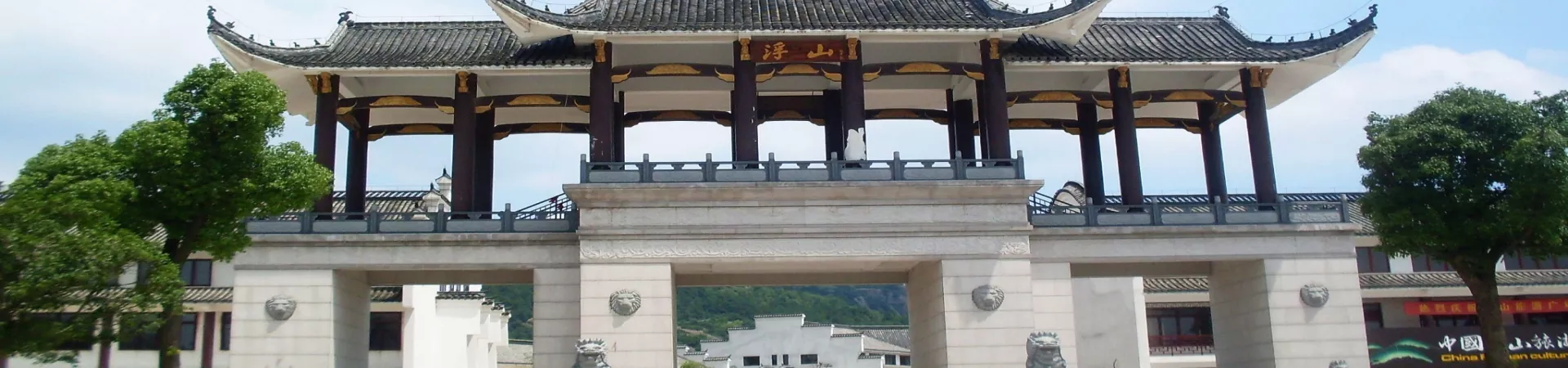
Subtitle: A Journey Through Time, Stone, and Verse
1. Introduction: The Floating Mountain of Anhui
Nestled against the shimmering expanse of Bai Dang Lake in Zongyang County, Anhui Province, lies a landscape that seems to defy the very laws of nature. This is Fushan, the "Floating Mountain." From a distance across the lake, its forested peaks and peculiar rock formations create the enduring illusion of a mountain range gently adrift upon the water's surface. This captivating sight is the origin of its name and the first hint of the wonders within. Today, Fushan is recognized as a National Geological Park, a National Forest Park, and a 4A-rated scenic area—a multi-faceted treasure where geology, ecology, and profound human history are intricately woven together.
2. A Geological Marvel: The Legacy of Ancient Fire
2.1. The Volcanic Origins Despite its modest height, with the highest peak ranging between 165 to 208 meters, Fushan possesses a grandeur born of cataclysmic force. It is, in essence, the magnificent fossil of a volcano that was active hundreds of millions of years ago. The mountain we see today is the eroded core of that ancient volcanic system, a natural sculpture carved by eons of weathering.
2.2. Landscapes Sculpted by Time This volcanic heritage has gifted Fushan with a phenomenally unique topography. The landscape is a labyrinth of strange peaks and fantastical stones, where igneous rock has been shaped into arresting forms. Traditionally, these are celebrated as the "36 Peaks and 72 Caves," though the actual number of niches, alcoves, and grottoes feels infinite. These are not deep caverns but exquisite erosional features—overhangs, arches, and honeycombed cliffs—that create a playful, mysterious terrain perfect for exploration and contemplation.
3. The First Mountain of Letters: An Open-Air Museum of Culture
3.1. A Magnet for Literary Giants Beyond its physical beauty, Fushan's soul is etched in culture. For over a millennium, it has been revered as "The First Mountain of Letters in All Under Heaven." Its serene and inspiring scenery acted as a powerful magnet for China's literary and intellectual elite. From the Tang and Song to the Ming and Qing dynasties, luminaries such as the poet Meng Jiao, the statesman-poet Bai Juyi, the essayist Ouyang Xiu, the reformer Wang Anshi, the scholar Fan Zhongyan, and the masters of the Tongcheng School of prose like Fang Bao and Yao Nai, all sought inspiration within its groves and cliffs.
3.2. The Whispering Stones: Cliff Carvings as Historical Dialogue These visitors did not merely pass through; they engaged with the mountain, leaving their thoughts, poems, and inscriptions directly on its stone canvas. This practice has resulted in an astonishing collection of 483 extant cliffside carvings (moya shike). Ranging from large, majestic characters to full poetic compositions, these carvings transform the geological park into a vast, open-air museum and library. Reading them is like overhearing a centuries-long conversation between great minds, all framed by the very rocks that prompted their reflection. The mountain's historical connection to the renowned cultural center of Tongcheng (it was part of Tongcheng County's Fengyi district during the Qing dynasty) further cements its status as a cornerstone of regional literary heritage.
4. Practical Information for the Visit
4.1. Admission and Operating Hours To experience this fusion of natural and cultural history, visitors should note the following practical details. The park operates year-round, with opening hours from 08:00 to 18:00, Monday through Sunday. The admission fee is set at 120 RMB per person, which grants access to this unique geological and historical sanctuary.
4.2. Suggested Duration and Exploration A visit to Fushan is best undertaken without rush. While the compact size of the mountain might suggest a shorter trip, the richness of its details demands leisurely exploration. A full day is highly recommended to adequately appreciate the scope. This allows time not only to hike among the extraordinary peaks and through the evocative caves but also to pause and decipher the ancient carvings, to understand the views that inspired generations of poets, and to simply absorb the tranquil atmosphere of the lakeside setting. The journey through Fushan is as much a walk through time and thought as it is a physical traverse through a volcanic landscape.