Wangshiyuan
A Masterpiece of Miniaturization: The Artistry of Suzhou's Master-of-Nets Garden
Nestled within the ancient city of Suzhou, the Master-of-Nets Garden (Wangshi Yuan) stands as a preeminent example of the classical Chinese residential garden from the mid to late imperial period. More than just a beautiful space, it is a profound philosophical statement in landscape design, celebrated globally as a UNESCO World Heritage Site. Its genius lies not in expansive size or overwhelming grandeur, but in its exquisite composition and the evocative atmosphere of a scholar's retreat, embodying the pinnacle of the "small yet refined" aesthetic that defines Suzhou's garden art.
Historical Origins and Philosophical Essence
The garden's story begins in the 12th century during the Southern Song Dynasty. Its original name, "Fisherman's Retreat" (Yuyin), reveals the founding ideal. This concept draws from the Chinese philosophical tradition of reclusion, where a scholar-official, weary of the complexities of court life, would symbolically withdraw to a simple, rustic existence in nature. The garden was a physical manifestation of this desire.
The name we know today, "Master-of-Nets," was formally adopted in 1765 during the Qing Dynasty. This name continues the fisherman allegory but adds a layer of humility and wisdom. A true "master of nets" is not merely one who catches fish, but one who understands the deeper principles of nature, timing, and simplicity. Thus, the garden is not just a home; it is a carefully constructed world representing its owner's scholarly pursuits, cultural refinement, and yearning for spiritual harmony between humanity and the natural world.
Architectural and Spatial Design: A Study in Precision
The Master-of-Nets Garden is a textbook example of achieving maximum artistic impact within a limited area. Covering approximately one-third of an acre (around 0.13 hectares), with its central pond occupying less than half an acre, the garden creates an astonishing sense of depth, variety, and tranquility. The layout is a masterclass in contrast and borrowed scenery (jiejing).
The Central Axis and Residential Quarters The southeastern section of the garden follows a traditional, formal axis characteristic of a scholar-official's residence. Upon entering through the main gate, visitors pass through the Sedan Chair Hall and arrive at the Ten-Thousand-Volume Hall (Wanjuantang). This principal reception hall, with its lofty beams and elegantly understated decoration, reflects the dignity and literary cultivation of the master. Directly behind it lies the Tower of Captured Beauty (Xiexiulou), which served as the inner quarters for the family. This linear progression from public to private space establishes a sense of order and Confucian propriety.
The Heart of the Garden: The Central Pond and Surrounding Pavilions The true soul of the Master-of-Nets Garden unfolds west of the residential axis, centered on the crystal-clear Rosy Cloud Pool (Zhaoyu Chi). This body of water acts as the garden's luminous focal point, around which all key viewing points revolve. The Moon Comes with Breeze Pavilion (Yuedao Fenglai Ting) juts out over the water, offering an unparalleled vantage point. The Pavilion for Washing the Hairline Ribbon (Zhuoying Shuige) and the Pine-and-Bamboo Studio (Songzhuzhai) are strategically placed to provide framed views that change with every step. Corridors and whitewashed walls snake around the perimeter, not as barriers but as dynamic elements that guide movement, conceal and reveal scenes, and display intricate lattice windows that act as living picture frames for the scenery beyond.
The Unforgettable Night Garden Experience
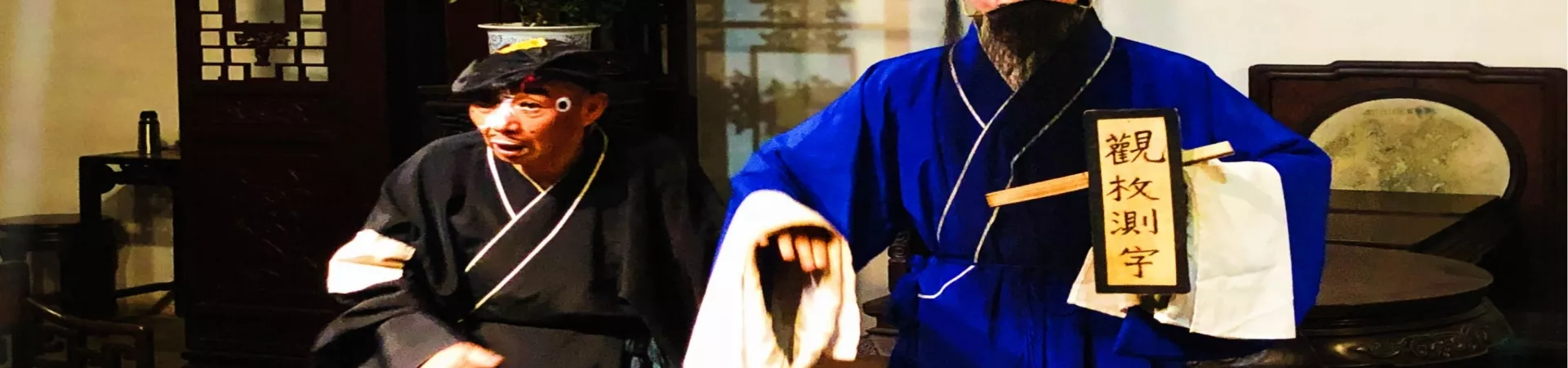
A unique and highly recommended aspect of visiting the Master-of-Nets Garden is the Night Garden program, typically offered from spring through autumn. As dusk falls, lanterns are lit, casting a soft, ethereal glow on the pavilions, rocks, and water. This transforms the garden into an even more poetic and intimate setting. The highlight is a series of traditional Chinese performing arts staged in different garden courtyards and pavilions. Guests can enjoy short, exquisite performances of Pingtan (Suzhou ballad singing and storytelling), Kunqu Opera (one of the oldest extant forms of Chinese opera), guzheng (zither) music, and classical dance. This immersive experience allows visitors to not only see but also hear and feel the cultural life that once animated these scholarly spaces.
Practical Visitor Information
Location and Transportation
The Master-of-Nets Garden is located at No. 11, Kuojiatou Alley, Daichengqiao Road, in the Gusu District of Suzhou. It is easily accessible by public bus. Key routes include: * Bus 29, 9003, 9006, or 9011 (community shuttle lines). Alight at the Wangshi Yuan (Master-of-Nets Garden) Station and walk a short distance to the entrance.
Admission Fees (Subject to change; prices as of 2023 reference)
- Standard Ticket: 40 RMB (for adults).
- Concession Ticket (Half-price): 20 RMB. Applicable to:
- Seniors aged 60-69.
- Children between 6 and 18 years old.
- Full-time students (excluding postgraduate adult education programs).
- Free Admission: Granted to:
- Seniors aged 70 and above.
- Children under 1.4 meters in height (must be accompanied by an adult).
- Visitors with disabilities (upon presentation of valid certificate).
- Active-duty military personnel, retired veterans, and military cadres.
Opening Hours
The garden operates on a seasonal schedule: * April 21 – October 20: 7:30 AM – 5:30 PM. Last admission at 5:00 PM. * October 21 – April 20 of the following year: 7:30 AM – 5:00 PM. Last admission at 4:30 PM. * Night Garden: Separate ticketing and hours apply, usually beginning around 7:00 PM or 7:30 PM. It is essential to check the official schedule for the most current performance times and ticket availability in advance.
Suggested Duration of Visit
A comprehensive visit to appreciate both the daytime scenery and the evening performances typically requires 2 to 3 hours. A daytime-only visit can be enjoyed in approximately 1.5 hours, allowing for a leisurely pace to absorb the details.
Information reference date: August 2023.