Lingering Garden
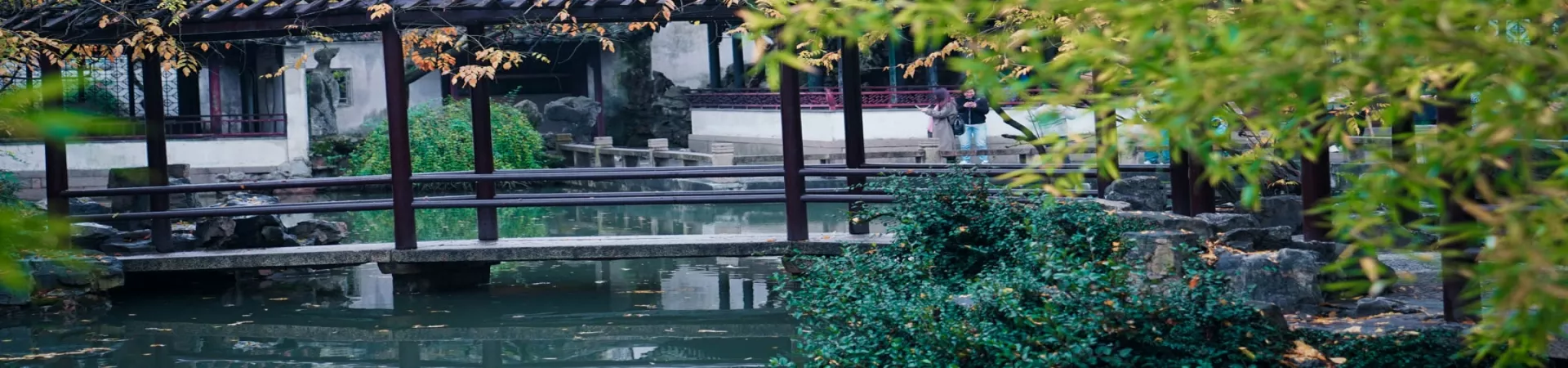
Subtitle: A Masterpiece of Ming Dynasty Garden Art, Ranking Among China's Top Four Classical Gardens
1. Introduction and Historical Significance
Nestled within the ancient city of Suzhou, the Lingering Garden stands as a pinnacle of Chinese classical garden design. Its construction began during the Wanli era of the Ming Dynasty (circa 1593), placing its origins over four centuries in the past. This heritage is not merely historical but qualitative, as it is universally acclaimed as one of China's Four Great Classical Gardens, sharing this distinguished status with Suzhou's own Humble Administrator's Garden, Beijing's Summer Palace, and Chengde's Mountain Resort. This designation underscores its unparalleled artistic achievement in synthesizing architecture, nature, and philosophy into a harmonious whole. The garden's very name, "Liu Yuan," suggests a place designed to entice visitors to linger, to pause and contemplate its myriad beauties, a promise it fulfills at every turn.
2. Architectural and Scenic Composition
The genius of the Lingering Garden lies in its intricate layout and breathtaking diversity within a confined space. It is celebrated for its exceptionally sophisticated arrangement of halls, pavilions, and corridors, and its remarkable collection of ornamental rocks. The garden's most extraordinary feat is its successful encapsulation of four distinct classical landscape genres within its walls: the grandeur of mountain and water scenes, the tranquility of pastoral fields, the serenity of forested hills, and the refined elegance of courtyard gardens. This seamless integration allows for a continuously unfolding journey through idealized natural scenery.
2.1. Layout and the Four Scenic Zones
The garden is strategically divided into four interconnected scenic zones—Central, Eastern, Western, and Northern—each with its own character and theme. These zones are not isolated but are artfully linked by a meandering covered corridor. This corridor is itself a significant cultural artifact; its walls are inset with stone tablets engraved with masterful calligraphy, known as the "Lingering Garden Model Calligraphy Carvings," featuring works from renowned historical calligraphers. This transforms a simple walkway into an open-air gallery of literary and artistic excellence.
2.2. The Central Zone: The Essence of Water
The heart of the garden is its Central Zone, widely considered the masterpiece within the masterpiece. This area is designed around a expansive, central pond that creates a feeling of openness and reflection. Pavilions, terraces, and towers are meticulously positioned along the water's edge and on small islands, offering ever-changing perspectives. The careful framing of views across the water, borrowing scenery from distant elements, exemplifies the Suzhou garden principle of creating boundless space within a limited area. Here, the interplay of architecture, water, rockeries, and carefully pruned trees achieves a state of perfect pictorial balance and serene beauty.
2.3. The Eastern Zone: Pavilion Architecture and the Famous Rocks
In contrast to the aquatic focus of the center, the Eastern Zone is distinguished by its elaborate series of halls, pavilions, and courtyards. It is here that the garden's famed collection of Taihu rocks takes center stage. The most celebrated of these is the Guanyun Peak (Cloud-Capped Peak), one of the legendary "Three Wonders of the Lingering Garden." This towering limestone rock is a quintessential example of the aesthetic values prized in Chinese scholar's rocks, embodying all four desired characteristics: shou (slenderness and elegance), zhou (textured surface with folds and wrinkles), lou (permeability with holes and channels), and tou (translucency). Flanked by the companion rocks Ruifeng (Auspicious Peak) and Xiufeng (Elegant Peak), and set before the elegant Linyun Tower, the Guanyun Peak forms a dramatic and philosophically charged focal point, representing a miniature mountain range and a conduit for contemplation.
3. Practical Visitor Information
3.1. Ticket Information
- Standard Ticket: 55 RMB per adult.
- Concession Ticket (Half-price): Applicable to: 1) Minors aged 6 (not inclusive) to 18 (inclusive); 2) Full-time undergraduate students and below, upon presentation of a valid student ID; 3) Seniors aged 60 (inclusive) to 70 (not inclusive), with valid ID.
- Free Admission: Applicable to: 1) Active-duty Chinese military personnel and retired military officers with valid ID; 2) Visitors with disabilities (with one companion if required for severe disability), with valid disability certificate; 3) Seniors aged 70 and above, with valid ID; 4) Children with a height of 1.4 meters or below; 5) Children aged 6 and below, with valid ID.
3.2. Opening Hours
- November 1 to February 28/29: 7:30 AM - 5:00 PM. Last ticket sale and entry at 4:30 PM.
- March 1 to October 31: 7:30 AM - 5:30 PM. Last ticket sale and entry at 5:00 PM.
3.3. Suggested Visit Duration and Contact
A thorough exploration of the garden's details and atmospheres typically requires 1 to 3 hours. For any inquiries, visitors can contact the garden administration at 0512-65579466 or 0512-65337903.