Xiangwang's Hometown
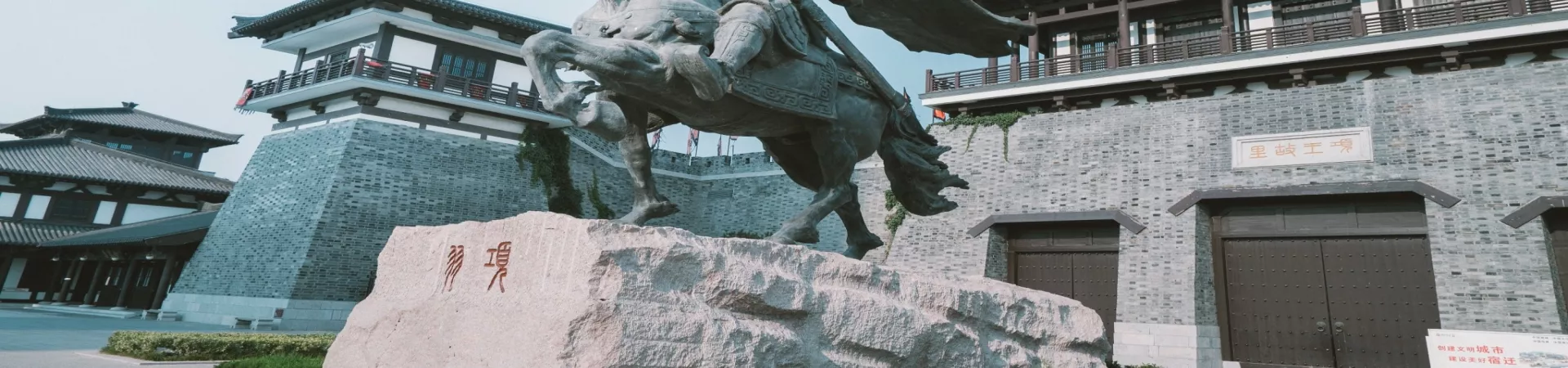
Subtitle: The Birthplace of a Legend: Exploring the Cultural Heritage of Xiang Yu in Suqian
1. Introduction: A Portal to the Chu-Han Contention Era
Nestled within the Suzhou District of Suqian City, Jiangsu Province, lies a site of profound historical resonance—Xiang Wang Guli, the Birthplace of Xiang Yu. Poetically known as "Wutong Lane," this hallowed ground is situated between the ancient Yellow River and the Beijing-Hangzhou Grand Canal, east of Xuhuai Road. It is revered as the birthplace of one of ancient China's most iconic and tragic figures: Xiang Yu, the nobleman of the Chu state, leader of the peasant rebellions that toppled the Qin dynasty, and the self-proclaimed "Hegemon-King of Western Chu," renowned for his peerless strength and indomitable spirit. More than just a historical location, Xiang Wang Guli stands as China's first comprehensive cultural tourism destination dedicated to preserving and presenting the legacy of Xiang Yu and his family's culture. Recognized as a National AAAA-level Tourist Attraction and a Key Cultural Relics Protection Unit of Jiangsu Province, it offers visitors a unique journey into a pivotal chapter of Chinese history, where architectural grandeur meets legendary narrative.
2. Historical Significance and Architectural Grandeur
2.1. The Legacy of the "Overlord" Xiang Yu (232–202 BC) remains a towering, complex figure in Chinese historiography and folklore. Celebrated in records like Sima Qian's Records of the Grand Historian, he is the epitome of martial prowess and aristocratic honor, famously depicted as a hero who "could pull mountains by his sheer strength." His life—from his dramatic rise as a rebellion leader against the oppressive Qin to his fateful rivalry with Liu Bang (founder of the Han dynasty) and his poignant defeat and suicide at the Battle of Gaixia—forms the core of the site's narrative. The local community's reverence for their native hero dates back centuries, with the earliest known commemorative stele erected in 1701 during the 40th year of the Kangxi Emperor's reign. This act of remembrance initiated the tradition of honoring Xiang Yu at his birthplace, leading to the construction of memorial arches and the eventual establishment of the present-day complex.
2.2. Architectural Synthesis: Chu-Han Flair and Imperial Gardens The architectural philosophy of Xiang Wang Guli masterfully blends historical homage with aesthetic appeal. The dominant style is "Chu Di Han Feng," evoking the cultural and artistic essence of the Chu region during the subsequent Han period. This is characterized by imposing structures, sweeping roofs, and intricate wooden carvings that reflect the power and spirit of the era. This core style is seamlessly integrated with elements of traditional Chinese palatial architecture, signifying Xiang Yu's royal status as the Hegemon-King, and the serene, balanced aesthetics of classical Chinese garden design. The result is a harmonious campus where majestic halls, like the Xiang Family Ancestral Hall—the central shrine venerating the lineage—coexist with tranquil courtyards, winding paths, and reflective ponds. This synthesis creates an atmosphere that is both awe-inspiring and contemplative, perfectly suited to its dual role as a memorial site and a cultural park.
3. Practical Information for Visitors
3.1. Admission and Operating Hours To plan an effective visit, note the following practical details: * Ticket Information: * General Admission: 80 RMB per adult. * Concessions (Half-price): Applicable to minors aged 6 to 18 (not inclusive), full-time undergraduate students and below, seniors aged 60 to 69, and individuals holding low-income or hardship certificates. * Opening Hours: The schedule varies seasonally. * Summer Period (June 1 - August 31): 09:00 - 18:00 (last entry at 17:30). * Winter Period (December 1 - February 28/29): 09:00 - 17:30 (last entry at 17:00).
3.2. Location and Transportation The site is conveniently accessible via public transport. Visitors can take Suqian city bus routes 101, 109, 301, or 52 and alight at the "Xiang Wang Guli (项王故里)" bus stop. From there, the entrance is within a short walking distance.
4. The Visitor Experience: Immersion in Culture and Legend
A visit to Xiang Wang Guli typically requires 1 to 3 hours, allowing for a thorough exploration. The experience is multifaceted. Visitors can stroll through the architectural complex, appreciating the scale and detail of the main halls and the peaceful garden landscapes. The site functions as an open-air museum, with steles, statues, and exhibits detailing Xiang Yu's life, major battles like the Battle of Julu and the Feast at Hong Gate, and the broader historical context of the Chu-Han Contention. Cultural performances or static displays often bring elements of Chu culture, such as music, dance, or ceremonial practices, to life. The Xiang Family Ancestral Hall provides a solemn space to understand the importance of clan heritage in Chinese history. Beyond the history, the environment itself, situated between two great historical waterways, invites reflection. The site is not merely about recounting a military defeat; it is about engaging with the enduring Chinese cultural themes of heroism, destiny, loyalty, and tragedy that Xiang Yu's story embodies. It connects the physical landscape of Suqian with the epic narratives that have shaped the Chinese imagination for over two millennia.
For further inquiries, you may contact the site at 0527-81001606 or 0527-81001608. Information last updated: June 20, 2023.