Crown Prince Slope
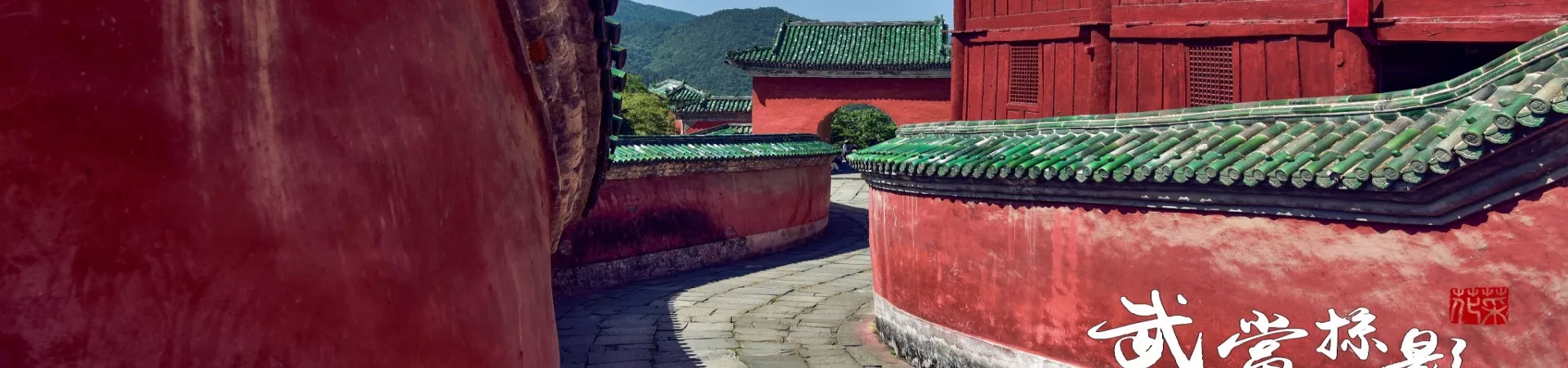
Subtitle: A Journey Through Myth and Architecture: Exploring the Taizi Slope Scenic Area in Wudang Mountain
1. Introduction to the Taizi Slope (Prince's Slope) Scenic Area Nestled within the sacred and majestic landscape of the Wudang Mountains, a UNESCO World Heritage Site near Shiyan City in Hubei Province, lies the Taizi Slope Scenic Area. This extended yet easily accessible route offers more than just picturesque views; it is a profound narrative journey into the heart of Taoist legend and architectural ingenuity. The area, comprising several significant sites including Huilong Guan (Returning Dragon Temple), Mozhen Jing (Grinding Needle Well), Laojun Tang (Lord Lao's Hall), and Baxian Guan (Eight Immortals Temple), is meticulously designed to chronicle the spiritual odyssey of the legendary Prince. It serves as a vital chapter in the Wudang story, seamlessly blending natural beauty, deep cultural heritage, and the timeless pursuit of enlightenment.
2. Historical and Legendary Foundations 2.1 The Legend of Prince Xuanwu The entire architectural and spiritual conception of Taizi Slope revolves around the foundational myth of Zhenwu (Perfected Warrior), also known as Xuanwu. According to legend, he was once the crown prince of the Jingle Kingdom, who renounced his royal life and worldly privileges after being divinely inspired by the deity Ziqi Yuanjun. Determined to seek the Tao (the Way), he journeyed to the secluded peaks of Wudang Mountain to cultivate himself through meditation and ascetic practices.
2.2 The Path to Immortality His cultivation at this very site was a testament to perseverance, lasting for forty-two arduous years. It is here that the famous parable of "Grinding an Iron Rod into a Needle" is set, where an old woman (disguised as a deity) patiently grinding an iron rod by a well taught the discouraged prince the virtue of unwavering persistence. Ultimately, his dedication bore fruit; he achieved great merit, attained the Tao, and ascended to immortality. He was later enfeoffed as Taixuan and canonized as Zhenwu, the revered "Grand Emperor of the Dark Heaven," becoming one of the most important deities in Taoist cosmology and the patron saint of Wudang Mountain.
3. Architectural Layout and Key Attractions The ancient building complex at Taizi Slope is not a random collection of structures but a carefully orchestrated spatial narrative that physically guides visitors through the prince's legendary journey. The architecture, characterized by the classic Wudang style that harmonizes with the mountainous terrain, uses rises, turns, and vistas to symbolize stages of spiritual development.
3.1 The Entrance and the Winding Path The approach to the main compound itself is symbolic. A remarkably long, red-walled corridor, known as the "Nine-Bend Wall," winds its way up the slope. This design is not merely aesthetic; it represents the twisting, challenging path of spiritual cultivation, shielding the inner sanctum from worldly influences (evil winds) and building anticipation for the revelation within.
3.2 The Core Complex: Fuzhen Guan (Reviving the Truth Temple) The central architectural masterpiece is Fuzhen Guan, often synonymous with Taizi Slope itself. Built during the Ming Dynasty, it is an engineering marvel adapted to the steep hillside. * The Main Gate and the Dragon-Tiger Hall: The entrance establishes the sacred space, often guarded by statues of the Green Dragon and the White Tiger, symbolic guardians in Taoist tradition. * The Wuliang (Immeasurable) Hall: This hall is dedicated to the worship of Zhenwu. Its construction utilizes ingenious techniques to create a spacious interior on a limited, sloping foundation. * The Five-Clouds Pavilion (Wuyun Lou): This multi-story pavilion, supported by a striking framework of twelve wooden pillars, appears to float amidst the clouds and mist. It offers breathtaking panoramic views of the surrounding peaks, metaphorically representing the elevated state of enlightenment achieved by the prince.
3.3 Associated Sites Along the Route 3.3.1 Mozhen Jing (Grinding Needle Well) Located before reaching the main slope, this site immortalizes the pivotal moment of encouragement in the prince's journey. The well and the associated temple, featuring a statue of the old woman grinding an iron rod, serve as a timeless reminder of the power of perseverance and faith—a core tenet in both spiritual practice and worldly endeavor.
3.3.2 Huilong Guan (Returning Dragon Temple) This temple, situated along the route, is another important religious site. Its name and location often relate to local geomantic lore or specific episodes in the broader Wudang mythological tapestry, adding layers to the spiritual landscape.
3.3.3 Laojun Tang and Baxian Guan These halls dedicated to Laozi (the deified philosopher Lao Tzu, founder of Taoism) and the Eight Immortals respectively, connect the specific legend of Zhenwu to the wider pantheon and philosophical system of Taoism, illustrating the interconnectedness of its deities and teachings.
4. Practical Visitor Information 4.1 Accessibility and Transportation Despite covering a relatively long route along the mountain, the Taizi Slope scenic spots are conveniently located close to the main tourist road that winds up Wudang Mountain. This makes the area highly accessible. Visitors typically access it via the district's tourist buses or private vehicles that travel the mountain road, with clear signage leading to the entrance.
4.2 Visiting Details * Opening Hours: 07:30 - 17:00 (Monday to Friday, year-round); 07:00 - 17:30 (Saturday, Sunday, and public holidays, year-round). It is advisable to start the visit with sufficient time to explore the area thoroughly. * Admission Fee: A separate entrance fee is required for the Taizi Slope (Fuzhen Guan) complex. Historically, this has been around 5 RMB per person, but fees are subject to change, and it is recommended to verify the current rate prior to your visit. This fee is often in addition to the overall Wudang Mountain scenic area entrance ticket. * Suggested Duration: A comprehensive exploration of the Taizi Slope area, including time to appreciate the architecture, understand the legends, and enjoy the views, typically requires 1 to 3 hours. This allows for a paced, contemplative visit rather than a hurried walkthrough. * Contact: For specific inquiries, the general management office for the Wudang Mountain Scenic Area can be contacted.
4.3 Experience and Tips A visit to Taizi Slope is as much an intellectual and spiritual engagement as it is a visual one. Reading the legends beforehand or hiring a local guide on-site greatly enriches the experience, transforming the buildings from mere structures into chapters of a living story. The walk through the Nine-Bend Wall and the climb within the complex involves steps and slopes, so comfortable footwear is essential. The Five-Clouds Pavilion is the ideal spot for photography, especially when morning mist or evening clouds shroud the valleys below, creating an ethereal, otherworldly atmosphere that seems to bridge heaven and earth.