Chung Ying Street
Subtitle: A Street of Two Systems: Exploring Shenzhen's Historic Zhong Ying Street
Introduction
Nestled on the border between Shenzhen, China, and Hong Kong's New Territories lies a unique historical and cultural artifact: Zhong Ying Street, or "Sino-British Street." This narrow lane, barely four meters wide, is far more than a simple shopping destination. It stands as a physical manifestation of the "one country, two systems" principle, a living museum of 20th-century geopolitics, and a fascinating study in contrasts. For visitors to Shenzhen, a trip to Zhong Ying Street offers a tangible journey through time, providing insight into the complex history of the region before and after Hong Kong's 1997 handover. While its commercial heyday has evolved, the street remains a poignant symbol of a divided past now unified, yet distinctly different.
A Walk Through History: The "One Street, Two Systems"
The Border Within a Street The most striking feature of Zhong Ying Street is its historical division. Prior to Hong Kong's return to China in 1997, the eastern side of the street was administered by China, while the western side fell under British colonial jurisdiction. A simple curb or a line of paving stones once functioned as an international boundary. This extraordinary arrangement earned it the name "Sino-British Street" and made it a rare global example of two political systems operating side-by-side on a single, intimate thoroughfare. The street was a creation of the 1898 Convention for the Extension of Hong Kong Territory, which leased the New Territories to Britain for 99 years, with the boundary line sometimes cutting directly through villages and, in this case, a market street.
Relics of a Divided Era: The Boundary Markers Scattered along the street are perhaps its most significant historical relics: the boundary marker stones. Erected at different periods in the early 20th century, these granite posts, numbered from 1 to 8, physically demarcated the border. Today, they are key photographic subjects for visitors. However, time has left its mark on these silent witnesses. Subject to decades of natural weathering and the touch of countless hands, many have lost their sharp edges, and the engraved inscriptions—once clearly denoting the authority that placed them—have faded and grown模糊. Their worn state adds a layer of poignancy, visually representing the softening and eventual erasure of the hard border they once signified.
The Commercial Hub: Shopping and Caveats
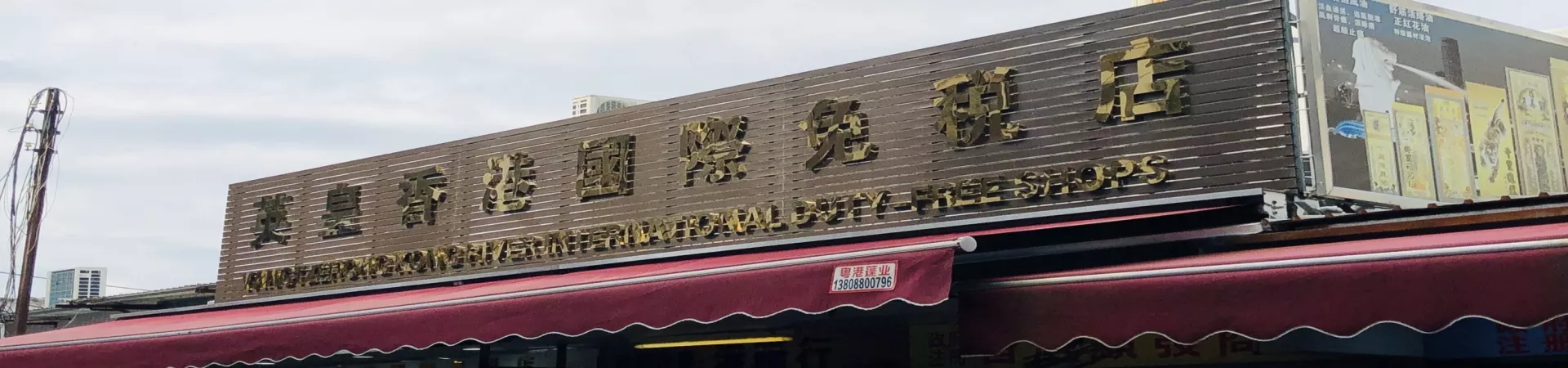
The Allure of Tax-Free Goods For much of the latter half of the 20th century and into the early 2000s, Zhong Ying Street's primary draw was commerce. Its unique status created a vibrant duty-free shopping zone. Goods from across mainland China, Hong Kong, and all over the world flooded the countless small shops that line both sides of the narrow lane. Electronics, clothing, jewelry, cosmetics, and daily necessities were famously priced lower than in neighboring urban centers, attracting throngs of bargain hunters from both sides of the border. The atmosphere was that of a bustling, international bazaar condensed into a few hundred meters.
A Note of Caution for Modern Visitors While shopping remains an activity here, the landscape has changed significantly. The price advantage is no longer as pronounced as in past decades, due to broader economic changes and policy adjustments. Visitors are advised to shop with discernment. It is crucial to carefully check the quality and authenticity of goods, be aware of warranty and return policies (which may be limited), and compare prices with major retailers in Shenzhen or Hong Kong. The experience is now more about the historical context than about securing major bargains. The primary commodity for sale is the unique story of the street itself.
Practical Information for Your Visit
Getting There Zhong Ying Street is located in the Shatoujiao area of Shenzhen's Yantian District. * By Public Bus: A common route is to take the Shenzhen bus 78K to the Shatoujiao Terminal Station. From there, it is a short walk of approximately 300 meters to the entrance. Alternatively, bus B662 (interval service) can take you to the Zhong Ying Street Checkpoint招呼站, also about a 300-meter walk away. * Important Access Note: Access to Zhong Ying Street is restricted. Mainland Chinese visitors must obtain a free entry permit (《边境特别管理区通行证》) by presenting their valid Chinese ID card at the nearby Shatoujiao Border Control Point. Foreign passport holders and visitors from Hong Kong/Macau/Taiwan must present their valid passports and entry visas to China at the same control point to gain access. This process is a reminder of the area's ongoing special administrative status.
Visiting Details * Admission: There is no entrance fee to access Zhong Ying Street itself. * Opening Hours: The street is accessible during the operating hours of the border control point, typically from morning until early evening. It is advisable to check the latest entry times (often around 9:00 AM to 4:00 PM) before your visit, as they are subject to change. The street area itself is not a "24-hour" zone in a practical sense for tourists due to the permit control. * Suggested Duration: A visit typically takes between 1 to 3 hours. This allows sufficient time to walk the street's length, observe the historical markers, visit the on-site Zhong Ying Street History Museum (highly recommended for deeper historical context), browse the shops, and absorb the unique atmosphere.
The Street Today: Symbolism and Reflection
Walking down Zhong Ying Street today, the physical border is invisible. The crowds are thinner and more subdued compared to its commercial peak. The faded marker stones and the mix of shop signs in both simplified and traditional Chinese characters are the main hints of its dual heritage. It has transitioned from a bustling commercial frontier to a site of historical education and quiet contemplation. It serves as a powerful, open-air monument to a bygone era of division and a testament to the current, complex reality of integration under "one country, two systems." For the thoughtful traveler, it is not just a street but a narrative etched in pavement and stone, telling a story of colonialism, commerce, change, and the ongoing journey of two cities intertwined by history.