Langshi Village
Subtitle: A Journey Through Time in Langshi Village, Shaoyang
1. Introduction: Where Five Counties Meet
Nestled in a unique geographical and cultural crossroads, Langshi Village in Shaoyang, Hunan Province, occupies a place of serene historical significance. Its location at the intersection of five counties—Wugang, Xinning, Shaoyang, Longhui, and Dongkou—earned it the ancient moniker "Where the Rooster's Crow is Heard in Five Counties." This poetic description speaks volumes about its central, albeit tranquil, position in the region. Situated approximately 60 kilometers from Wugang City and 30 kilometers from Longhui County town, the village was historically more than just a quiet settlement; it served as a vital economic hub and transportation nexus for the surrounding border areas. Its network of stone-paved roads radiating in all directions once buzzed with commercial activity, leading to its proud nickname, "Little Nanjing." Today, visitors are invited to step away from the modern bustle and into this well-preserved enclave, where the echoes of a prosperous past are etched into every brick, beam, and cobblestone.
2. Architectural Symphony: A Legacy in Brick and Wood
The soul of Langshi Village lies in its exceptional assemblage of ancient residential architecture. A total of 88 main structures (excluding separate temples, nunneries, and pavilions) survive, covering an impressive area of 10,880 square meters. Of these, 55 remain in remarkably complete condition. This architectural canvas was painted over two centuries, with construction spanning from the 52nd year of the Qing Dynasty's Kangxi reign (1713 AD) to the third year of the Republic of China (1914 AD).
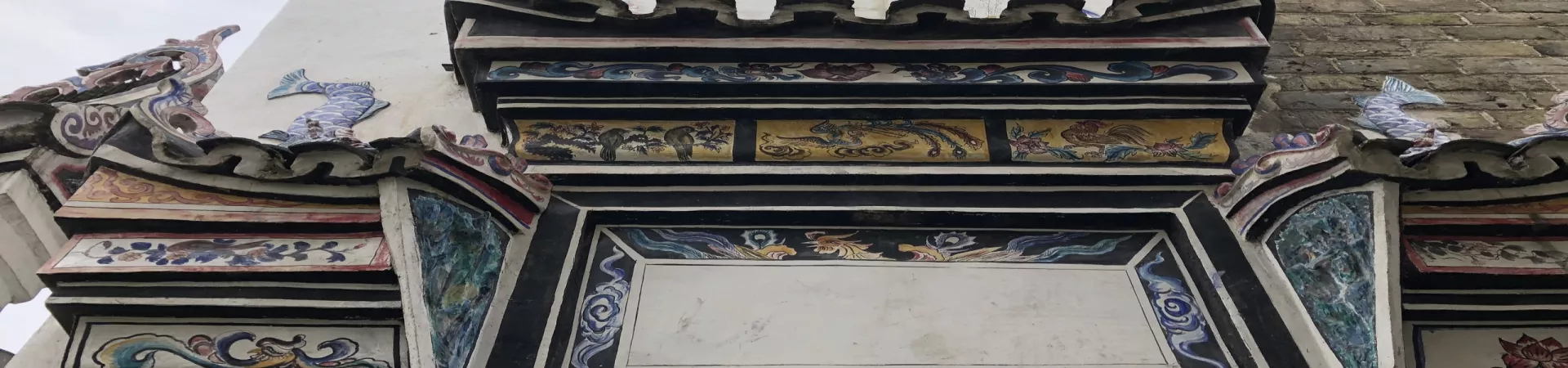
2.1. Layout and Structure: Harmony and Order The village presents a picture of harmonious planning and dignified order. All buildings uniformly face south, arranged in neat, orderly rows that reflect traditional Chinese principles of geomancy and community layout. The primary construction style is a consistent brick-and-wood frame structure. This design features a distinctive and elegant silhouette: each house unit is flanked at both ends by tall, painted "sealing fire walls" (feng huo qiang). These gable walls, constructed from blue-grey bricks, curve gracefully upwards at the corners like wings, serving both the practical purpose of fire containment and a highly decorative role. The central section of the building between these walls is built with a wooden pillar framework supporting paneled wooden walls.
2.2. The Alleyways: Engineering Marvels Underfoot Perhaps one of the most captivating features of Langshi is the network of alleyways that run between each row of houses. These are not mere paths but meticulously engineered passages paved entirely with large, smooth slabs of bluestone. Their craftsmanship is so superb that locals boast—and visitors can witness—that even during the heaviest downpour, one can walk from the eastern end of the village compound to the western end without getting one's shoes wet. This remarkable drainage and paving system stands as a testament to the ingenuity and high-quality construction standards of the village's forebears, transforming practical infrastructure into an enduring aesthetic and functional marvel.
3. Practical Information for the Visit
To fully appreciate the tranquility and details of Langshi Village, planning your visit with the following practical aspects in mind is recommended.
3.1. Duration and Timing A visit to Langshi Village typically requires 1 to 3 hours. This allows sufficient time to wander leisurely through the ancient alleyways, admire the architectural details of the courtyard homes, and absorb the peaceful atmosphere. The village is open to visitors all day, every day of the year, offering flexibility for your itinerary. The soft light of early morning or late afternoon can be particularly beautiful for photography, casting long shadows along the stone lanes and highlighting the textures of the ancient walls.
3.2. Getting There Reaching Langshi Village involves a scenic journey into the countryside. The most common route is to take a long-distance bus to the Shuangpai Township Government station. From this point, Langshi Village is not within immediate walking distance. Visitors will need to arrange for local transportation, such as hiring a taxi or a private car, for the final leg of the journey to the village itself. It is advisable to confirm the return trip arrangements with your driver in advance.
3.3. Admission Details For the most current information regarding ticket prices and any potential fees for entry or guided services, it is recommended to inquire directly with the local scenic area management before or upon your visit. Policies can vary, and checking directly ensures you have the latest details for your planning.