Shaoxing Lu Xun's Hometown Scenic Area
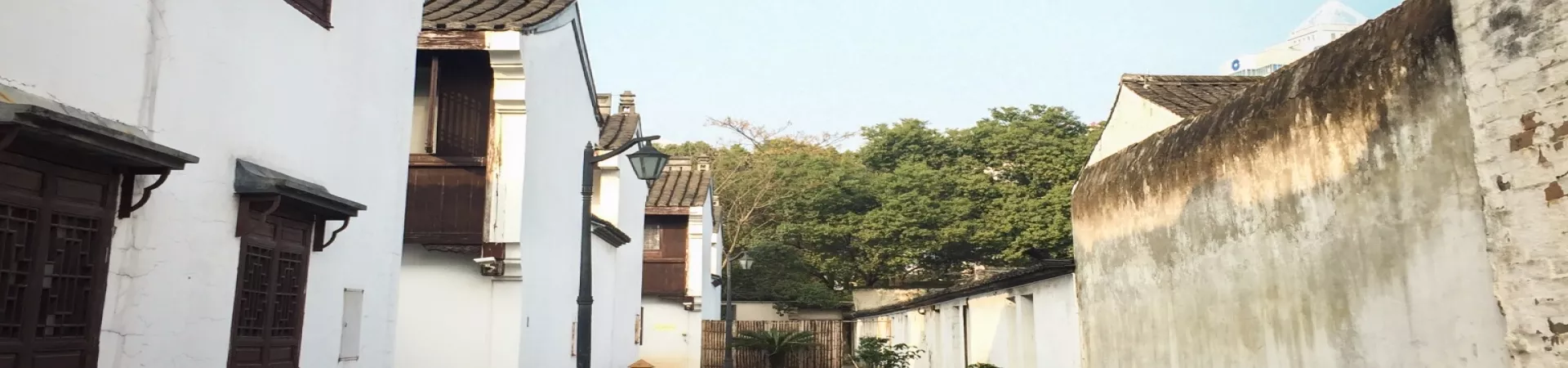
Subtitle: A Journey into the Heart of Modern Chinese Literature
1. Introduction to the Historic District Nestled in the heart of Shaoxing city, Zhejiang Province, the Lu Xun Native Place is not merely a tourist attraction but a profound pilgrimage site for anyone interested in modern Chinese literature and history. This meticulously preserved historical street district offers an unparalleled, tangible connection to Zhou Shuren (1881-1936), the man behind the pen name Lu Xun, widely regarded as the greatest writer of 20th-century China. The district encompasses the actual environment where he spent his formative years, an environment that would later fuel his iconic stories and shape his critical worldview. A visit here transcends typical sightseeing; it is an immersive experience that breathes life into the pages of his revolutionary works, allowing visitors to walk the same lanes, touch the same walls, and see the same sights that inspired a literary giant.
2. Exploring the Core Historical Sites The district's magic lies in its authentic preservation and careful restoration of key locations from both Lu Xun's life and his fictional universe.
2.1. The Childhood Home: From Hundred-Plant Garden to Three-Flavor Study The centerpiece of the visit is the complex of buildings that constituted Lu Xun's family home. Here, the legendary Hundred-Plant Garden (Bai Cao Yuan) comes to life. Far more than a simple garden, this was the boundless kingdom of childhood imagination he described with such vivid nostalgia. Visitors can explore this green space, envisioning the young boy searching for cicadas, digging for radix pseudostellariae, and experiencing the simple wonders he later contrasted against the rigid confines of formal education.
That formal education is represented by the Three-Flavor Study (San Wei Shu Wu), the private school where Lu Xun studied under his stern tutor. The classroom is arranged as it was, complete with the desk where the young Lu Xun famously carved the character "早" (zao, meaning "early") as a self-admonishment after arriving late. The atmosphere evokes the strict Confucian education system that he would later critique, making his literary rebellion all the more understandable.
2.2. Ancestral Residence and Traditional Architecture Adjacent to his childhood home is the Lu Family Ancestral Residence (Zuju), a larger compound showcasing the lifestyle and social standing of a scholarly family in late Qing Dynasty Shaoxing. The architecture, with its series of courtyards, ceremonial halls, and living quarters, provides essential context for the social norms and family structures that are often a backdrop or a target in Lu Xun's stories.
2.3. Literary Landmarks Brought to Life The restoration extends into the very fabric of his fiction. The Tugu Temple, mentioned in The True Story of Ah Q, and the Jingxiu Nunnery can be found within the district. Perhaps most evocative for literature enthusiasts is the Hengji Pawnshop (恒济当), the very establishment referenced in the preface to his seminal short story collection Outcry (Nahan). Seeing these real structures anchors his often allegorical and critical stories in a concrete, physical reality, deepening the reader's appreciation for his creative process.
3. The Lu Xun Memorial Hall: A Deeper Dive into His Life and Legacy To fully comprehend the man behind the literature, a visit to the Lu Xun Memorial Hall is indispensable. This modern, well-curated museum houses a rich collection of artifacts that trace his journey from a Shaoxing youth to a national icon. Exhibits include personal effects like his furniture, childhood toys, and even the seashells given to him by his childhood friend Runtu—the real-life inspiration for the poignant character of the same name in his story My Old Home. Through manuscripts, photographs, and historical documents, the memorial hall chronicles his roles not just as a writer of fiction, but also as a seminal essayist, translator, and social critic who relentlessly championed cultural and social reform during a tumultuous period in Chinese history.
4. Practical Visitor Information 4.1. Admission and Ticketing Admission to the Lu Xun Native Place historic district is free of charge. However, to manage visitor flow, a ticket is required for entry into the key protected heritage sites, including the Three-Flavor Study, Lu Xun's Childhood Home (故居), and the Lu Family Ancestral Residence. These tickets are obtained by presenting a valid original ID card (passport for international visitors) at the ticket offices near the entrances to these specific sites. One ID can secure up to three tickets (for the ID holder plus two companions). This policy is strictly enforced, and each ID is typically limited to one set of tickets per day.
4.2. Opening Hours Opening hours vary seasonally: * Summer Season (June 1 - August 31): * Tuesday to Sunday: 8:30 - 21:00 (Last entry at 20:40) * Monday: 8:30 - 17:00 (Last entry at 16:40) * Winter Season (December 1 - February 28/29 of the following year): * Monday to Sunday: 8:30 - 17:00 (Last entry at 16:40)
4.3. Transportation and Accessibility The district is conveniently located in downtown Shaoxing. The most straightforward way to reach it is by public bus. Multiple bus lines, including 8, 13, 24, 30, 68, and 88, stop at the "Lu Xun Guli" (鲁迅故里) bus station. From the bus stop, it is a short and well-signposted walk of approximately 283 meters to the main entrance of the scenic area.
4.4. Suggested Duration and Tips To fully appreciate the historic homes, the memorial hall, and the atmospheric old street itself, a minimum of 3 hours is recommended. Visitors should allocate more time if they wish to read exhibit descriptions in detail or explore the surrounding traditional shops and canals of Shaoxing. It is highly advisable to bring your original passport or ID card for ticket collection. The district can be busy on weekends and holidays, so an early arrival is beneficial for a more tranquil experience. Comfortable walking shoes are essential, as the experience involves considerable walking on historic stone pathways.