Lu Xun's Former Residence
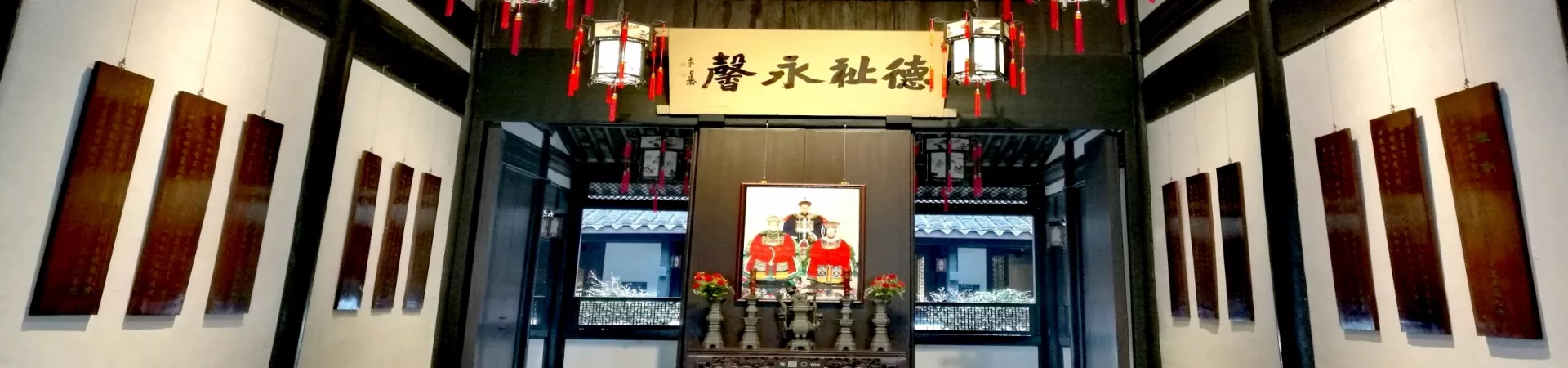
Subtitle: A Journey into the Childhood Home of China's Literary Giant
1. Introduction to Lu Xun's Former Residence
Nestled within the historic quarter of Shaoxing, Zhejiang Province, the Lu Xun's Former Residence stands as a poignant and essential portal into the formative years of one of modern China's most influential literary figures. Built in the early 19th century, this residence is the centerpiece of the broader "Lu Xun's Hometown" scenic area and attracts countless visitors, scholars, and admirers seeking to understand the environment that shaped Lu Xun's sharp social critique and profound humanism. More than just a museum, it is a carefully preserved slice of late Qing Dynasty life, offering an intimate glimpse into the daily rhythms, familial structures, and social backdrop that would later fuel the stories of "The True Story of Ah Q," "Diary of a Madman," and "The New Year's Sacrifice." Walking through its courtyards and rooms is to walk through the physical setting of Lu Xun's memories, a tangible connection to the author whose works remain fiercely relevant.
2. Historical Significance and Architectural Layout
2.1. The Structure and Its Evolution The original residence was a two-part compound (两进). While the front section has undergone changes and no longer retains its original early-19th century form, the rear section—the main living quarters—remains authentically preserved. It is within these weathered wooden beams, grey brick walls, and stone-paved courtyards that Zhou Zhangshou, later known by his pen name Lu Xun, spent his childhood and adolescent years from 1881 until 1899, when he left Shaoxing to pursue his education. This distinction between the altered front and preserved rear is important; it focuses the visitor's experience on the very spaces where the writer ate, slept, studied, and observed the world around him. The architecture is characteristic of Jiangnan-style (江南风格) vernacular dwellings from the period, featuring a central hall flanked by living spaces, an ancestral worship area, and private courtyards that blend indoor and outdoor living.
2.2. A Crucible for a Literary Mind This house was not merely a home but a microcosm of the society Lu Xun would later dissect in his writing. It was here he witnessed the conventions, pressures, and complexities of a traditional scholarly family in decline. The compound housed his extended family, and the dynamics within these walls—between his grandmother who told him folk tales, his strict father, and the various servants and relatives—provided a deep well of observation. The famous "Hundred-Plant Garden" (百草园), a small, wild garden at the rear of the compound, is vividly brought to life here. Described by Lu Xun as his childhood paradise, a place of endless fascination with insects and plants, it stands in stark, symbolic contrast to the rigid Confucian education he received at the "Three Flavor Study" (三味书屋) nearby. This juxtaposition, physically experienced by visitors moving from the study to the garden, encapsulates the tension between natural curiosity and formal restraint that permeates his work.
3. Practical Visitor Information
3.1. Location and Access The residence is located at within the Lu Xun's Hometown Scenic Area in Yuecheng District, Shaoxing City. The area is well-connected by public transport. * By Bus: Multiple bus lines serve the area. You can alight at the "Second Hospital" (第二医院) bus stop (served by routes 8, 11, 13A, 24A, etc.) and walk a short distance. Alternatively, buses heading to the "Lu Xun's Hometown (Shen Garden)" (鲁迅故里(沈园)) stop place you at the entrance to the entire historic precinct. * By Taxi/Rideshare: Simply asking for "Lu Xun Guli" (鲁迅故里) will suffice, as it is a major landmark in the city.
3.2. Admission and Opening Hours A significant advantage for visitors is that admission to Lu Xun's Former Residence, along with several other key sites within the Lu Xun's Hometown precinct, is free of charge. This policy greatly enhances accessibility for all. The opening hours vary slightly: * Mondays: 8:30 AM - 5:00 PM (year-round). * Tuesday to Sunday: * Summer Season: 8:30 AM - 9:00 PM. * Winter Season: 8:30 AM - 8:30 PM. It is always advisable to allocate at least 1 to 2 hours for a meaningful visit to the residence itself, though exploring the entire connected scenic area (including the Three Flavor Study and memorial hall) can easily take half a day.
4. Enhancing Your Visit Experience
4.1. Planning Your Trip To fully appreciate the context, consider reading some of Lu Xun's short stories, particularly those set in or inspired by Shaoxing, such as "My Old Home" or "The New Year's Sacrifice," before your visit. This will make the physical spaces resonate more deeply. Mornings on weekdays are typically less crowded. As the residence is part of a larger pedestrian-friendly historic zone, wear comfortable walking shoes. The climate in Shaoxing features hot, humid summers and chilly, damp winters, so dress accordingly.
4.2. Exploring the Broader Context The Former Residence is intrinsically linked to other nearby sites that form a cohesive narrative. A visit is incomplete without seeing the Three Flavor Study (三味书屋), the private school where Lu Xun studied under his tutor, Master Shou Jingwu. The original desks, including the one where Lu Xun famously carved an early character, are on display. Just a short walk away is the Lu Xun Memorial Hall, which provides an excellent biographical overview and exhibits of his manuscripts, personal effects, and historical context, complementing the experiential understanding gained from the home.
4.3. Key Contacts and Considerations For the most current information, especially regarding any temporary closures or special events, you can contact the scenic area management at 0575-85132080. Remember that operational details like precise opening and closing times can change, so it is wise to verify on the day of your visit. The surrounding historic streets are also worth exploring for local snacks, Shaoxing rice wine tasting, and traditional handicrafts, making the trip a comprehensive cultural immersion.