Lanting Scenic Area
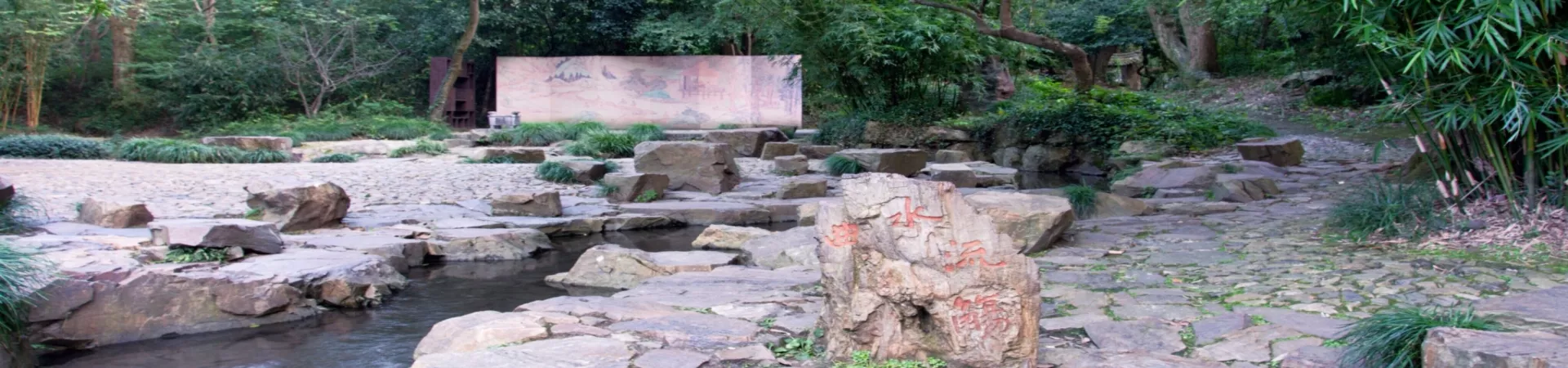
Subtitle: A Journey Through Calligraphy, Culture, and Captivating Landscapes
Introduction: The Cradle of a Cultural Legacy
Nestled at the foot of Lanzhu Mountain, approximately 12.5 kilometers southwest of Shaoxing city, the Lan Ting (Orchid Pavilion) Scenic Area stands as one of the three most renowned scenic spots in Shaoxing's outskirts, alongside the Yu Mausoleum and East Lake. Its fame, resonating across centuries and continents, is eternally intertwined with one of the most celebrated masterpieces in Chinese cultural history: the Preface to the Poems Composed at the Orchid Pavilion (Lantingji Xu). This site is not merely a park; it is the hallowed ground where art, philosophy, and nature converged in a legendary moment, immortalized by the "Sage of Calligraphy," Wang Xizhi. In recent decades, the annual Lan Ting Calligraphy Festival has revitalized this ancient legacy, drawing scholars, artists, and visitors from around the globe to celebrate the enduring art of Chinese calligraphy. The area masterfully integrates sublime natural scenery, elegant classical gardens, and a profound historical atmosphere, distinguished by its four quintessential characteristics: serene landscapes, refined historical events, exquisite literary heritage, and peerless calligraphic art.
The Historical Heart: Legacy of the Lanting Gathering
The Legendary Gathering of 353 CE The soul of Lan Ting lies in an event from the 9th year of the Yonghe era (353 CE) during the Eastern Jin Dynasty. The renowned calligrapher and official Wang Xizhi invited forty-one literary elites and friends to this serene location for the Spring Purification Festival. The tradition involved floating wine cups along a meandering stream; as a cup paused before a guest, he would compose a poem or drink wine. From this convivial gathering, a collection of poems emerged. Wang Xizhi, in a moment of inspired brilliance, wrote the preface to this collection in semi-cursive script. The Lantingji Xu is revered not only for its lyrical content reflecting on life, nature, and transience but also for being the apotheosis of Chinese calligraphic artistry. The original manuscript is lost to history, but its spirit permeates every corner of the scenic area.
Cultural Evolution Through the Ages While the original pavilion from the Jin Dynasty is gone, the site has been commemorated and rebuilt multiple times throughout subsequent dynasties, particularly the Ming and Qing. Each reconstruction added layers of cultural significance, transforming the area into a comprehensive memorial to Wang Xizhi and the art of calligraphy. The ongoing Calligraphy Festival ensures this legacy is a living tradition, with thousands of practitioners gathering each spring to demonstrate their skills and pay homage.
Exploring the Scenic Area: A Tapestry of Sites
The Core Historical Sites * Goose Pool Stele (E Chi Bei): The entrance sets the tone with this iconic stele. Legend states that Wang Xizhi loved geese, and the character for "goose" (e) on the stele, said to be written by Wang himself and his son Wang Xianzhi, embodies the graceful strength he admired in their movement and sought in his brushwork. * The Orchid Pavilion (Lan Ting): The centerpiece is a reconstructed hexagonal pavilion, simple yet elegant, housing a stele inscribed with "Lan Ting" by the Qing Emperor Kangxi. It symbolizes the spot where the ancient literati gathered, offering a space for contemplation. * The Winding Stream (Qu Shui): This gentle, man-made stream recreates the setting for the "floating wine cups" game. Visitors can sometimes witness reenactments or simply imagine the scholarly revelry that once took place on its banks. * The Flow Cup Pavilion (Liu Shang Ting): Located along the stream, this pavilion is where Wang Xizhi is believed to have written the Preface. It houses important steles, including copies of the Lantingji Xu. * The Imperial Stele Pavilion (Yu Bei Ting): This impressive octagonal pavilion features a large stele with calligraphy by Emperor Kangxi on one side and Emperor Qianlong on the other, showcasing the deep admiration later emperors held for this cultural site.
The Calligraphy Museum & Natural Beauty * Lan Ting Calligraphy Museum: A modern facility dedicated to the history and art of Chinese calligraphy, with a special focus on Wang Xizhi and the Lantingji Xu. It displays replicas, historical texts, and rotating exhibitions, providing crucial context for the outdoor sites. * Youjun Temple (Wang Xizhi Temple): A temple complex dedicated to worshipping Wang Xizhi, further emphasizing his deified status in Chinese cultural history. * The Bamboo Forest and Lanzhu Mountain: The area is lush with greenery, tranquil bamboo groves, and quiet paths leading up the slopes. This natural backdrop of clear waters, rugged rocks, and dense foliage embodies the "serene landscape" that inspired the poets and is essential to the site's peaceful ambiance.
Essential Visitor Information
Planning Your Visit * Suggested Duration: A comprehensive visit typically requires 2 to 3 hours. This allows time to explore both the outdoor historical pavilions and streams as well as the indoor Calligraphy Museum at a comfortable pace. * Best Time to Visit: Spring (especially around the Calligraphy Festival in April) and autumn offer the most pleasant weather. The natural scenery is particularly vibrant during these seasons.
Admission Details The general admission ticket is priced at 70 RMB. The ticket includes entry to both the main Lan Ting Scenic Area and the Calligraphy Museum. * Concessions (50% discount): Apply to seniors aged 60-69 (with valid ID) and full-time students (with student ID). * Free Admission: Is granted to several groups, including: children under 6 (or under 1.2m tall); seniors aged 70 and above; active-duty and disabled military personnel, veterans, and their families; individuals with disabilities; holders of specific provincial honor certificates (e.g., for teaching or blood donation); and organized student groups (outside national holidays). Note: Local Shaoxing residents may obtain free entry with ID outside of major public holidays (Golden Weeks). It is always advisable to check the latest official announcements for the most current policy details.
Operating Hours & Transportation * Opening Hours: The scenic area is open daily from 8:00 AM to 5:00 PM, with last admission at 5:00 PM. * Contact: For inquiries, you may call 0575-84600890 or 0575-84029406. * Getting There: The most convenient public transportation option is to take Shaoxing city bus routes 303A, 303B, 303C, 3A, 3, or the special tourism line 0003 and alight at the "Lan Ting Fengjingqu" (Lan Ting Scenic Area) bus stop. From there, it is a short walk to the entrance.