Bazi Bridge
Subtitle: A Timeless Journey Through Shaoxing's Ancient Waterways
Introduction Nestled within the historic fabric of Shaoxing, Zhejiang Province, lies the Bazi Bridge, a structure quietly defying the relentless march of time. Revered as "China's Oldest Interchange," this eight-hundred-year-old stone bridge is far more than a mere river crossing; it is a profound testament to ancient Chinese engineering philosophy, a living artifact of urban harmony, and the serene heart of a classic Jiangnan watertown. To visit Bazi Bridge is to step into a living painting, where history is not confined to museums but flows as gently as the waters beneath its arches.
The Architectural Marvel: An Ancient Interchange
2.1. Ingenious Design and Layout The bridge's name, "Bazi" or "Figure-Eight," derives from its distinctive form, which elegantly spans the confluence of three small canals. Its true genius, however, lies not just in its shape but in its foundational principle: seamless integration. Unlike modern urban projects that often clear the way through demolition, the builders of Bazi Bridge meticulously adapted their design to the existing cityscape. It respected the established network of streets, the placement of homes, and the natural topography. The objective was clear—to solve a complex traffic problem (for both pedestrians and boats) without dismantling the community it aimed to serve. This resulted in a multi-directional structure with ramps gracefully connecting different streets at varying levels, creating a primitive yet highly effective pedestrian interchange.
2.2. A Philosophy in Stone This adaptive, non-invasive approach represents a pinnacle of thoughtful urban planning from the Southern Song Dynasty. The bridge stands as a physical manifesto of the principle "顺应而不强拆" (to comply with, not forcibly demolish). Every construction element was purposefully and artfully integrated, ensuring the bridge itself became a cherished part of the neighborhood's fabric rather than an intrusive imposition. In an era of rapid development, this ancient example of sustainable and respectful architecture offers timeless wisdom, demonstrating how infrastructure can enhance functionality while preserving cultural and social heritage.
The Living Watertown: A Scene of Timeless Harmony
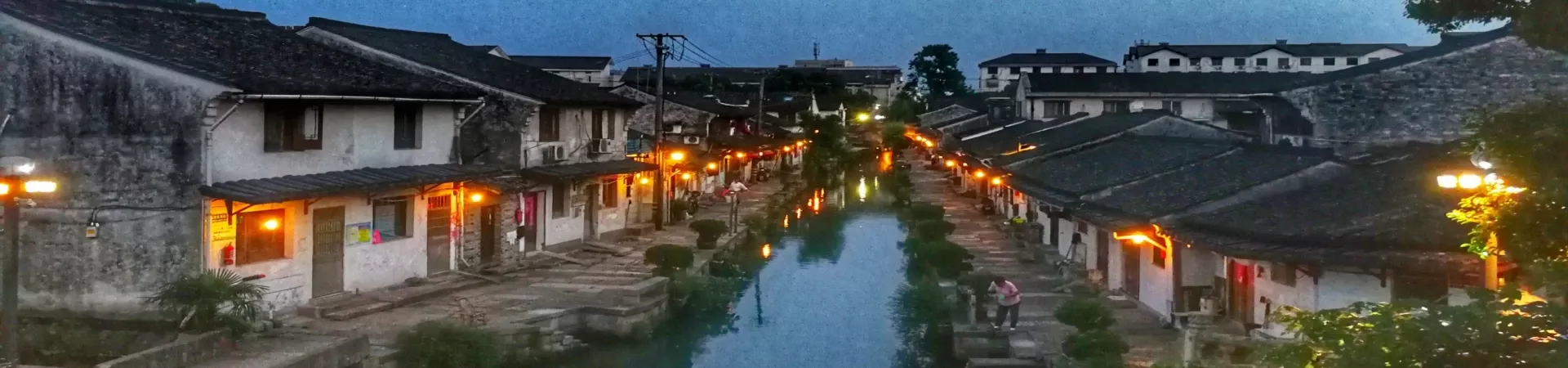
3.1. The Quintessential Watertown Landscape Stepping onto the worn stone steps of Bazi Bridge rewards the visitor with a panorama that embodies the poetic ideal of "small bridges, flowing water, and homes" (小桥,流水,人家). The view is a composition of serene beauty: tranquil waterways reflecting the sky, ancient dwellings with white walls and dark tiles lining the banks, and other humbler stone bridges arching over narrow channels. The atmosphere is one of恬淡 (tranquil simplicity) and宁静 (peaceful quietude), a world away from urban clamor.
3.2. A Glimpse into Daily Life Yet, this scene is vibrantly alive. The water is not merely a scenic backdrop but the lifeblood of the community. This is where the bridge reveals its second soul—as a window into the enduring rhythms of watertown life. From its vantage point, one might瞥见 (glimpse) the daily rituals of the "枕河人家" (homes resting upon the river): a resident washing vegetables by the water's edge, laundry drying in a gentle breeze, a boat slowly gliding by carrying goods. These fleeting moments feel like a direct connection to a古朴纯净的年代 (an era of古朴 purity), where human life and the aquatic environment exist in seamless symbiosis. The harmony is palpable, making one feel that the culture of the watertown was always meant to be this way—intimate, fluid, and deeply connected to nature.
Practical Information for Visitors
4.1. Location and Accessibility The Bazi Bridge is located in the ancient quarter of Shaoxing city. The most convenient access is by public bus. Visitors can take Bus No. 7 or No. 68 and alight at the Xiangzhangyuan (香樟园) Bus Stop. From there, a short and pleasant walk through the old streets will lead you to the bridge.
4.2. Admission and Opening Hours In keeping with its role as a integral part of the living community, access to Bazi Bridge is completely free of charge. It is open to the public 24 hours a day, every day of the year. This unrestricted access allows for visits at different times to capture varying moods—the soft morning light, the bustling afternoon, or the lantern-lit tranquility of evening.
4.3. Suggested Visit Duration To fully appreciate the bridge's architecture, absorb the surrounding atmosphere, and wander the adjacent ancient lanes and waterways, a visit of approximately one hour is recommended. However, its charm often invites visitors to linger longer, perhaps sitting on a stone step to simply watch life flow by at its own unhurried pace.