Baicaoyuan
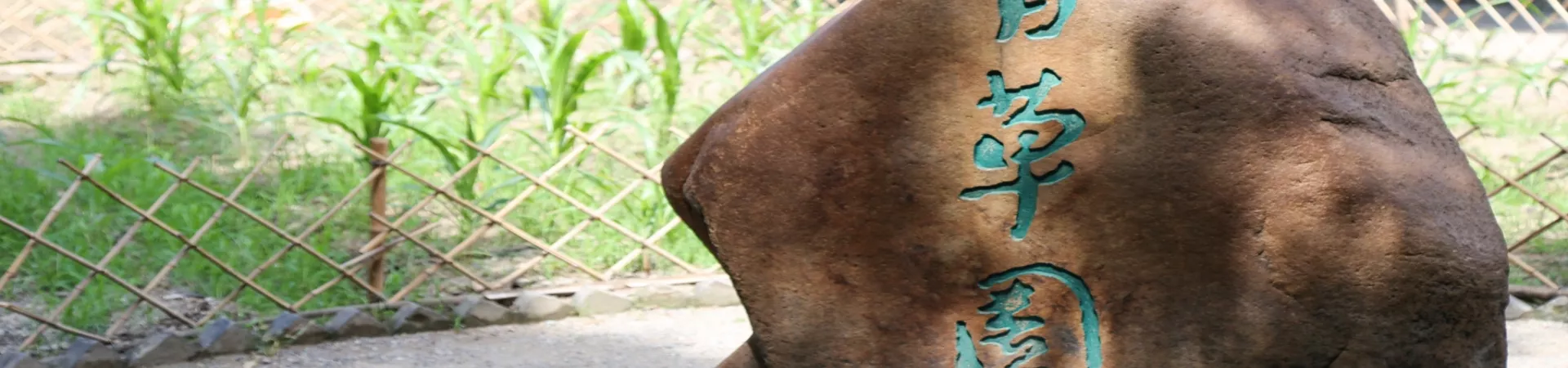
Subtitle: A Journey Through Lu Xun's Childhood Paradise
Introduction: A Literary Sanctuary in the Heart of Shaoxing
Nestled discreetly behind the revered Lu Xun's Former Residence in Shaoxing, Zhejiang Province, lies a seemingly unassuming plot of land that holds an extraordinary place in modern Chinese literary consciousness—the Hundred Herbs Garden, or Bǎicǎo Yuán. More than just a garden, it is a physical portal to the formative world of one of China's most influential writers, Lu Xun (Zhou Shuren). For the countless visitors who walk its paths, it is not merely a tourist stop but a pilgrimage to the very source of childhood wonder and nostalgia immortalized in prose. This tranquil space, once a communal vegetable patch, has been forever transformed by literature into a universal symbol of innocent exploration and the poignant transition from the freedom of childhood to the discipline of learning.
1. From Communal Vegetable Patch to Literary Icon
1.1. Historical Origins and Practical Purpose Long before it achieved fame, the Hundred Herbs Garden served a purely utilitarian function. It was the shared kitchen garden for about a dozen households of the Zhou clan (part of the Xintaimen compound), where families cultivated seasonal melons, vegetables, and grains. In autumn, the open grounds would have been used for sun-drying rice, a common rural scene. Its design was simple and practical, devoid of the ornamental landscaping found in classical Chinese scholar gardens. This very simplicity and connection to everyday life provided the raw, authentic backdrop for a child's imagination to flourish.
1.2. Lu Xun's Personal Playground For the young Zhou Shuren, however, this ordinary garden was nothing short of an enchanted kingdom. It became his private sanctuary and playground, a world brimming with adventure and discovery far removed from the formalities of adult life. Here, he was not a student but an explorer, a naturalist, and a hunter. The garden was his realm of unfettered joy, where the cycles of nature provided endless entertainment and fascination.
2. The Garden of "Infinite Interest": Exploring Lu Xun's World
2.1. Vivid Memories Preserved in Prose The garden's immortality is irrevocably tied to Lu Xun's iconic essay, "From Hundred Herbs Garden to Three-Flavor Study." Through his vivid recollections, readers experience the garden through a child's senses: the tart sweetness of mulberries picked and eaten straight from the tree, the thrilling patience required to trap sparrows under a propped-up bamboo sieve, the meticulous search for cicada shells on the dirt, and the mysterious allure of folklore about the "fair lady snake" said to reside within the old wall. Lu Xun famously described this environment as possessing "infinite interest," a phrase that now perfectly encapsulates the site's appeal to visitors.
2.2. Key Features and Enduring Landmarks While the plant life has changed over a century, the garden's essential layout and several key features remain, allowing visitors to directly connect with the author's descriptions. * The "Short Mud Wall": Perhaps the most iconic surviving element is the low, earthen wall on the garden's western side. This is the very "short mud wall" that bounded young Lu Xun's world and sparked his curiosity. Its weathered, rustic appearance today is a powerful touchstone to the past. * The "Liangjie" Boundary Stone: At the southern end of this mud wall, attentive visitors can find a boundary stone inscribed with the characters "梁界" (Liáng Jiè), marking a historical property line. This small, often-overlooked detail adds a layer of tangible history to the site. * Recreated Natural Environment: The garden today is maintained with a variety of plants, trees, and bamboo groves that evoke the lush, wild atmosphere described by Lu Xun. It is a space designed for contemplation, inviting guests to imagine the sounds, smells, and sights that once captivated the future literary giant.
3. A Shared Cultural Memory
The profound power of the Hundred Herbs Garden lies in its ability to transcend its specific history. For many Chinese readers, Lu Xun's essay is a staple of school curricula, making his childhood experiences a common reference point. Consequently, visiting the garden is rarely just about Lu Xun; it becomes an act of recalling one's own childhood adventures—climbing trees, chasing insects, and discovering secret hideaways. The garden transforms into a mirror for personal memory, making it a deeply resonant and emotionally engaging site for domestic tourists. It stands as a testament to how literature can elevate a simple location into a shared cultural heritage, a collective "childhood playground" for a nation.
4. Practical Visitor Information
4.1. Location and Access The Hundred Herbs Garden is seamlessly integrated into the "Lu Xun's Former Residence" scenic area in downtown Shaoxing. There is no separate entrance; access is included with entry to the former residence compound. * Address: Within Lu Xun's Former Residence Scenic Area, Shaoxing, Zhejiang. * Public Transportation: The area is well-served by bus. Visitors can take routes such as 111, 13A, 13, or 177A and alight at the "Luxun Gu Li (鲁迅故里)" bus stop. The garden is a short and well-signposted walk from there.
4.2. Admission and Opening Hours * Admission Fee: There is no charge for entry to the Hundred Herbs Garden or the broader Lu Xun's Former Residence scenic area. It is open to the public free of charge. * Opening Hours: The site is open daily from 8:30 AM to 9:00 PM. This extended schedule allows for visits in the cooler evening hours, which can be particularly atmospheric.
4.3. Suggested Visit Duration A leisurely exploration of the Hundred Herbs Garden itself typically requires about 30 to 45 minutes. However, as it is part of a larger historical complex that includes Lu Xun's birthplace, the Three-Flavor Study, and memorial halls, visitors are strongly encouraged to allocate a minimum of 2 to 3 hours to fully appreciate the entire context of Lu Xun's early life and literary legacy. The garden serves as the perfect, serene prelude to the more structured scholarly environment of the Three-Flavor Study, physically and symbolically tracing the journey described in his famous essay.