Yunmen Temple
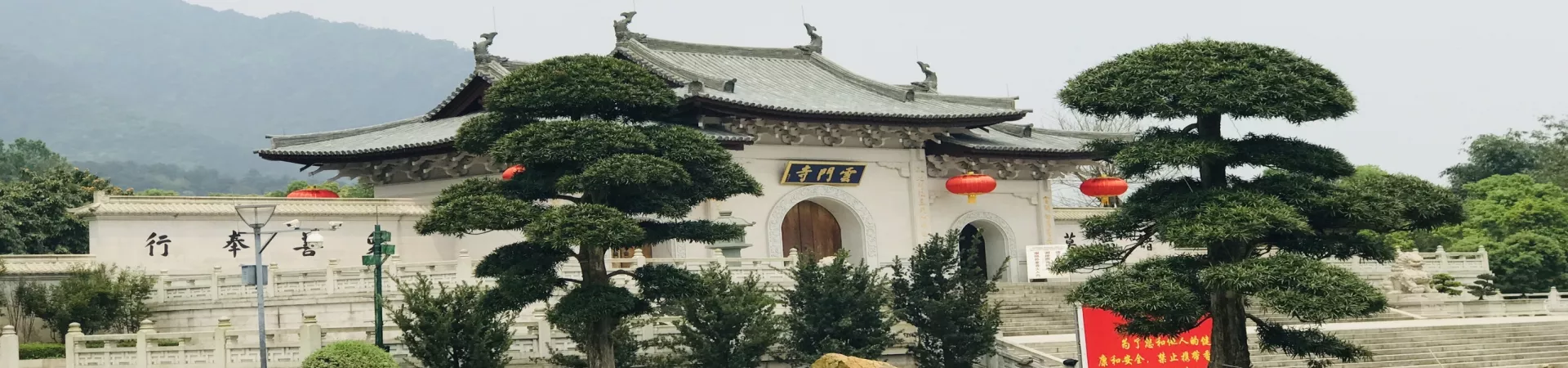
Subtitle: A Journey into the Heart of Chan Buddhism: Yunmen Temple in Shaoguan
1. Introduction and Historical Significance
Nestled against the lush, rolling hills north of Ruyuan County in Shaoguan, Guangdong Province, lies Yunmen Temple, a sanctuary of profound peace and towering historical importance. Approximately 50 kilometers from the bustling city center of Shaoguan, this temple is not merely a scenic retreat but one of the seminal birthplaces of Chinese Chan (Zen) Buddhism. Its story begins in the year 923 AD, during the Later Tang dynasty of the Five Dynasties period. It was founded by the eminent Master Wenyan, a seventh-generation dharma descendant of the Sixth Patriarch, Huineng. Here, Master Wenyan established and propagated the Yunmen school, which would become one of the five major lineages of Chan Buddhism, shaping spiritual thought and practice for centuries.
The temple’s journey through time, however, has been one of dramatic revival. By the late Qing Dynasty, the once-vibrant center had fallen into a state of neglect and near ruin. Its renaissance came in the winter of 1943, spearheaded by the most revered monk of modern Chinese Buddhism, Venerable Master Xuyun. Having just overseen the restoration of the famed Nanhua Temple (home to the incorruptible body of the Sixth Patriarch), Master Xuyun turned his efforts to Yunmen. His dedication was monumental; over nine years, 180 halls and rooms were constructed, and over 80 sacred statues were newly enshrined, successfully reviving the authentic spirit and practice of the Yunmen lineage. In recognition of its immense cultural and religious value, Yunmen Temple was designated a National Key Buddhist Temple in 1983, a status it shares with its sibling, Nanhua Temple.
2. Architectural and Cultural Treasures
Approaching the temple, visitors are greeted by the imposing, newly built mountain gate and stone memorial archway, standing an impressive 12 meters tall. This grand entrance sets the tone for the spiritual journey within. The temple complex is a harmonious blend of historical preservation and functional monastic architecture.
One of the most priceless cultural artifacts resides within the temple walls: the "Stele of the True Nature of the Late Great Master Kuangzhen of the Yunmen Guangtai Chan Monastery in the Great Han Dynasty's Dabao First Year (958 AD)". This stele, inscribed during the Southern Han period, offers an invaluable historical record and is considered a treasured Buddhist relic. The temple also serves as a memorial to its great restorer. The Virtual Cloud Memorial Hall (Xuyun Jiniantang) and a solemn Relic Stupa (Sheli Ta) were later added on the tranquil temple grounds, honoring Master Xuyun’s lifelong contributions and providing spaces for contemplation.
Beyond the main compound, about half a li (a quarter kilometer) away, lies the Haihui Pagoda (Sea Assembly Pagoda). This area, surrounded by dozens of halls and residential quarters capable of accommodating over a hundred people, now functions as a dedicated place of practice and study for Buddhist nuns.
3. The Natural Sanctuary: Guihua Tan Scenic Area
The spiritual serenity of Yunmen Temple is magnificently complemented by the breathtaking natural beauty of its surroundings, most notably the Guihua Tan (Osmanthus Flower Pool) Scenic Area at the temple's rear. This area is a masterpiece of nature where cultural history and landscape artistry intertwine.
The centerpiece is a spectacular waterfall, cascading dozens of meters down a cliff face into a deep, serene pool below. The true magic, however, unfolds around the pool's slopes, which are covered with lush osmanthus trees. During the months of August and September, the entire valley is transformed. The air becomes thick with the intoxicating, sweet fragrance of blooming osmanthus flowers, creating an immersive sensory experience that has captivated visitors for generations. This natural perfume, combined with the sound of rushing water and the sight of the misty waterfall, makes the Guihua Tan area an integral part of the temple's contemplative atmosphere.
4. Exploring the Extended Landscape
The natural and spiritual exploration extends further around Yunmen Temple. The area in front of the temple is crowned by Guanyin Mountain (Goddess of Mercy Mountain), adding to the sacred geography. Scattered throughout this picturesque landscape are several intriguing sites that blend natural wonder with folklore. These include the "Chumi Shi" (Out-of-Rice Rock), a stone associated with legends of miraculous provision; the Jiuxian Yan (Nine Immortals Rock); the Cibei Feng (Compassion Peak); and the Tiegu Shan (Iron Drum Mountain). Each site, with its unique rock formations, flowing streams, and hidden waterfalls, invites leisurely exploration and quiet reflection amidst the ever-present, fragrant embrace of osmanthus trees.
Practical Information for Visitors
- Opening Hours: 08:30 - 17:00, daily throughout the year.
- Admission Fee: A nominal fee of 5 RMB.
- Contact: For any inquiries, the temple can be reached at +86 751 5382757.
A visit to Yunmen Temple is thus a holistic journey. It is an encounter with the living history of Chan Buddhism, an appreciation of sacred art and architecture, and a deep immersion into some of Guangdong's most enchanting and fragrant natural scenery. It stands as a testament to resilience, faith, and the enduring search for peace.