Shantou Small Park
Subtitle: A Journey Through Time: Exploring Shantou's Historic Heart, Xiaogongyuan
Introduction: The Soul of Old Shantou
Nestled in the heart of Shantou's old city district lies Xiaogongyuan, a place that is far more than just a park. It is the historic commercial and cultural nucleus of the city, a living museum that vividly encapsulates the grandeur and cosmopolitan spirit of 1930s Shantou. This area serves as the quintessential symbol of the city's prosperous past, built largely by the overseas Chinese who shaped its destiny. For any visitor to Shantou, a trip to Xiaogongyuan is an essential journey back in time, offering an immersive experience into its unique architectural landscape and enduring legacy.
The Architectural Tapestry: A Slice of Paris in South China
2.1 Urban Layout and Design The most striking feature of the Xiaogongyuan district is its distinctive urban planning. The area's layout is a remarkable imitation of a Parisian neighborhood, characterized by a fan-shaped, radial street pattern emanating from a central point. This European-inspired design creates a dynamic and visually captivating streetscape unlike any other in China. The main roads, lined with continuous rows of characteristic arcaded buildings known as qilou, form the skeleton of this historic quarter.
2.2 The Qilou: Iconic Arcaded Buildings These qilou buildings are the defining architectural element of the zone. Typically two to four stories high, they feature a covered pedestrian arcade on the ground floor, providing shelter from both the tropical sun and frequent rain—a practical and elegant design borrowed from Southern European and Southeast Asian colonial architecture. Their façades often blend Western decorative motifs with traditional Chinese elements, a style reflective of the era's global influences and the tastes of the prosperous merchant class.
2.3 The Expanded Historic District While the name "Xiaogongyuan" often refers to its central core, the historic district in a broader sense encompasses the surrounding neighborhoods that flourished alongside it. This includes the old commercial blocks known as "Si Yong Yi Sheng Ping," the eastern "Yantingtou" area (historically linked to the salt trade), the northern Hongting, and the southern areas facing the old Shantou Port. Together, they form a cohesive urban fabric that was once a bustling hub of commerce, residence, and social life during the Republic of China era.
Landmarks and Symbols: Pillars of History
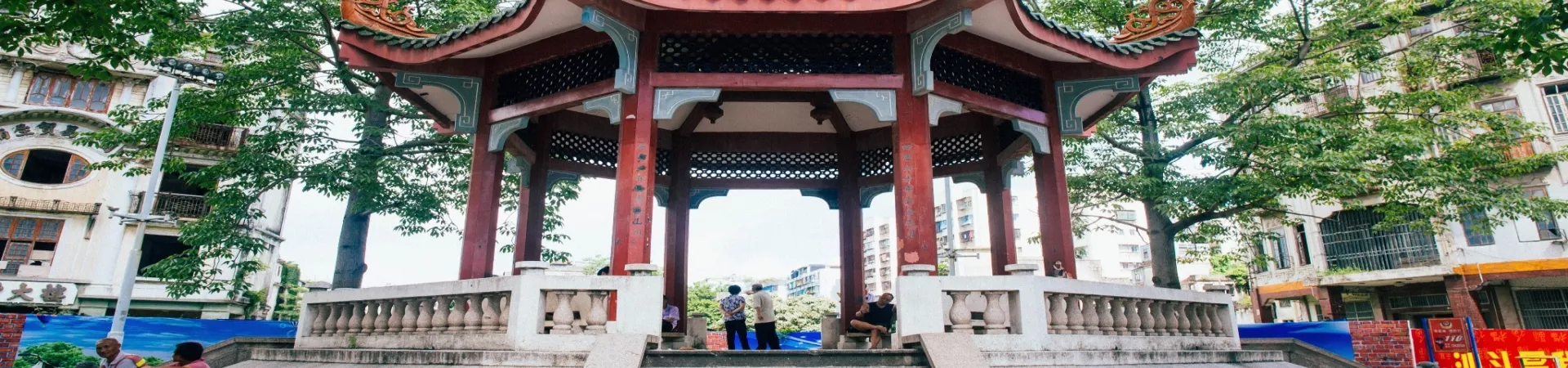
3.1 The Centrepiece: Sun Yat-sen Memorial Pavilion At the very core of the radial street plan stands the symbolic heart of Xiaogongyuan: the Sun Yat-sen Memorial Pavilion. This elegant octagonal pavilion, often what is referred to in the "narrow sense" of Xiaogongyuan, sits like a jewel at the convergence of several major streets. The current structure is a reconstruction, but it faithfully marks the spot of the original pavilion, serving as a central meeting point and the most recognizable landmark for visitors and locals alike.
3.2 The Department Store: A Testament to Overseas Chinese Enterprise Dominating the skyline of this historic district is the seven-story former Department Store building. Its predecessor was the "Nansheng Company," founded in 1932 through investments from a consortium of overseas Chinese. As the second tallest building in pre-liberation Shantou, it was a marvel of its time, symbolizing modern commerce, luxury, and the immense influence of the overseas Chinese community in developing their hometown. Today, it remains an iconic structure, a silent witness to the area's glorious commercial past and a cornerstone of the Xiaogongyuan skyline.
3.3 Key Streets and Atmosphere The streets radiating from the pavilion, such as Anping Road, Shengping Road, and Guoping Road, are arteries of history. Restored and revitalized, they now house a mix of traditional tea shops, local snack vendors selling Shantou specialties like bahueluo (oyster omelet) and zhaliang (rice noodle roll), souvenir stores, and cultural exhibitions. Strolling these streets allows one to absorb the atmosphere, where the echoes of bustling trade from the last century mingle with the vibrant energy of present-day tourism and local life.
Practical Information for the Visit
4.1 Getting There The Xiaogongyuan Historical and Cultural District is easily accessible by public bus. Visitors can take bus routes 1, 2, 3, or 5 and alight at the "Shantou Kaibu Wenhua Guan" (Shantou Opening Port Culture Museum) bus stop. From there, it is a short and pleasant walk of approximately 300 meters to the entrance of the district. Taxis and ride-hailing services are also readily available throughout the city.
4.2 Admission and Opening Hours Access to the Xiaogongyuan open-air district and its streets is completely free of charge, encouraging exploration at one's own pace. The area is open to the public 24 hours a day, every day of the year. This allows for different experiences: daytime visits are perfect for appreciating architectural details, visiting indoor museums or shops, and observing daily life, while evenings offer a magical ambiance as the buildings and the central pavilion are beautifully illuminated.
4.3 Suggested Duration To fully appreciate the architecture, visit key landmarks, explore the side streets, sample local snacks, and perhaps visit the nearby Shantou Opening Port Culture Museum, a visit of 1 to 3 hours is recommended. This provides ample time to wander without rush, take photographs, and truly soak in the historical environment.