Natural Gate
Subtitle: Where Astronomy Meets Art: Exploring the "Natural Gate" at the Tropic of Cancer
1. Introduction to a Geographic Marvel
Nestled within the stunning crescent of Qing'ao Bay on Nan'ao Island lies a monument that captures a unique intersection of geography, astronomy, and artistic design. This is the "Natural Gate" (自然之门), the centerpiece of the Tropic of Cancer Square. It stands not merely as a tourist attraction but as a profound marker of one of Earth's most significant astronomical lines. Among the eleven Tropic of Cancer monument towers erected across China, the Natural Gate holds a distinctive honor: it is the only one built on an island. Its location in Shantou, Guangdong, transforms a visit into a dual discovery—of pristine coastal beauty and precise celestial alignment. The monument serves as a tangible point of connection between the terrestrial and the cosmic, inviting visitors to contemplate our planet's place in the solar system.
2. Architectural Design: A Symbolic and Scientific Masterpiece
2.1. The Concept of the "Gate" The tower's design is a brilliant piece of architectural symbolism, derived from the evolution of the Chinese character for "door" or "gate" (门). This concept is profoundly fitting, as the structure literally marks the "gateway" to the tropical zone south of the Tropic of Cancer. The two imposing pillars, leaning inward and connected at the top, create a powerful and recognizable silhouette against the sky and sea, framing the natural beauty of the bay.
2.2. Encoded Dimensions: A Calendar in Steel and Concrete Far from being arbitrary, every key dimension of the Natural Gate is a precise nod to important astronomical dates, blending science seamlessly into its form: * The Sphere: With a radius of approximately 3.21 meters, it corresponds to the date of the Spring Equinox, March 21st. * The Cantilevered Arms: Extending about 6.22 meters, they represent the Summer Solstice, June 22nd. * The Overall Height: Measuring from the base to the top of the sphere is roughly 12.22 meters, mirroring the date of the Winter Solstice, December 22nd. * The Angle of the Pillars: The subtle inward tilt of the two main pillars is precisely calculated to match the latitude of 23.5 degrees North—the exact line of the Tropic of Cancer it commemorates.
This intricate encoding transforms the monument into a three-dimensional calendar, a permanent testament to the Earth's annual journey around the Sun.
3. The Celestial Spectacle: "The Shadowless Noon"
3.1. The Astronomical Phenomenon The primary reason for the monument's existence culminates in a breathtaking astronomical event each year. The Tropic of Cancer is defined as the northernmost latitude where the Sun can appear directly overhead at noon. The Natural Gate is engineered to visually demonstrate this phenomenon.
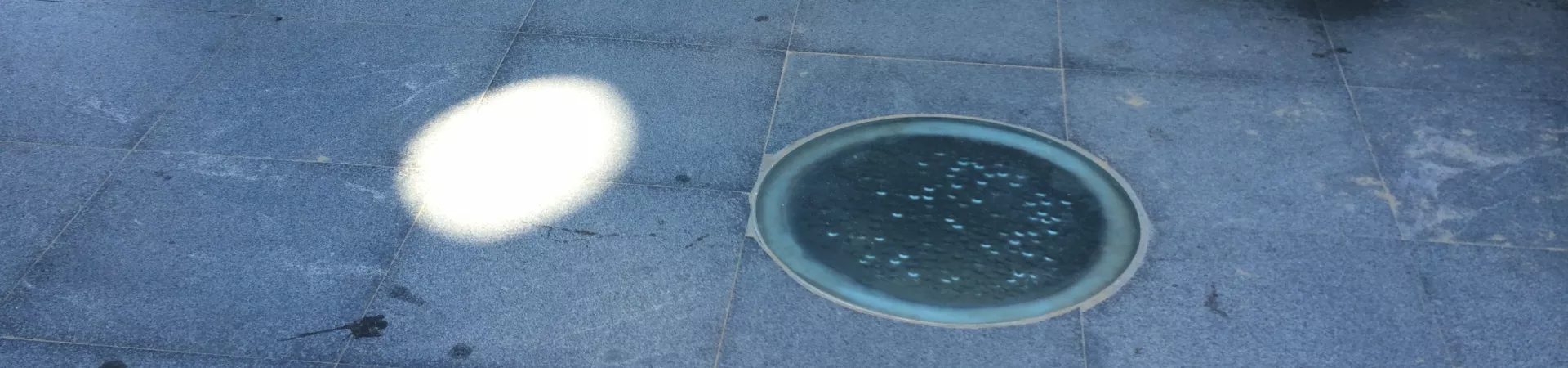
3.2. The Experience Annually, on the day of the Summer Solstice (around June 21st or 22nd in the Gregorian calendar, aligning with the traditional Chinese lunar calendar's summer solstice date), a remarkable event occurs. At precisely solar noon, the Sun aligns perfectly perpendicular to the Earth at this location. Its rays pass directly through a special tubular channel in the center of the sphere atop the gate. For a brief, magical moment, the shadow of the sphere and the structure itself disappears vertically beneath it, projecting a beam of light onto a designated marker on the central platform below. This is the famed "立杆不见影" or "vertical pole casts no shadow" experience. Witnessing this event allows visitors not just to see but to physically stand within a precise moment of celestial mechanics, a direct connection to the rhythms of our solar system.
4. Practical Visitor Information
4.1. Location and Ambiance The monument is situated within the Tropic of Cancer Square in Qing'ao Bay, Nan'ao Island. The square itself is a spacious, open area where the grandeur of the gate is complemented by the vast expanse of the sky and the soothing sounds of the bay's waves. It is an ideal spot for photography, contemplation, and simply enjoying the ocean breeze.
4.2. Accessibility and Fees One of the most appealing aspects of the Natural Gate is its accessibility. The site is open to the public free of charge. There is no admission fee, making it an inclusive destination for all travelers, families, and astronomy enthusiasts.
4.3. Opening Hours and Visit Duration The square and monument are accessible 24 hours a day, every day of the year. This all-day access allows for different experiences: the stark clarity of the monument under the midday sun, the golden hues cast upon it during sunset, or its impressively lit visage against the night sky. A typical visit to appreciate the architecture, read the informational plaques, and enjoy the surroundings generally takes under an hour. However, many visitors choose to stay longer to relax on the adjacent beach or explore the wider charms of Qing'ao Bay.
4.4. Planning Your Visit While the monument is impressive year-round, the ultimate time for a visit is undoubtedly around the Summer Solstice to potentially witness the shadowless phenomenon. However, it is advisable to check the exact local timing for the event. For visits at other times, the clear skies of autumn and spring provide excellent conditions for viewing. The site is a powerful educational tool, offering a concrete understanding of global geography and astronomy, making it particularly engaging for students and children. Whether you are a science buff, an architecture admirer, or a traveler seeking unique landmarks, the Natural Gate offers a quiet yet profound moment of connection with the natural world and the universe beyond.