Yingtian College
Subtitle: A Journey Through One of China's Four Great Ancient Academies
1. Introduction: The Cradle of Imperial Education Nestled beside the serene South Lake of Shangqiu Ancient City in Suiyang District, Henan Province, stands the Yingtian Academy, a monument to China’s profound scholarly heritage. Known historically by several revered names—Yingtianfu Academy, Suiyang Academy, Nanjing Academy, Nandu Academy, and even the Nanjing Imperial College—this institution is celebrated as one of the "Four Great Ancient Academies" of China. Its founding is a landmark in Chinese educational history, with historical records noting that "the establishment of prefectural schools began here," marking it as a pioneering model for state-sponsored education during the Northern Song Dynasty. More than just a collection of ancient buildings, the academy represents a thousand-year legacy of intellectual pursuit, Confucian philosophy, and the cultivation of statesmen who shaped the empire.
2. Historical Significance and Evolution 2.1. Origins and Imperial Patronage The academy's roots trace back to the private school of the esteemed scholar Yang Que during the Later Jin Dynasty. It flourished in the early Northern Song Dynasty, gaining immense prestige and attracting scholars from across the land. Its significance was formally recognized in 1009 AD when Emperor Zhenzong bestowed the name "Yingtianfu Academy" and granted it official status. At its zenith, it rivaled the Imperial College in the capital, Kaifeng. The legendary scholar Fan Zhongyan, who taught and studied here, famously embodied its ethos of "being the first to worry about the world’s troubles and the last to enjoy its comforts." The academy later evolved into the "Nanjing Imperial College" during the Ming Dynasty, serving as a crucial southern center for the imperial examination system and national learning.
2.2. Architectural and Cultural Legacy Despite damage and reconstruction through dynastic changes, the restored academy complex today faithfully reflects the layout and solemn spirit of a Song Dynasty institution of higher learning. Its architecture is a physical manifestation of Confucian values, designed to inspire reverence for knowledge, virtue, and social responsibility.
3. Exploring the Academy Grounds: Key Sites and Structures A visit to Yingtian Academy is a walk through a living textbook of classical Chinese architecture and academic tradition. The carefully arranged compounds guide visitors through the core spaces of scholarly life.
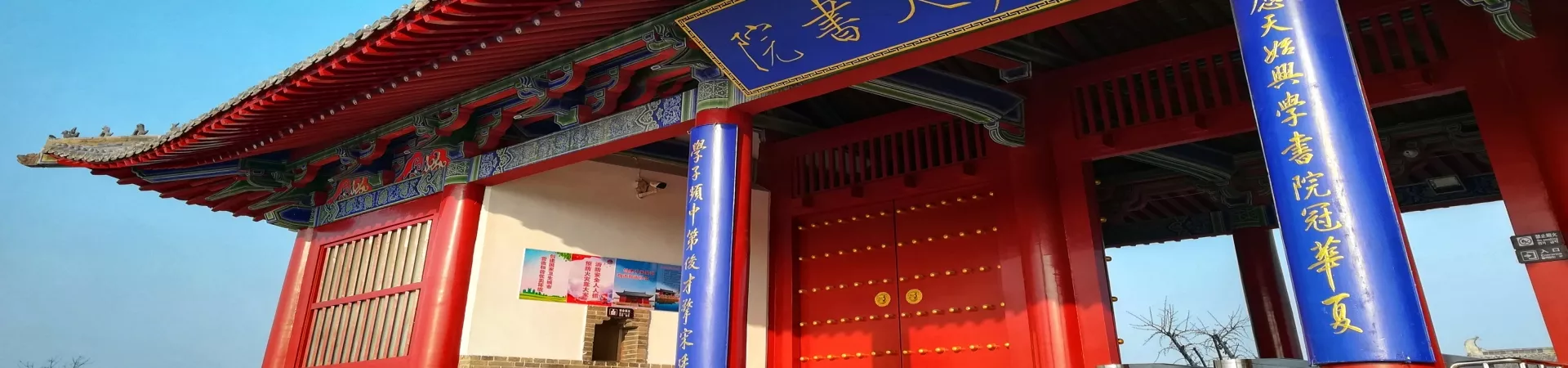
3.1. The Central Axis: Halls of Wisdom and Reverence The layout revolves around a central axis, featuring its most important ceremonial and educational buildings. * Main Gate (Shuyuan Damen): The imposing entrance sets the tone, leading visitors into the scholarly realm. * Front Lecture Hall (Qian Jiangtang): This was the primary venue for lectures, debates, and intellectual discourse, where masters would impart knowledge to disciples. * Dacheng Hall (Dacheng Dian): Dedicated to Confucius, the "Great Sage," this hall is the heart of the academy. It served as a place for ceremonial worship and embodied the ultimate respect for the Confucian tradition. * Chongsheng Hall (Chongsheng Dian): Honoring Confucius's ancestors and later Confucian masters, this hall emphasizes the continuity and depth of the philosophical lineage.
3.2. Symbols of Scholarly Achievement * Zhuangyuan Bridge (Zhuangyuan Qiao): The "Number One Scholar Bridge" arches over a waterway within the complex. Crossing this bridge symbolically represented the aspirational journey of a scholar aiming for the highest honors in the imperial examinations. * Imperial Library (Yushu Lou): This building housed precious imperial edicts, classical texts, and scholarly works. It underscores the academy's connection to the imperial court and its role as a custodian of knowledge.
3.3. Spaces of Learning and Community * Minglun Hall (Minglun Tang): Translating to "Hall for Clarifying Human Relations," this space was dedicated to the study of ethics, proper social relationships, and core Confucian virtues. * Instructor's Residence (Jiaoguan Zhai): This residential quarter for the academy's professors offers a glimpse into the daily lives of the scholarly masters. * Corridor Rooms (Langfang): These flanking corridors and side rooms likely housed students, served as study areas, or displayed steles, creating an enclosed, contemplative environment for the academic community.
4. Practical Visitor Information 4.1. Location and Access The academy is situated within the historical precinct of Shangqiu Ancient City, adjacent to South Lake. The most convenient access from Shangqiu city is via the Shangqiu Railway Station. * Transportation: From Shangqiu Railway Station, take public bus route 1 directly to the North City Gate of Shangqiu Ancient City. From there, the academy is a short walk or local taxi ride to the South Lake area.
4.2. Admission and Operating Hours * Ticket Fee: The entrance ticket is priced at 20 RMB per person. * Opening Hours: The academy is open daily from 09:00 to 17:30. The last admission is at 17:30. These hours are generally consistent throughout the year.
4.3. Suggested Visit Duration To fully appreciate the historical context, explore the architectural details of the main halls, and enjoy the tranquil lakeside setting, a visit typically requires between 1 to 3 hours. This allows for a leisurely pace to absorb the atmosphere and reflect on the site's scholarly legacy.