Yanbotai
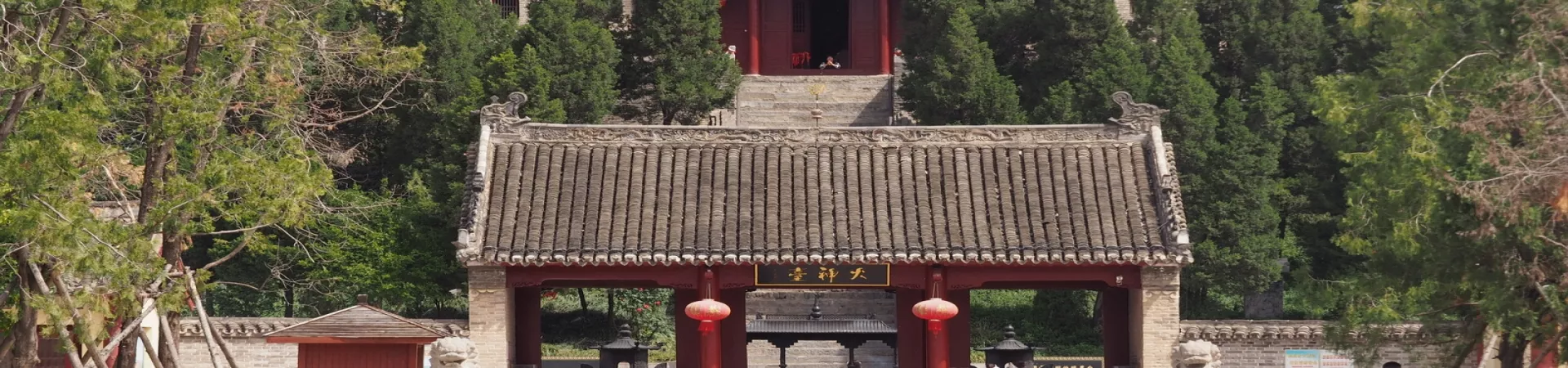
Subtitle: A Journey to the Cradle of Chinese Commerce and Ancient Astronomy
1. Introduction to the Site Nestled within the ancient city of Shangqiu in Henan Province, China, lies the Yānbó Tái (阏伯台), a historical site of profound cultural and symbolic significance. More than just a simple platform or temple, it represents a unique convergence of two fundamental pillars of early Chinese civilization: the veneration of fire and astronomy, and the origins of organized commerce. Often visited in conjunction with the adjacent Shangzu Temple (商祖祠, Temple of the First Merchant) complex, this destination offers a deep dive into the very beginnings of Chinese ritual, scientific observation, and commercial tradition. The site, though compact, demands thoughtful exploration, inviting visitors to step back over four millennia into the era of legendary sage-kings and foundational myths.
2. Historical and Cultural Significance
2.1. Yānbó: The Celestial Fire Keeper The platform is dedicated to Yānbó (also known as Qi), a figure from Chinese mythology and semi-legendary history. According to ancient texts like the "Bamboo Annals" and "Records of the Grand Historian," Yānbó was a son of Emperor Ku (Di Ku) and was appointed by his brother, Emperor Yao (one of the revered Five Emperors), to the important settlement of Shang. His primary duty was the solemn role of "Huozheng" (火正), the Official in Charge of Fire.
In antiquity, the maintenance of a perpetual, sacred fire was crucial for survival, ritual sacrifices, and communal cohesion. Yānbó was responsible for tending this eternal flame, a duty that elevated him to a quasi-divine status posthumously. He became deified as the God of Fire (Huoshen). The platform itself is traditionally considered an ancient astronomical observatory used for ritual fire ceremonies and for observing the stars, particularly the "Great Fire" star (Antares, Scorpio α), which was critical for determining the seasons and the agricultural calendar in that era. Thus, Yānbó Tái stands as one of the oldest potential astronomical observatory sites in China.
2.2. The Birthplace of Shang Culture and Commerce The location's significance multiplies when considering its connection to the Shang Dynasty (c. 1600–1046 BCE). Shangqiu's name literally translates to "Hill of Shang," and it is considered the ancestral homeland and first capital of the Shang people. Yānbó, as the first ruler enfeoffed here, is regarded as the progenitor of the Shang lineage.
Centuries later, a descendant of Yānbó, Wang Hai (also known as Xiè), further contributed to the site's legacy. Honored in the neighboring Shangzu Temple, Wang Hai is celebrated as China's "first merchant" for pioneering the use of ox carts for long-distance trade in cattle. This innovation marked a pivotal moment in economic history. Therefore, the area around Yānbó Tái is venerated not only as a center of ancient worship and astronomy but also as the symbolic birthplace of Chinese commercial enterprise. The site embodies the transition from ritualistic practice to practical economic development.
3. Visitor Practical Information
3.1. Admission and Operating Hours A single admission ticket, priced at 15 RMB, grants access to both the Yānbó Tái and the comprehensive Shangzu Temple scenic area. This combined ticket offers excellent value for a cultural and historical excursion.
The site operates year-round with seasonal adjustments to its opening hours: * Summer Season: The gates are open from 7:50 AM to 6:30 PM. * Winter Season: Operating hours are from 8:00 AM to 5:30 PM. It is advisable to plan your visit accordingly and allow sufficient time before closing for a complete experience.
3.2. Planning Your Visit A typical visit to explore both Yānbó Tái and the Shangzu Temple grounds thoroughly requires approximately 1 to 3 hours. Visitors can climb the stone steps of the platform itself, which is topped with a later-built temple hall dedicated to Yānbó (Huoshen). From this elevated position, one gains a view of the surrounding parkland and part of the ancient city wall. The real immersion, however, comes from contemplating the historical layers beneath. The adjacent Shangzu Temple complex expands the narrative with halls, statues, and exhibits dedicated to the history of commerce, featuring not only Wang Hai but also later merchant icons.
4. The On-Site Experience and Atmosphere
4.1. Architectural and Environmental Features The current structures on Yānbó Tái, including the brick platform and the hall, are reconstructions from the Ming and Qing dynasties, built upon the legendary ancient foundation. The architecture is classical northern Chinese temple style. The atmosphere is one of quiet reverence rather than grandiose spectacle. The site is often peaceful, shaded by old trees, allowing for reflection. The climb to the top is modest but symbolic, representing a connection to the heavens above, which Yānbó himself was tasked with interpreting.
4.2. A Combined Cultural Journey The integration with the Shangzu Temple is seamless. After descending from the astronomical and ritual focus of Yānbó Tái, visitors walk into the realm of economic history. The contrast and connection between the two are palpable: one site represents humanity's attempt to understand and order the cosmos through fire and stars; the other showcases the practical human activity of trade and exchange that such societal order made possible. This dual theme makes the visit particularly enriching, illustrating how myth, science, and commerce were deeply intertwined in the foundation of Chinese culture.
For any visitor interested in the roots of Chinese civilization, this site in Shangqiu provides a tangible, if understated, link to a distant past where the roles of priest, astronomer, and chieftain were combined, and from whose lineage sprang both a mighty dynasty and the enduring spirit of Chinese merchants.