Tomb of King Xiaowang of Liang
Subtitle: Exploring the Mausoleum of Prince Xiao of Liang: A Journey into the Western Han Dynasty's Underground Splendor
1. Introduction: The Royal Necropolis of Mangdang Mountain
Nestled into the southern slopes of Bao'an Mountain, a branch of the majestic Mangdang range approximately 34 kilometers northeast of Yongcheng City in Shangqiu, Henan Province, lies a tomb of profound historical significance—the final resting place of Liu Wu, Prince Xiao of Liang. This site is not merely an isolated grave; it is a crown jewel within the Mangdang Mountain Western Han Dynasty Liang King Mausoleum Complex. Recognized as the earliest and largest cluster of Han Dynasty tombs ever discovered in China, this complex represents a pinnacle of early Chinese funerary architecture and royal ambition. The tomb of Prince Xiao of Liang stands as a particularly magnificent example, offering visitors a tangible connection to the power, artistry, and spiritual beliefs of the Western Han Dynasty over two millennia ago.
2. The Historical Persona: Prince Xiao of Liang
2.1. A Life of Imperial Privilege The occupant of this grand tomb, Liu Wu (c. 184–144 BCE), was a central figure in the early Western Han court. As the second son of Emperor Wen and the beloved younger brother of Emperor Jing, his life was marked by extraordinary favor and influence. His titles evolved with his stature: initially enfeoffed as the Prince of Dai, then as the Prince of Huaiyang, he was finally granted the wealthy and strategically crucial principality of Liang in 168 BCE. The historical title "Xiao" (孝), meaning "filial," was posthumously bestowed, reflecting Confucian virtues.
2.2. Power and Legacy in the Liang Principality The Liang principality, encompassing a vast and fertile territory, became a powerhouse under Liu Wu's rule. His court was known for its patronage of scholars and artists, and his military might played a crucial role in suppressing the Rebellion of the Seven States, solidifying the central authority of his brother, Emperor Jing. This immense wealth and political standing directly translated into the ambition and resources required for his eternal home, setting a precedent for the royal mausoleums that would follow in the Mangdang mountains.
3. Architectural Marvel: Engineering Without Gunpowder
3.1. The "Cut-from-the-Mountain" Technique The most awe-inspiring aspect of the tomb, and the entire mausoleum complex, is its method of construction. In an era centuries before the invention of gunpowder, the entire structure was hewn directly from the living rock of the mountain. This technique, described as "cutting the mountain to form the outer coffin and tunneling through stone for the burial chamber," involved the labor of countless workers using simple iron chisels and hammers. The scale of this manual excavation is almost incomprehensible, representing a monumental feat of human endurance and organized labor.
3.2. Layout and Design of the Tomb The tomb's entrance faces east, aligning with traditional beliefs and solar symbolism. Stretching 56.62 meters into the heart of the mountain, the tomb's design mimics the layout of a royal palace above ground. It features a long, sloping passageway, main chambers, side rooms, and intricate drainage systems. The precision of the carving, the smoothness of the walls, and the overall structural integrity after more than 2,100 years stand as a testament to the extraordinary skill and planning of Han Dynasty engineers and artisans. The complex is often described as a "palace complex underground," a fitting subterranean counterpart to the prince's earthly power.
4. Artistic Treasures: Glimpses of Han Dynasty Splendor
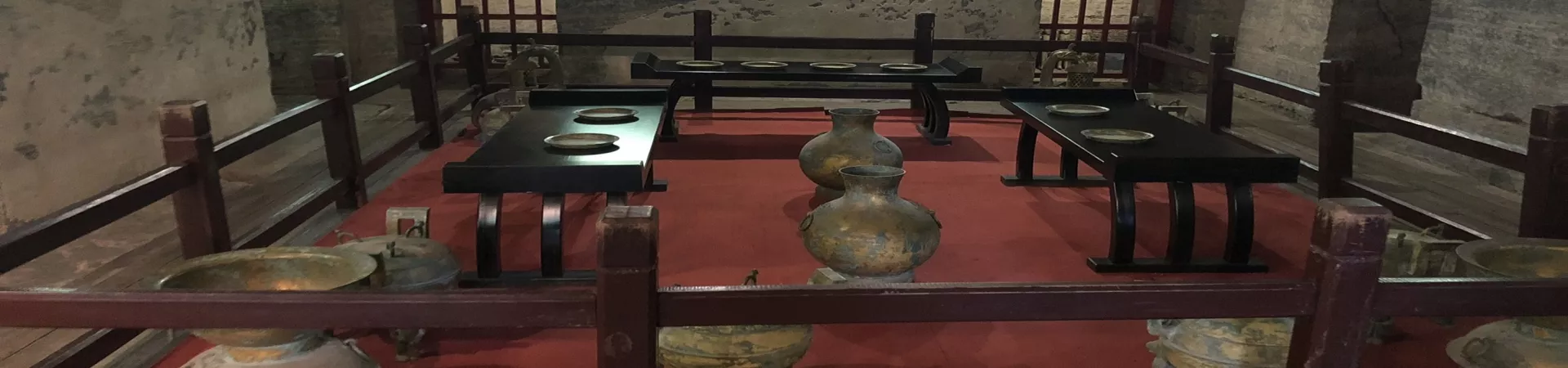
The true glory of Prince Xiao of Liang's tomb was revealed through the astonishing artifacts recovered from within. These objects, intended to serve and protect the prince in the afterlife, are now considered national treasures.
4.1. The Golden Thread Jade Suit Among the most iconic finds is a jinyu yuyi, or a burial suit sewn with golden threads. This suit, made of thousands of finely carved jade plaques linked by delicate gold wire, was based on the belief that jade could preserve the body from decay. While perhaps not as complete as the famous example from the tomb of Liu Sheng in Mancheng, its discovery here underscores the prince's supreme status, as such suits were reserved for the highest royalty.
4.2. Lavish Grave Goods The tomb yielded a wealth of other exquisite items: * Murals: Early examples of Han Dynasty wall paintings, offering insights into contemporary cosmology, mythology, and daily life. * Gilded Bronze Chariot and Horse Fittings: Exquisitely detailed ornaments and components from ceremonial chariots, showcasing advanced metallurgy and the importance of chariots in ritual and status. * Cavalry Figurines: Terracotta statues of soldiers and horses, reflecting the military prowess that was central to Liu Wu's identity and the security of his kingdom. * A Treasury of Jade Artifacts: Ritual bi discs, ornamental plaques, and personal adornments, all carved from the finest nephrite, demonstrating the supreme cultural and spiritual value placed on jade.
5. Visitor Information
The Mausoleum of Prince Xiao of Liang is accessible to the public as part of the Mangdang Mountain Western Han Liang King Mausoleum Scenic Area. * Location: Bao'an Mountain, Mangdang Mountain Range, northeast of Yongcheng, Shangqiu City, Henan Province. * Ticket: Approximately 10 RMB (subject to change; it is advisable to verify current pricing before your visit). * Contact: For the most current information, visitors can inquire via the scenic area's general information line, such as +86 371 5900 105.
A visit to this site is more than a tour of an ancient tomb; it is an immersive walk through a chapter of China's early imperial history. To stand within the cool, silent chambers carved by hand from solid rock is to witness the sheer will of a dynasty and the timeless human desire to memorialize power and ensure eternity. The artifacts, now housed in museums, tell a story of artistic sophistication, while the empty tomb itself whispers of the immense labor and profound beliefs that shaped the world of the Western Han.